

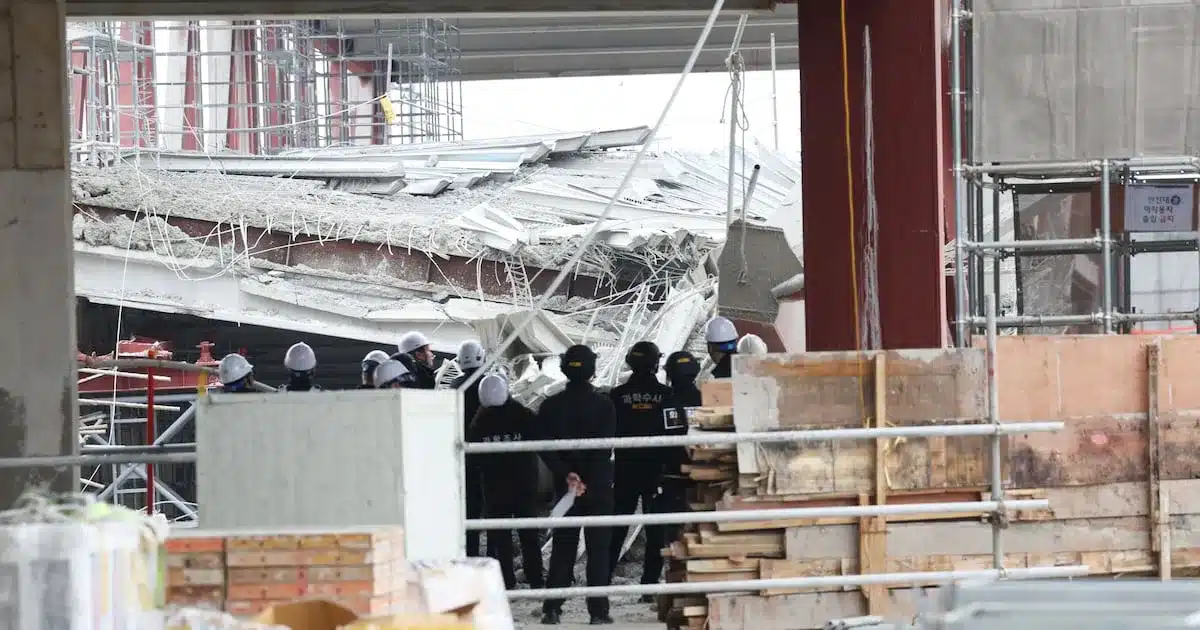
Four individuals have been apprehended six months after a devastating collapse at the Gwangju Landmark construction site resulted in the deaths of four workers.
The arrests address allegations of negligence in design, construction, and supervision, which are believed to have contributed to the fatal incident. A judge at the Gwangju District Court issued arrest warrants for four individuals involved in the construction project, citing charges including violations of the Occupational Safety and Health Act and construction site negligence.
Details of the Arrests and Investigation
Following an investigation, the judge determined that there was sufficient cause to detain the four suspects. Those arrested include a site manager from the construction company, the CEO and site manager of a subcontracting firm, and a supervisor. They are accused of failing to implement fundamental safety protocols, including those related to structural design and safety management, leading to the deaths of four laborers.
Arrest warrants for seven other individuals, including personnel from the construction company and a site scaffolding contractor, were denied. These individuals had also undergone preliminary questioning. Authorities stated that the evidence against these seven was largely unsubstantiated, and their detention was deemed unnecessary at this time, though the investigation continues.
Both the police and the Ministry of Employment and Labor consider the case to be of significant importance in preventing similar accidents. The arrested individuals are suspected of failing to properly implement structural design specifications and neglecting safety management during the construction process.
The Collapse Incident
The Gwangju Landmark collapse occurred on December 11th of last year, around 1:58 PM, at a construction site in Chipyeong-dong, Seo-gu, Gwangju. The incident happened during concrete pouring work on the building’s rooftop. A steel structure collapsed, trapping construction workers and employees of a materials supplier, resulting in four fatalities at the scene.
Root Causes Identified
Preliminary investigations by expert agencies pointed to inadequate welding of steel structures and insufficient quality control as the primary causes of the collapse. According to the Ministry of the Interior and Safety’s National Institute for Disaster Prevention, the welding strength of the steel components fell significantly short of design standards. Evidence also indicated insufficient welding at some connection points, suggesting construction deficiencies.
The investigation also highlighted issues such as the use of unqualified welders and lax supervision. It was found that construction and supervisory personnel failed to adequately inspect or verify the quality of the welding. Furthermore, there are indications of illegal subcontracting practices, where companies that received lower-tier subcontracts re-subcontracted the work, a practice now under scrutiny.
Ongoing Investigations
Since the accident, the police have been conducting investigations involving stakeholders from the construction company, subcontractors, supervisory bodies, and the client. Approximately 40 individuals are currently under investigation, including four civil servants from the Gwangju City Urban Development Bureau, who were involved as the project’s client.
The Gwangyeong Metropolitan Police Agency’s organized crime investigation unit is examining not only the direct causes of the collapse but also systemic issues such as the bidding process and the multi-tiered subcontracting system. Police plan to review further arrests based on collected evidence, expert findings, and testimony from relevant parties.
