

[ad_1]
Animator Ahn Jae-huun discusses hand-drawn sensibility, constructing a distinctly Korean visible language
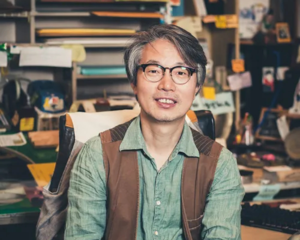
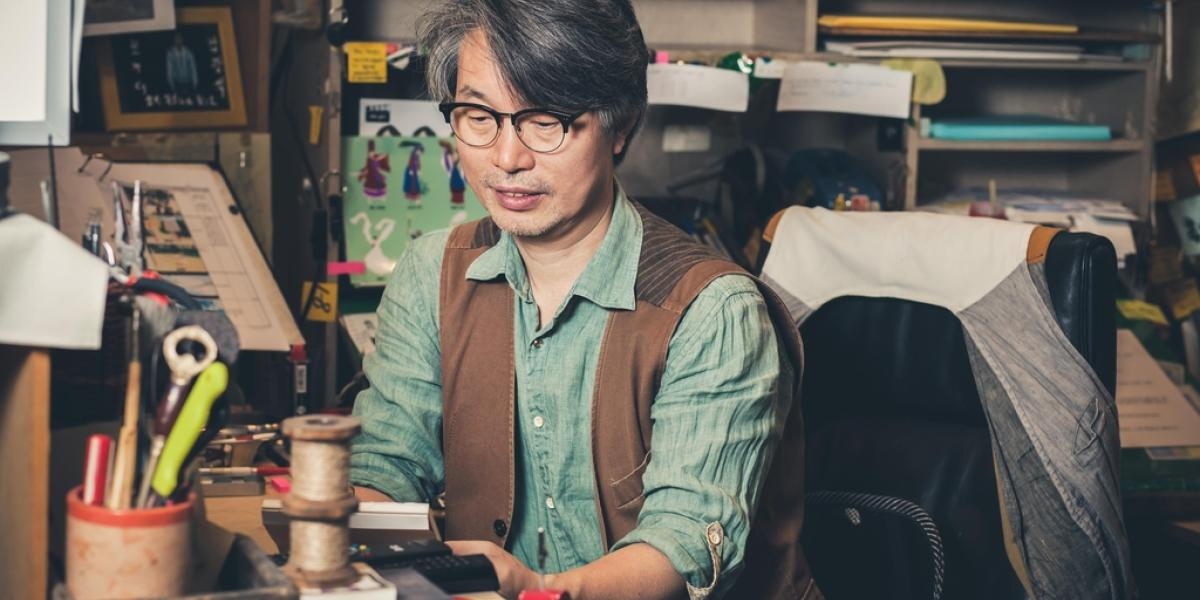
SHARJAH, United Arab Emirates — Time slowed down in Sharjah. The emirate’s movie competition moved at its personal languid tempo, with lengthy gaps between screenings and loads of empty hours to fill. Ahn Jae-huun, there as a juror for the animation competitors, had simply come again from a neighborhood museum once we sat down to speak.
“I noticed this Chinese language mom and her little boy on the museum in the present day,” he says. “The child was bouncing round in every single place, completely stressed. And I assumed: It’s very wonderful that you just’re like that proper now. Sometime, all these photographs you are seeing will seep into no matter work you do.”
That is how Ahn sees the world — every thing feeds into the artistic course of. At 56, he is spent 33 years within the Korean animation trade, and his studio’s identify, Meditation With a Pencil, captures his strategy. He nonetheless attracts by hand, on precise paper, earlier than his workers scans the photographs into digital recordsdata.
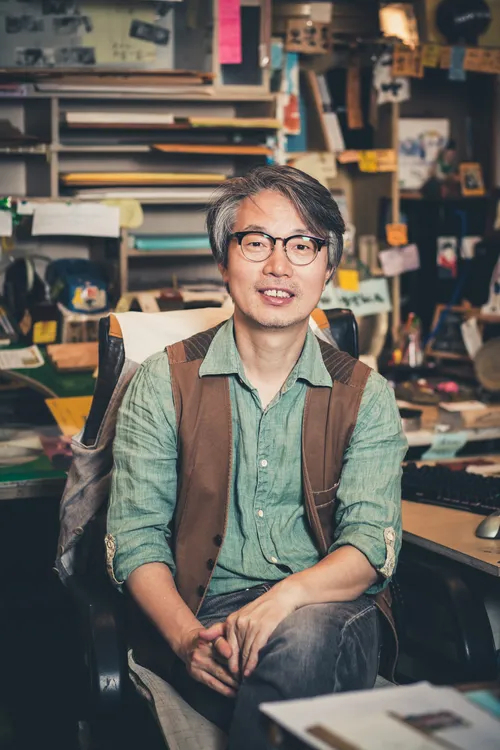
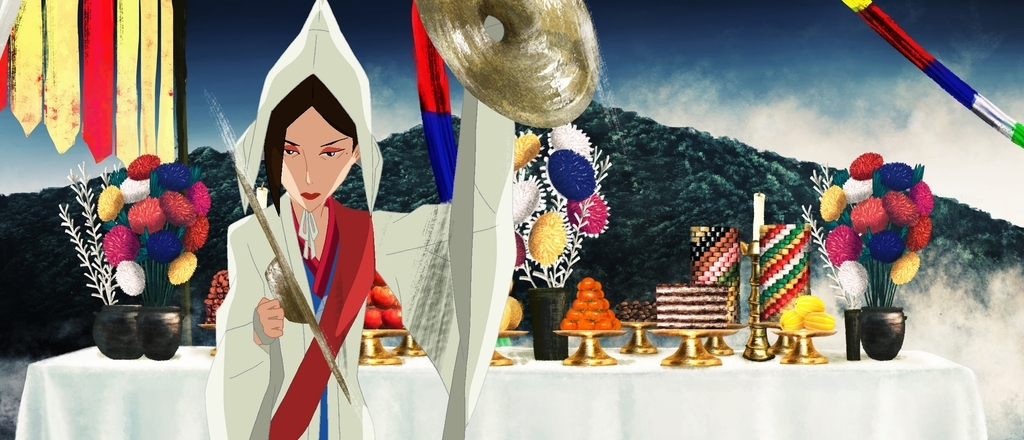
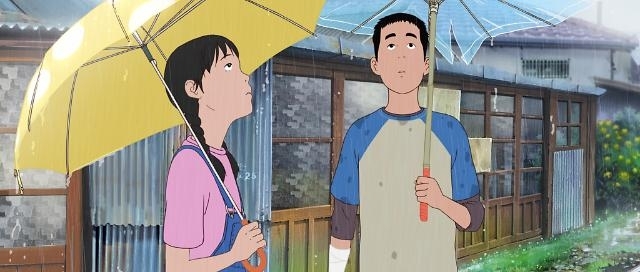
In an trade the place Japanese anime and Hollywood studios dominate and Korean works nonetheless battle for recognition, the studio has carved out a recognizable type rooted in Korea’s personal landscapes and tales. His breakthrough work, “Inexperienced Days,” which took 10 years to complete, reconstructed the textures of Nineteen Seventies and 80s Korea. Then got here his diversifications of early fashionable Korean literary classics, an endeavor that culminated within the 2020 characteristic, “The Shaman Sorceress.” The work received a particular jury prize on the Annecy Worldwide Animation Movie Pageant that yr.
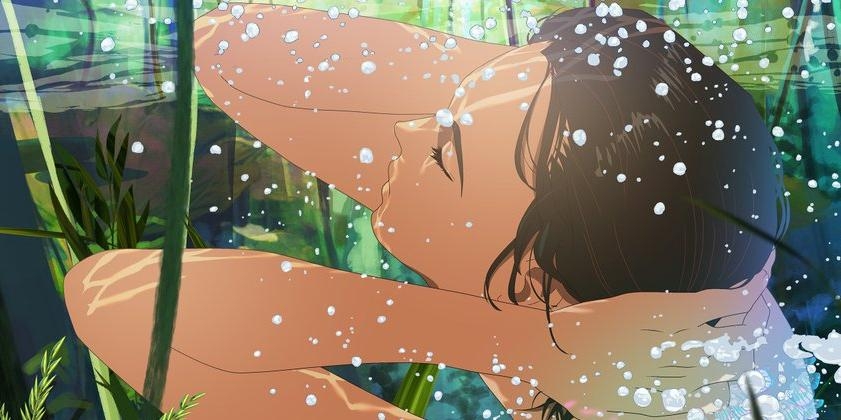
He has been increasing his scope since. His newest, “Gill,” a fairy-tale premise a few boy who sprouts gills after being tossed into water, premiered at Annecy final yr with a Korean launch date nonetheless pending.
At a time when traits and tastes shift each season, there’s one thing virtually cussed about Ahn’s path. Nevertheless it’s positively constructed one thing unmistakable — much less about nostalgia than the conviction behind it.
Q. You’ve got centered a lot on adapting Korean classical literature. That looks as if the tougher highway.
A. There have been two paths, to cite Robert Frost’s poem. One that everybody takes, the place content material reaches its objectives and makes cash. The opposite is the highway much less traveled. Adapting Korean classical literature into animation was positively the highway not taken.
It isn’t precisely a sensible alternative commercially. The studio does bold initiatives too, however the literary diversifications — that is the place my sense of obligation to the neighborhood actually lies. I’ve gotten a lot help from society over time. I used to be the primary animator to obtain a Korean Movie Council grant. I really feel like I owe one thing again to the nation.
Q. It seems like extra than simply gratitude, although
A. Korean animation missed a vital interval. From the 1900s to the early 2000s, when international content material industries had been taking off, we had been caught doing outsourcing work for American and Japanese studios. I needed to fill that hole with these works, to attach the dots.
It is the identical factor I felt on the museum in the present day. If animators right here turned their historical past into movies, Korean audiences may watch and perceive how these folks lived and beloved. Animation erases limitations like that. My movies won’t do nicely on the field workplace, however they will help worldwide audiences perceive Korea. That issues to me.
Q. How did you find yourself sticking with hand-drawn animation all these years?
A. Once I was younger, I simply beloved paper and pencil. However later it turned extra strategic. We do not have Hollywood’s capital or the historical past and variety of Japanese anime. So what can we provide that is distinctive? Craftsmanship is what others choose. Sincerity is what I can choose in myself — my very own onerous work. I figured the easiest way to indicate sincerity was to attract each body by hand.
There’s additionally the sensibility — the particular rhythm that defines a director’s work. In 2D animation, the director’s really feel goes straight into the timing of motion. Japanese animators every have distinct rhythms as a result of they got here up by way of 2D. Identical with American animation. Whenever you begin with 2D, a rustic’s animation develops its personal qualities. With 3D, it turns into extra capital-driven, and every thing begins wanting the identical.
Q. How have your workers dealt with your old-school strategy?
A. I admire them for placing up with it. They take my pencil drawings, scan them, then proceed the work digitally. That is inconvenient for them, however they acknowledge the worth in that strategy. Lately, they’re really educating me digital methods — Now I am studying backwards.
Q. Your current initiatives appear totally different — “Gill” and an upcoming remake of John Woo’s motion flick “A Higher Tomorrow.” What modified?
A. I am all the time sluggish to adapt. Once I first began in animation, I would see others choose issues up shortly, however I hated copying or making one thing work simply accidentally. I wanted to totally perceive it, to utterly management it earlier than transferring ahead. With Korean landscapes and folks, I needed to focus intensely on getting that proper first earlier than increasing.
With “Gill,” my workers really gave me the character design. We’re working extra collaboratively now. It isn’t me being magnanimous — we arrive at solutions collectively by way of dialogue, and the workers has grown to that time.
“A Higher Tomorrow,” that is extra of a commissioned mission. At first, I assumed: John Woo’s path is already so animated, why adapt it? However then I spotted one thing. Proper now, every thing from Korea tends to get lumped underneath the Okay-label — Okay-pop, Okay-this, Okay-that. Taking over “A Higher Tomorrow” felt like stripping away that label and doing one thing that might transfer all of Asia. The unique is a shared textual content, however a Korean director is making it, and the settings may embrace Japan and different locations.
Older Koreans who beloved Hong Kong cinema within the Eighties and 90s — they don’t have any reminiscence of Korean animation. But when we deliver them one thing like “A Higher Tomorrow,” possibly we will create a brand new reminiscence and increase who can join with Korean animation.
Q. Folks typically say Korean animation lacks a particular identification. What do you make of that?
A. When foreigners consider Japanese animation, they instantly consider Studio Ghibli, of Makoto Shinkai. There’s an impression, a definite identification. Korea did not have that. That is why I used to be grateful when folks overseas mentioned they acknowledged my works as distinctly Korean — not some offshoot of Japanese animation.
Having an impression is not sufficient, although. For a rustic’s animation trade to thrive, younger animators want clear selections. They want to have the ability to say: I wish to work at this studio due to that director’s philosophy and visible type. Korea by no means had that continuity — no director caught round lengthy sufficient.
Some animators at our studio now say “Inexperienced Days” was what made them wish to inform tales like that, with that aesthetic. That is the way it works in any area — folks want function fashions.
Q. What does that require from you as a director?
A. If I would wavered or modified my angle, the workers would don’t have any cause to work with me. However while you meet folks whose dedication exceeds even the worth of the work itself, that is when this occupation turns into sacred. It is totally different from field workplace success — it is about one thing else totally.
On the studio’s anniversary lately, I instructed my workers they’re the one folks I would need at my funeral. I used to suppose I would hate anybody coming to my funeral. However them? They’ve labored with me, anxious with me, helped draw Korea’s landscapes. They’re welcome to return.
Q. What are your ideas on new expertise, particularly AI?
A. I’ve lived by way of each format shift you’ll be able to think about. I’ve watched LP information turn out to be cassettes turn out to be CDs turn out to be MP3s turn out to be apps. I’ve used mechanical pencils, fountain pens, typewriters even.
AI is nothing like I’ve ever seen. Whether or not it is 3D or 2D, conventional animation takes the identical fundamental time. The price range and stage of element may differ, however the human effort is comparable. AI radically cuts that timeline — and that modifications every thing about how we work.
A personality that took two weeks to attract and revise now takes a day, and the satisfaction is extremely excessive. Up to now, you’d know the workers member dreamed about that character for weeks, so that you’d select your suggestions rigorously. With AI, we could be brutally trustworthy about it. We will put this third social gathering between us and say: This appears to be like horrible. Does not this drawing look terrible? And we giggle about it collectively.
We’ve not gotten to the purpose the place it handles motion and path but — different locations are doing that, producing every thing from character to movement directly. However for now, I believe giving audiences totally managed motion remains to be our duty as animators.
Q. So you continue to see worth in what people can deliver?
A. The texture of an individual going into the motion is essential. It is the identical as my workers placing up with the inconvenience of my pencil drawings. How can we get human qualities to mix into AI? Our group is forward on this as a result of we have been testing it for six or eight months now.
Certainly one of my workers instructed me: You’ve got labored your method up from paper, so audiences will see AI as a brand new problem from you, not a shortcut. And since we all know what goes into the work — what sincerity appears to be like like whatever the instruments — we will experiment with it. The group wasn’t too anxious about being changed. From the beginning, they needed to determine tips on how to use it nicely.
Q. Going ahead, what’s your imaginative and prescient for the movies you wish to make?
A. I can not make everybody come see my movies, however I need individuals who do come to recollect them for years to return. I used to focus extra on animation for adults. Now I am fascinated with what folks name “household movies” — although I believe that time period encompasses every thing. A tune for kids, philosophy for younger adults, a life story for the aged. That is what household movies must be. I wish to make not less than yet one more like that earlier than I am completed.
moonkihoon@heraldcorp.com
[ad_2]
