

As the seasons transition and the air grows cooler, many seek comforting and nourishing meals. Miyeokguk, or Korean seaweed soup, stands out as a staple that has long been a part of Korean culinary tradition. Rich in essential nutrients like calcium and iodine, it’s historically recognized for its benefits to growing children and postpartum recovery. While commonly found, the preparation and quality of miyeokguk can vary significantly from one restaurant to another, transforming a simple dish into a remarkable dining experience. This exploration delves into four distinct miyeokguk establishments across Korea, from the southern coast to the capital, showcasing the diverse and exceptional ways this humble soup is prepared.
The Richness of Seaweed Soup: From Coast to Capital
Miyeokguk is more than just a soup; it’s a symbol of nourishment and care, often served on birthdays and during periods of recovery. Its journey from a traditional remedy to a celebrated dish is a testament to its enduring appeal. The following establishments offer unique takes on this classic, highlighting regional ingredients and innovative culinary approaches.
Tongyeong: The Taste of the Sea at Ganggu Sikdang
Our culinary journey begins in Tongyeong, a city renowned for its fresh seafood. Near the central market, Ganggu Sikdang offers a remarkable version of miyeokguk. While the restaurant specializes in soy sauce-based dishes, its combination of gammat-bab (a type of rice) and dolmiyeokguk (rock seaweed soup) is exceptional. The rock seaweed, harvested from the local waters, boasts a thick, chewy texture and a deep, oceanic aroma. The restaurant owner shared that the seaweed is personally collected by elders, emphasizing the connection to local tradition and the sea. Dolmiyeok, a significant marine product and designated national important fishery resource, is traditionally harvested using tools called ‘teul-dae’ due to its unique growth patterns on rocks. The soup itself, enriched with abalone, beef, and hwaltteokbok-i (a type of rice cake), truly captures the vibrant taste of the sea. The drying process for rock seaweed is meticulous, requiring specific sun and wind conditions over three days, a testament to the dedication poured into each bowl.
Busan: A Creative Twist at Oncheonjang Gitbaljip
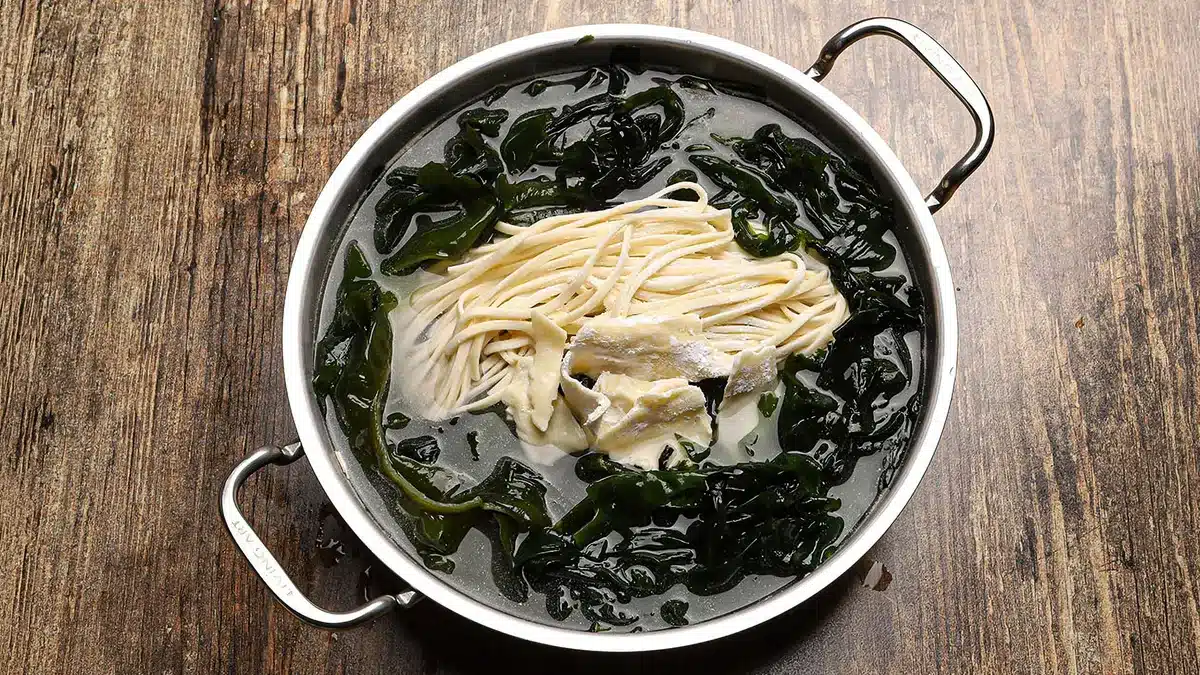
Moving to Busan, Oncheonjang Gitbaljip redefines the very concept of miyeokguk. This establishment, formerly a renowned mulhoe (raw fish soup) restaurant, has transformed into a destination for its unique guksujeongol (noodle hot pot) style miyeokguk. The broth, simmered with plump mussels and clams, forms the base of this exquisite dish. The addition of kalguksu (knife-cut noodles) and sujebi (hand-pulled dough flakes) is followed by dumplings, creating a hearty and complex soup. After a brief simmer, the restaurant’s signature dish, ‘Eomeo Miyeok Guksujeongol,’ is served. The broth is deep and flavorful, while the noodles are delightfully chewy. Alongside, a side of braised chicken feet offers an unexpected, yet welcome, culinary pairing. This innovative menu item has made Oncheonjang Gitbaljip a celebrated spot in Dongnae, a district known for its gukbap (rice soup) and milmyeon (cold wheat noodles).
Seoul: Refined Flavors at Pungjo Miyeok
Returning to the capital, Seongsu-dong’s Pungjo Miyeok has been a word-of-mouth favorite for years, even gaining popularity on local online communities. The restaurant offers a diverse range of miyeokguk, including varieties with beef, abalone, clams, and mussels. During the summer, the refreshing, sea-scented miyeokguk is particularly popular. A delightful aspect of dining here is the generous serving of grilled clams that accompanies orders of miyeokguk, adding an extra layer of flavor and enjoyment. Pungjo Miyeok employs a slow-cooking method, simmering the seaweed at a gentle 80°C for eight hours. This technique allows the flavors to deepen while preserving the seaweed’s natural vibrant green color and crisp texture. The result is a broth that is both rich and light, with seaweed that remains tender yet retains a pleasant bite. The abalone miyeokguk, in particular, is praised for its delicate flavor, with the tender abalone melting into the broth, releasing a subtle sweetness and the fresh essence of the sea.
Chuncheon: Comforting Simplicity at Eosangak
Chuncheon, known for its picturesque lakes like Soyangho and Uiamho, is far from the sea, making seafood ingredients a relative rarity. Unlike cities with bustling fish markets, fresh seafood is not a common sight. This regional characteristic likely contributed to the scarcity of miyeokguk restaurants in the area. Eosangak in Chuncheon is operated by a retired couple who previously ran a restaurant called ‘Sikdangtanggi’ in Seoul’s Seongsu district. The restaurant offers a generous spread of side dishes, with free refills, featuring fresh vegetables like lettuce, cabbage, and perilla leaves, often enjoyed with fermented soybean paste. The Yangji beef miyeokguk is a signature dish, featuring ample amounts of tender beef that make the soup savory rather than rich. It offers a simple, comforting flavor reminiscent of homemade miyeokguk. For families with children, the affordable children’s miyeokguk (priced at 7,000 won) and the shrimp fried rice provide family-friendly options.
Miyeokguk: A Timeless Culinary Companion
Reflecting on these diverse culinary experiences, it’s clear that miyeokguk holds a special place in Korean cuisine. From the deep, oceanic notes of Tongyeong’s rock seaweed soup to the innovative noodle hot pot in Busan, the refined slow-cooked broth in Seoul, and the comforting simplicity in Chuncheon, each bowl tells a story. Miyeokguk has been a consistent presence at the Korean table, evolving from a restorative food to a versatile and beloved dish. Whether it’s the profound taste of the sea or the gentle warmth of a familiar flavor, miyeokguk consistently offers a nourishing and satisfying meal, embodying the essence of simple yet profound culinary comfort.
