

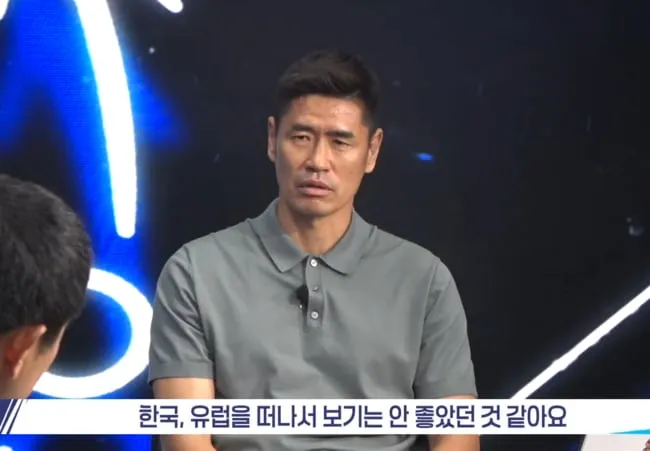
Former South Korean national team captain and European league veteran Seol Ki-hyeon has shared his thoughts on a recent on-field confrontation between Jeonbuk Hyundai Motors player Lee Seung-woo and Ulsan HD FC coach Kim Do-hoon. The incident occurred during a K League 1 match on July 22nd, where Jeonbuk secured a 1-0 victory over Ulsan. While the match itself was significant for the fierce ‘Hyundai derby’ rivalry, the altercation between Lee and Kim overshadowed the final score.
The Confrontation Unfolds
The dispute arose in the second half, around the 75th minute, when Jeonbuk was leading 1-0. Lee Seung-woo sustained a shoulder injury after a collision with Ulsan defender Seo Myung-gwan. While receiving treatment and being substituted due to the apparent dislocation, Lee expressed significant pain. The delay in play prompted audible frustration from the Ulsan supporters. Lee, in turn, responded to the crowd from the stands, escalating the tension.
This exchange caught the attention of the Ulsan bench, leading to a heated verbal exchange between coach Kim Do-hoon and player Lee Seung-woo. Both individuals exchanged strong words, requiring intervention from team officials and staff from both sides to separate them. The match referee, Ko Hyung-jin, issued yellow cards to both Lee and Kim.
Player’s Perspective: The Drive to Win
Following the match, Lee Seung-woo, who has a history of shoulder dislocations, downplayed his injury, stating, “It’s okay that I’m in pain. It happened before.” He elaborated on his mindset during the incident: “I play for Jeonbuk. Coach Kim represents Ulsan and is in a position to protect his team. As a Jeonbuk player, I wanted to win. I wasn’t on the field to say ‘I’m sorry’ or ‘Thank you.’ I acted out of a desire to win. I believe that’s what football is about.”
Coach’s Restraint: No Further Comment
Coach Kim Do-hoon, however, chose to be brief. “There’s nothing more to say separately,” he stated. “I was angry for other reasons, but I won’t elaborate on them. You can see what happened by watching the replay. I have no intention of discussing it further.” Reports suggest Kim’s anger was primarily fueled by Lee’s reaction to the Ulsan fans’ jeers.
The situation was further complicated by claims from one media outlet that Lee Seung-woo had used offensive language, allegedly referring to him as “that kind of player.” Both the Korea Football Association (KFA) and the referees’ association have vehemently denied these allegations.
Seol Ki-hyeon’s Expert Opinion
Amidst the ongoing controversy, which follows a previous clash between coach Cho Sung-hwan and a player, former national team star Seol Ki-hyeon weighed in on the incident. In a YouTube video released on July 25th on the channel ‘Alls’, Seol expressed his surprise at the confrontation.
Seol, who had a notable career playing in Belgium and England for clubs such as Anderlecht, Wolverhampton Wanderers, Reading, and Fulham, remarked, “When I watched it on TV, it was an extremely rare case. It’s very uncommon even in Europe.” He further elaborated on his experience:
- “I’ve seen players argue with opposing coaches, but confrontations between a player and their own coach are not frequent.”
- “It’s not a common occurrence in Europe either.”
Reflecting on the broader implications, Seol added, “Looking beyond just Korea and Europe, such scenes are not good to see.” He emphasized the importance of mutual respect within the sport, stating, “Although we do our best to win matches, I believe there’s a need for a certain level of respect. When we show consideration and compromise towards each other, it looks much better. What we saw was not a good image.”
Lee Young-pyo, also a former national team player and co-host of the YouTube show, echoed Seol’s sentiment, noting, “It’s not a common occurrence even in Europe.”
Broader Context and Implications
The incident highlights a recurring theme of intense emotions and sometimes volatile interactions within professional football. While passion and the drive to win are essential components of the sport, the line between competitive spirit and unsportsmanlike conduct can sometimes blur. The reactions from both Lee Seung-woo and coach Kim Do-hoon, though stemming from different immediate triggers, underscore the high stakes and pressures involved in top-tier football.
Seol Ki-hyeon’s commentary, drawing from his extensive experience in diverse footballing cultures, provides a valuable external perspective. His assertion that such direct confrontations between a player and their own coach are rare, even in the highly competitive European leagues, suggests that the incident in the K League may warrant further reflection by players, coaches, and the league itself on maintaining professional conduct and mutual respect.
The KFA’s swift denial of the alleged offensive language used by Lee Seung-woo is crucial in preventing further misinformation and ensuring a fair assessment of the situation. As the debate continues, the focus remains on how such incidents are managed and what lessons can be learned to uphold the integrity and sportsmanship of the league.
Conclusion: A Call for Respect
The clash between Lee Seung-woo and Kim Do-hoon serves as a stark reminder of the intense pressures within professional football. While the desire to win is paramount, former players like Seol Ki-hyeon and Lee Young-pyo advocate for a higher degree of mutual respect and sportsmanship. The rarity of such events, even in demanding leagues abroad, suggests that Korean football, like all professional leagues, should continue to foster an environment where competitive fire coexists with professional decorum. The incident underscores the need for players and coaches to manage their emotions, even in the heat of a crucial derby match, to maintain a positive image for the sport.
