

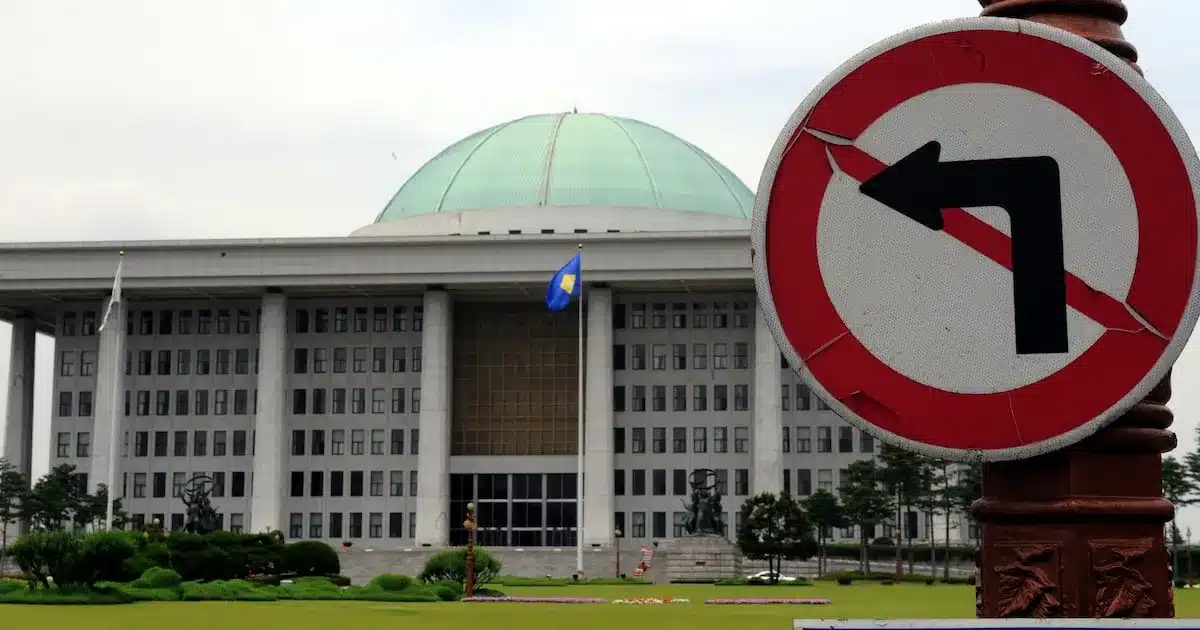
South Korea’s logistics industry is gearing up for the upcoming National Assembly audit, scheduled to commence on October 6th. With the Chuseok holiday and National Foundation Day falling close together, companies have a compressed timeframe to prepare, leading to an accelerated response compared to previous years. Several prominent companies and industry-wide issues are expected to be at the forefront of discussions during the audit.
Key Companies and Issues on the Audit Agenda
The logistics sector is bracing for scrutiny on several fronts. Coupang, which was a major focus of last year’s audit, is likely to be discussed again this year. However, the nature of the discussion may differ. Homeplus’s financial situation, the controversy surrounding Starbucks Korea’s ‘May 18 Tank Day’ event, and the long-standing issue of revising regulations for large retail businesses after 14 years are also anticipated topics. Furthermore, recurring industrial accidents at food companies like Maeil Dairies and Our Home are expected to be raised.
Homeplus Faces a Critical Juncture Before the Audit
Homeplus, the online supermarket, stands out as a company facing an immediate and critical decision regarding its future. The Seoul Bankruptcy Court had initially decided to dismiss the company’s restructuring plan on September 3rd. However, this decision was reversed when the largest creditor, Meritz Securities, committed to providing 200 billion won in Debtor In Possession (DIP) financing. This support led to the withdrawal of the dismissal ruling and an extension of the deadline for submitting the restructuring plan to September 4th. Homeplus subsequently reopened 67 stores on September 13th.
The September 4th deadline represents the absolute final date for any further extensions under bankruptcy law. This places Homeplus at a critical crossroads, with its fate—whether it continues operations or is liquidated—hanging in the balance just before the National Assembly audit begins. The National Assembly has a precedent for intervening in such situations. The Democratic Party had planned to hold a hearing for Meritz and MBK Partners on August 27th, but this was canceled after Meritz confirmed its 200 billion won investment. Instead, a briefing was held on September 21st, attended by the Democratic Party members due to the People Power Party’s absence. During this briefing, Democratic Party lawmakers focused their criticism on the alleged mismanagement by the Samhophond fund’s directors and the financial authorities’ accountability.
MBK Partners, the major shareholder, did not appear before the National Assembly. While the immediate threat of a hearing was averted due to the emergency funding, it is widely believed that the Homeplus issue will not disappear from the audit’s agenda. Discussions at the government level could potentially encompass not only MBK’s asset sales and management practices since its acquisition but also the Samhophond fund structure and Meritz’s loan and recovery processes. Attention is also focused on whether Kim Byung-ju, Chairman of MBK, will be summoned to testify for the second consecutive year.
Regulatory Revisions for the Logistics Industry
In light of Homeplus’s potential bankruptcy, the Special Committee for the Promotion of the Distribution Industry is expected to clash over proposed amendments to the Distribution Business Act. The bill, which includes provisions for allowing early morning deliveries by large retailers and easing mandatory business suspension rules, was sent to the Legislation and Judiciary Committee in May. Representative Kim Dong-a of the Democratic Party has proposed a bill that would permit unlimited online deliveries while maintaining restrictions on offline operations. In contrast, Representative Kim Sung-won of the People Power Party advocates for abolishing both late-night operating restrictions and mandatory business suspension rules.
The industry itself expresses skepticism about allowing early morning deliveries, citing the high costs associated with establishing dedicated logistics infrastructure and the substantial burden of delivery fees. They argue that the actual economic benefits might not be significant. This hesitation, coupled with opposition from small business owners and labor groups, has stalled discussions on the proposed revisions.
Coupang Faces Different Scrutiny This Year
Coupang, a dominant player that underwent significant government scrutiny last year, is expected to be a topic of discussion again. However, the focus of the scrutiny may shift. Following a 624.6 billion won fine for personal information leakage and ongoing legal proceedings in the U.S. House of Representatives regarding South Korea’s discriminatory regulations, the intensity of discussions surrounding regulation and reinvestment is likely to be less severe than last year.
Brian Mast, Chairman of the U.S. House Foreign Affairs Committee, stated in a Fox News interview on September 23rd (local time) that the South Korean government is providing preferential treatment to American companies like Coupang. He also alleged that South Korea is not fulfilling its promise to supply more semiconductors and advanced equipment to the U.S. Mast is known as a hardliner within the Republican Party. Separate from these trade issues, labor problems at Coupang could still draw attention. An accident occurred on September 23rd at a Coupang logistics center in Gwangju, Gyeonggi Province, where a worker in their 40s collapsed while operating a forklift and was taken to the ICU in critical condition. This incident has led to increased scrutiny from the Ministry of Employment and Labor.
Industrial Accidents at Food Companies Under Review
The Ministry of Employment and Labor is also investigating serious accidents at food processing plants. At a Maeil Dairies plant in Pyeongtaek, two workers in their 50s collapsed while cleaning a storage tank on September 9th, resulting in one fatality. This same plant experienced a fatal accident in April 2022, leading to an investigation for violating the Serious Accidents Punishment Act. However, the investigation was concluded without prosecution in January of this year.
At an Our Home facility in Yongin in June, a worker from a subcontracting company was caught in a conveyor belt. This incident occurred just one year after a similar fatal accident at the same plant. The Ministry of Employment and Labor has launched an investigation into potential violations of the Serious Accidents Punishment Act, and the Industrial Safety and Labor Policy Division is also conducting an inspection.
Starbucks Korea’s ‘Tank Day’ Controversy May Reach the Assembly
The controversy surrounding Starbucks Korea’s ‘Tank Day’ event is also highly likely to be brought before the National Assembly. There is considerable interest in whether Jung Yong-jin, Chairman of the Shinsegae Group, will be summoned to testify, as he was last year. Last year, the Fair Trade Commission summoned Chairman Jung as a witness concerning consumer data protection on online platforms.
Divergent opinions between the ruling and opposition parties are anticipated regarding this issue. The government’s response, including the Ministry of National Defense’s temporary suspension of a military welfare service agreement with Starbucks Korea, may be questioned. Specifically, debates could arise over whether the government’s actions constituted an appropriate response to a perceived boycott. The recent trend of Starbucks gradually resuming its social contribution activities is also lending weight to this perspective. The issue of product refunds, which has been a point of contention with consumers, is also under the purview of the Fair Trade Commission.
The Fair Trade Commission is currently reviewing whether to amend the standard terms and conditions for gift certificates to allow refunds for unused portions exceeding 60% of the value. There is also a possibility that discussions could escalate to regulations on advance payment deposits. With the National Assembly audit approximately one month away, the logistics industry is in a state of flux, grappling with both holiday season preparations and the demands for audit materials. A representative from the logistics industry commented, “Holiday peak season preparations and requests for audit data are arriving simultaneously. Since we don’t know what will be raised at the highest level, we have no choice but to prepare for all possibilities.””
