

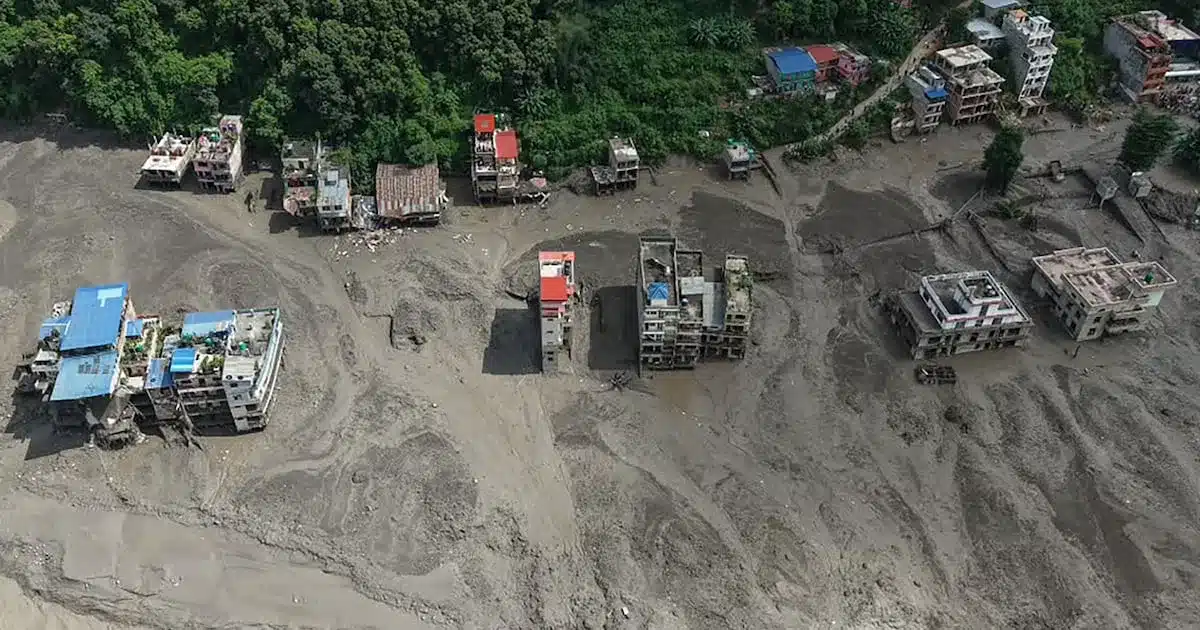
A sudden and severe flood in Nepal’s Rasuwa district has resulted in 384 tourists going missing, according to the Nepal Tourism Ministry. The deluge occurred on October 26th near the banks of the Bhote Kosi River, a popular trekking area in the Himalayas.
Devastating Flood Strikes Himalayan Region
The flash flood, which struck without warning, swept away tourists and locals in the Rasuwa region, situated approximately 120 kilometers north of the capital city, Kathmandu. This area is known for its stunning mountain scenery and is a gateway to treks in the region bordering China’s Tibet Autonomous Region.
Official figures compiled from ten different travel agencies indicate that 384 individuals are unaccounted for. The missing include 291 foreign nationals and 93 Nepalese citizens. Authorities have cautioned that the number of missing persons could potentially rise as more information becomes available and rescue operations continue.
Nationalities Affected by the Disaster
Among the missing foreign nationals, a significant number are Indian citizens. The Tourism Ministry reported that 105 individuals with Indian nationality are among the missing. This figure includes 37 Indian expatriates residing abroad who were visiting Nepal at the time of the disaster.
Other nationalities confirmed to be missing include:
- 17 Malaysian citizens
- 12 British citizens
- 4 citizens from the Republic of South Africa
- 3 American citizens
The nationality of 111 individuals remains unconfirmed as of the latest reports. Local news outlets have also reported at least 17 fatalities directly attributed to the floodwaters, with an additional 26 police officers also missing and presumed to be caught in the disaster.
Rescue and Recovery Efforts Underway
In response to the crisis, the Nepalese government has mobilized significant resources for search and rescue operations. The Nepalese Army and police forces have been deployed to the affected areas to conduct thorough searches for survivors and recover any victims. Their efforts are focused on locating those who may be trapped or swept away by the powerful currents.
Helicopters are being utilized to transport injured individuals from the remote disaster zone to hospitals in Kathmandu for urgent medical attention. The challenging terrain of the Himalayan region, combined with the suddenness of the flood, has complicated rescue efforts.
Understanding the Causes and Impact
While the exact cause of the sudden flash flood is still under investigation, heavy monsoon rains are the likely trigger. Nepal, situated in the Himalayas, is prone to landslides and flash floods, especially during the monsoon season, which typically runs from June to September. However, floods of this magnitude, particularly impacting tourist areas so severely, are a grave concern.
The Rasuwa district is a popular destination for trekkers and mountaineers, drawn by its proximity to popular trekking routes like the Langtang Valley trek. The disaster has disrupted tourism, a vital economic sector for Nepal, and raised concerns about the safety of infrastructure and early warning systems in remote mountainous regions.
The government is working to assess the full extent of the damage, which includes not only the human toll but also potential damage to trails, bridges, and local communities. International assistance may be sought as the recovery and rebuilding process begins.
Looking Ahead: Safety and Preparedness
This tragic event underscores the vulnerability of mountainous regions to extreme weather events and the importance of robust disaster preparedness and response mechanisms. The Nepalese authorities are expected to review safety protocols for trekking routes and tourist areas, especially in light of climate change potentially increasing the frequency and intensity of such natural disasters.
The focus remains on the ongoing search and rescue operations and providing support to the families of those affected by this devastating flood. The international community is watching closely, with many nations offering condolences and support to Nepal during this difficult time.
