

South Korea is preparing for a potentially hotter-than-average summer, with experts urging the nation to bolster its defenses against extreme heatwaves, drawing lessons from the devastating impacts seen in Europe. A recent inter-agency meeting convened by the Ministry of the Interior and Safety highlighted the urgent need for proactive measures, including enhanced public health monitoring and infrastructure improvements, to mitigate the risks associated with super heatwaves.
European Heatwave Crisis and Its Implications
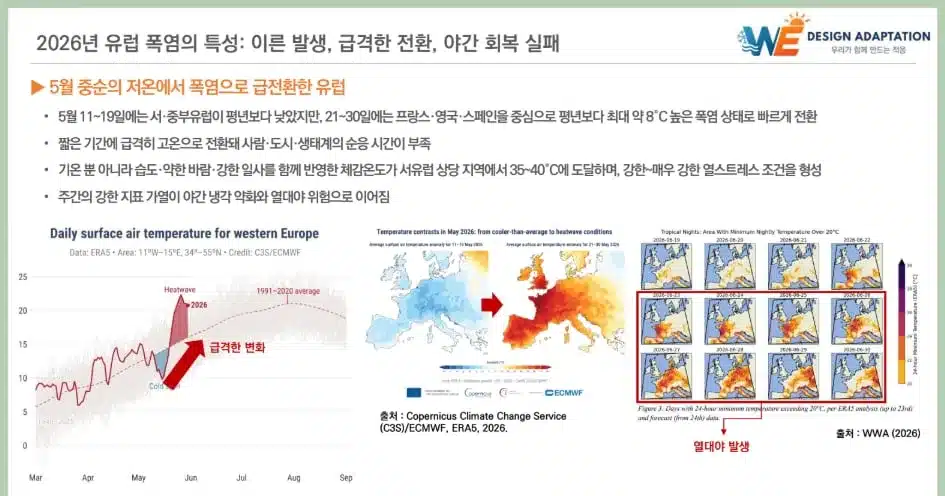
The recent surge of ‘super heatwaves’ across Europe, characterized by prolonged periods of exceptionally high temperatures, has served as a stark warning. Experts at the meeting, including meteorologists and public health officials, analyzed the causes and consequences of these extreme weather events. Dr. Kim Ho, a professor at Seoul National University’s Graduate School of Public Health, explained that the European heatwaves were exacerbated by atmospheric phenomena like heat domes and Omega blocking patterns, which trapped hot air over Southern and Central Europe.
“From late June, heat domes and Omega blocking patterns became stationary over Southern and Central Europe,” Dr. Kim stated. “This led to average temperatures being 5 to 12 degrees Celsius higher than the seasonal norm. It’s estimated that approximately 190 million people were exposed to temperatures exceeding 35 degrees Celsius.”
The human cost of these events was significant. Dr. Kim cited figures from the French Public Health Agency, indicating that around 1,000 excess deaths occurred during the three-day peak of the heatwave in France. This grim reality underscores the vulnerability of populations to extreme heat, particularly in regions with lower air conditioning penetration.
Lessons for South Korea: Vulnerable Populations and Infrastructure
The experiences in Europe have prompted urgent calls for South Korea to re-evaluate its own preparedness for similar extreme heat events. Dr. Kim emphasized the need to reassess cooling infrastructure and implement real-time health monitoring systems, especially for heat-vulnerable groups.
Chae Yeo-ra, a researcher at the Korea Environment Institute, pointed out that the relationship between temperature and mortality is not linear. “The risk of death from high temperatures doesn’t increase uniformly; it shows a sharp, non-linear rise after a certain threshold,” she explained. “Working environments also play a significant role in exacerbating heatwave impacts.”
Ms. Chae further elaborated on the cascading effects of heatwaves, describing the European situation as a “complex disaster” that simultaneously strained transportation, electricity, and water infrastructure. Water shortages, she noted, can impede cooling and hydroelectric power generation, while reduced electricity supply can weaken the very systems designed to protect vulnerable populations, potentially leading to a vicious cycle of risks.
Enhancing Public Cooling Facilities and Access
A key recommendation emerging from the discussions is the critical need to strengthen public health infrastructure, particularly access to cooling centers. “Expanding the operating hours of public cooling centers to include evenings and weekends, and improving accessibility within communities, are essential health protection measures to reduce heatwave casualties,” Ms. Chae urged.
She also stressed the importance of a granular approach to risk management. “We need to meticulously manage regional risk factors by segmenting them, such as the elderly, low-income households, outdoor workers, and those living in inadequate housing,” she added.
Government Initiatives and Future Outlook
In response to these growing concerns, the South Korean government has been enhancing its heatwave response system. Starting this year, a new ‘Super Heatwave Warning’ level has been introduced, supplementing the existing special heatwave advisory system. This new warning is issued when daily maximum temperatures are forecast to exceed 39 degrees Celsius (or a perceived temperature of 38 degrees Celsius).
The Korea Meteorological Administration (KMA) forecasts that the average temperature across the country from July to September will be higher than the average for previous years. Noh Gyeong-suk, head of the KMA’s Climate Change Impact Assessment Division, attributed this prediction to several factors.
“The high sea surface temperatures in the Indian Ocean and the North Pacific are influencing the strengthening of high-pressure systems over the eastern part of our country,” Noh explained. “This increases the likelihood of high temperatures due to the inflow of warm southerly winds and increased solar radiation.”
A Global Challenge Requiring Collective Action
Kim Yong-gyun, the head of the Ministry of the Interior and Safety’s Disaster Management Bureau, reiterated that extreme heat events driven by climate change are a global challenge requiring a unified response. “We will thoroughly analyze overseas cases and collaborate with experts to enhance our heatwave response capabilities, thereby protecting the lives and safety of our citizens,” he pledged.
The proactive stance and the focus on learning from international experiences signal a determined effort by South Korea to build resilience against the escalating threat of extreme heat, ensuring the well-being of its population in the face of a changing climate.
