

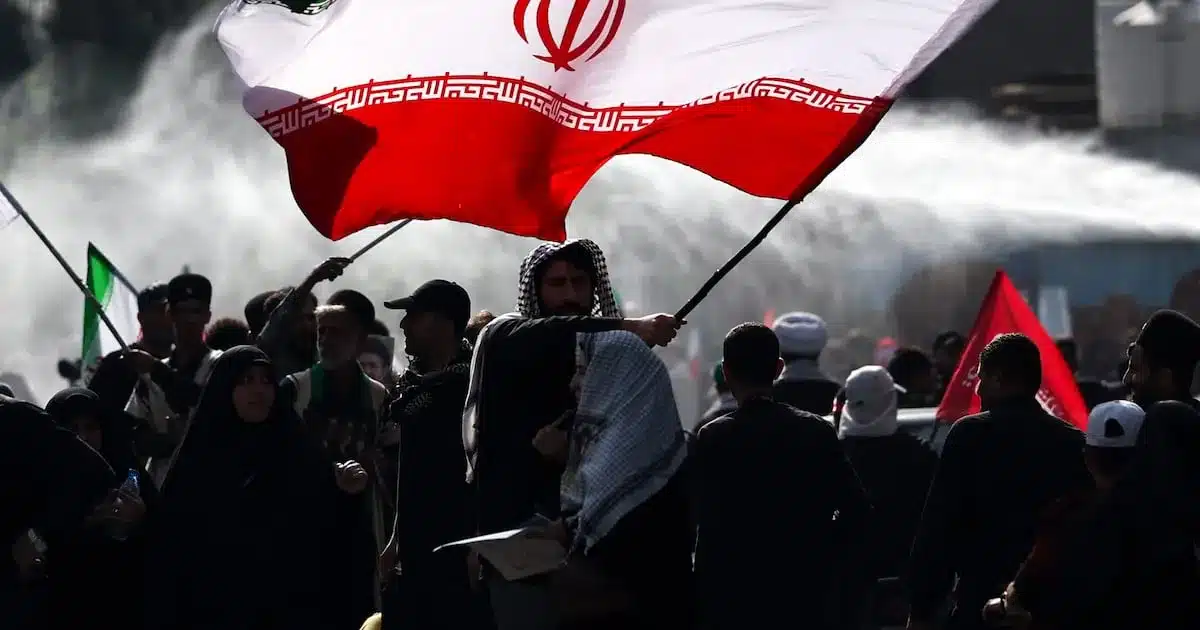
Iran has issued a strong condemnation following the United States’ imposition of sanctions, which were enacted in response to an incident involving an Iranian attack on a commercial vessel in the Strait of Hormuz. The Iranian Foreign Ministry declared that Tehran would take decisive measures to protect its national interests and security, issuing a stern warning to Washington.
Iran’s Strong Rejection of US Actions
In a statement released shortly after the US sanctions were announced, Iran’s Foreign Ministry conveyed a serious message to the United States. “Iran strongly warns the United States against the consequences of its actions that violate international law,” the statement read. “Tehran will take decisive measures to protect its national interests and national security.”
The ministry further elaborated on its grievances, specifically addressing the US decision to revoke waivers that had previously exempted Iranian oil sales from sanctions. Iran views this move as a violation of a Memorandum of Understanding (MOU) aimed at maintaining peace, and holds the United States responsible for the repercussions of this decision. This action by the US is seen by Iran as a breach of prior agreements and a destabilizing move in the region.
US Justification for Sanctions
The US military’s Joint Staff confirmed that the sanctions were a direct response to Iran’s actions. They stated that the US had launched significant punitive measures against Iran following an Iranian attack on a commercial ship in the Strait of Hormuz, a critical waterway for global oil transit. The US military emphasized that the attack, which targeted a civilian vessel, was an unacceptable act of aggression.
“This action is intended to impose significant costs on Iran for targeting a civilian ship as a pretext for attacking international shipping,” a US military spokesperson explained. “Iran’s aggression is not only dangerous but also a clear violation of international norms and maritime law.” The US maintains that its response is proportionate and necessary to deter further hostile actions and ensure freedom of navigation in the vital Strait.
Economic Repercussions: Waivers Revoked
Coinciding with the military sanctions, the US Treasury Department also announced the revocation of sanctions waivers related to Iranian oil sales. This move effectively reimposes restrictions on transactions involving Iranian crude oil, impacting Iran’s primary source of revenue. Previously, under the terms of an MOU between the US and Iran aimed at de-escalating tensions, the US had granted a 60-day grace period allowing for the production, processing, and trading of Iranian crude oil.
The revocation of these waivers signals a hardening of the US stance on Iran’s oil exports, aiming to exert maximum economic pressure. This decision is expected to have significant implications for global oil markets and Iran’s economy, potentially leading to increased oil prices and reduced supply. The US has stated that this measure is part of a broader strategy to curb Iran’s financial capabilities and influence in the region.
Reports of Explosions in Iran
Following the US announcement of sanctions and the revocation of waivers, reports emerged of explosions occurring in various locations within Iran. Iranian state media, including the Islamic Republic of Iran Broadcasting (IRIB), reported multiple explosions in the Gashum Island area, as well as in Sirik. Additionally, several explosions were reportedly heard in Bandar Abbas, the capital of Hormozgan Province.
The exact nature and cause of these explosions remain unclear. It is not immediately apparent
