

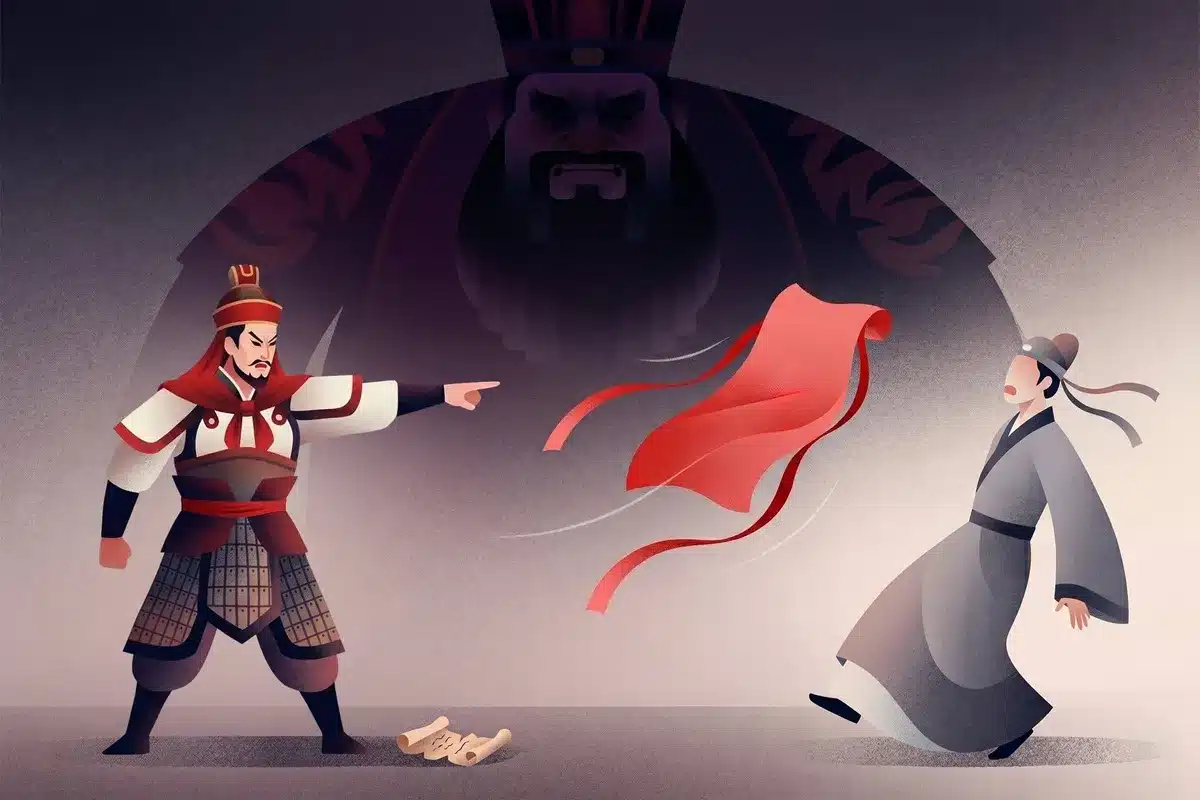
The tumultuous era of the Three Kingdoms was marked by shifting alliances, brutal warfare, and the relentless pursuit of power. Amidst this chaos, the actions of key figures like Dong Zhuo and Sun Jian dramatically shaped the fate of the Han Dynasty. This period saw Dong Zhuo’s audacious seizure of the capital and Sun Jian’s initial, yet ultimately thwarted, advance, setting the stage for a bitter confrontation.
Dong Zhuo’s Reign of Terror and Sun Jian’s Initial Setback
Dong Zhuo, a powerful warlord, plunged the capital into turmoil, setting the imperial palace ablaze. Simultaneously, Sun Jian, a formidable general, concealed the imperial seal, a move that signaled a breach of his sworn oath. These events were pivotal in escalating the conflict.
Sun Jian’s Frustration and Confrontation
Sun Jian, enraged by the unfolding events, expressed his deep frustration. He had personally led his troops to the front lines, facing Dong Zhuo’s forces under a hail of arrows and stones, risking his life in the process. His efforts were aimed at two primary objectives: upholding justice for the nation by deposing the tyrannical Dong Zhuo, and addressing personal grievances stemming from Dong Zhuo’s actions against his family.
Despite his personal sacrifices and the critical situation on the battlefield, Sun Jian felt betrayed. He believed that Dong Zhuo, influenced by slanderous reports, had failed to provide adequate supplies and reinforcements to his troops. This perceived neglect led to Sun Jian’s tactical retreat, a decision that fueled his anger.
Upon receiving news of this setback, Yuan Shu, an ally, dispatched a message urging Sun Jian to advance. Sun Jian, accompanied by two of his generals and the imperial seal, proceeded to Yuan Shu’s camp to confront the situation directly. There, Sun Jian used a stick to draw in the dirt, vividly illustrating his grievances to Yuan Shu.
Sun Jian declared, “Dong Zhuo was never my sworn enemy. Yet, I have risked my life, fighting on the front lines, facing death unflinching, for two reasons. First, to uphold justice for the nation by deposing a traitor. Second, to avenge my family’s honor. However, the general only listened to slanderous words and refused to send me the necessary provisions and reinforcements. This is why I was defeated by the enemy. Are you satisfied now, General?”
Yuan Shu, taken aback and unable to respond, sought to appease Sun Jian. He ordered the execution of a man who had previously slandered Sun Jian, attempting to mend the rift.
A Proposal of Marriage and Sun Jian’s Outrage
At this critical juncture, a messenger arrived from Dong Zhuo’s camp, requesting an audience with Sun Jian. The messenger, identified as Yi Ji, a general serving under Dong Zhuo, conveyed a surprising proposal.
Yi Ji approached Sun Jian and whispered, “Our lord, Dong Zhuo, considers you the only respected figure in the land. He has specially sent me to ask about the matter of your household. The lord wishes to arrange a marriage alliance between your esteemed father and his son, proposing a hundred-year pact.”
Sun Jian reacted with immense fury. He rebuked Yi Ji vehemently, stating, “Dong Zhuo is a traitor who defies heaven and overthrows the imperial court! I am sworn to exterminate his entire clan and bring him to justice. How dare he propose a marriage alliance with such a traitor? I should have you executed on the spot, but I will restrain myself. Return immediately and tell Dong Zhuo to abandon this foolish idea. If there is any hint of such a proposal again, your own life will be forfeit!”
This exchange highlights the deep animosity between Sun Jian and Dong Zhuo, fueled by Dong Zhuo’s tyrannical actions and Sun Jian’s quest for justice and personal vengeance. The proposed marriage alliance was not only rejected but met with extreme hostility, underscoring the irreconcilable nature of their conflict.
The Broader Context: The Three Kingdoms’ Struggle for Legitimacy
The events involving Dong Zhuo and Sun Jian occurred during a period of profound instability following the Yellow Turban Rebellion and the subsequent fragmentation of central authority. Dong Zhuo’s rise to power was characterized by his ruthless consolidation of control over the young Emperor Xian and the imperial court, effectively making him the de facto ruler of the Han Dynasty.
His actions, such as moving the capital to Chang’an and burning Luoyang, were seen as acts of barbarism and defiance against the established order. These actions galvanized opposition from various regional warlords, including Sun Jian, who saw themselves as legitimate inheritors of the Han legacy.
Sun Jian, often referred to as the “Tiger of Jiangdong,” was a skilled military commander who gained significant influence in the southern regions. His participation in the coalition against Dong Zhuo was a crucial moment, demonstrating his commitment to restoring the Han Dynasty. However, internal divisions and strategic miscalculations within the coalition, as well as Dong Zhuo’s military strength, ultimately prevented a decisive victory against him at that stage.
The narrative of Sun Jian’s personal grievances, his frustration with his allies, and his outright rejection of Dong Zhuo’s overtures paint a picture of a determined leader fighting on multiple fronts. His confrontation with Yuan Shu and his furious dismissal of Dong Zhuo’s envoy underscore his unwavering resolve to see Dong Zhuo brought to justice.
Legacy and Historical Significance
While Dong Zhuo was eventually assassinated by his own adopted son, Lü Bu, in 192 AD, the power vacuum he left led to further fragmentation and conflict among the warlords. Sun Jian himself met an untimely death in 191 AD during a campaign against Liu Biao, another regional governor.
Despite their relatively short-lived direct confrontation, the actions of Dong Zhuo and Sun Jian were instrumental in the unfolding drama of the late Han Dynasty. Dong Zhuo’s tyranny accelerated the collapse of central authority, while Sun Jian’s campaigns represented a significant challenge to his power and a testament to the aspirations of those seeking to restore order. Their conflict serves as a vivid illustration of the personal ambitions, political machinations, and military struggles that defined the Three Kingdoms period, a period that continues to capture the imagination through historical accounts and popular culture.
