

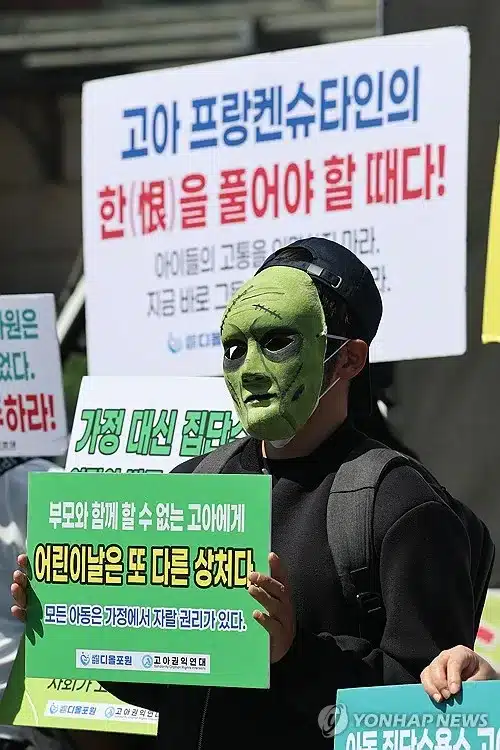
Survivors of the A Children’s Home in Jecheon, South Korea, have come forward with harrowing accounts of physical, emotional, and sexual abuse that allegedly occurred over several decades. In a series of interviews, individuals who spent their childhoods at the facility described systematic mistreatment, including severe beatings, deprivation of food, and sexual misconduct by staff members.
Systematic Abuse and Neglect
The testimonies, gathered over multiple interviews with 15 former residents now in their teens to thirties, paint a grim picture of life at the orphanage. One survivor recounted receiving a doll as a graduation gift from kindergarten, only to be severely beaten upon returning to the facility for opening the package.
Another survivor, who was only four years old, recalled being beaten and held down by a teacher for vomiting due to illness. The severity of the abuse was such that even holidays like Christmas and Children’s Day, when gifts were received, saw them confiscated and stored away. These gifts were never given to the children.
The survivors also allege that their discovery as abandoned infants lacked proper investigation by the police to find their parents. Following this, they endured abuse that they describe as beyond imagination. Their lives were reportedly ruined even after leaving the facility. They contend that government bodies, including the Ministry of Health and Welfare, city halls, and the police, failed to prevent the violence, making them victims of state-sanctioned abuse.
Baek Sung-hyun, a representative for the A Children’s Home Survivors’ Fact-Finding and Emergency Response Committee, stated that measures such as reinvestigation of abuse, punishment of perpetrators, and compensation for victims are necessary. He also called for the immediate departure of any perpetrators still working at the facility. Baek noted that over a decade ago, the punishment for perpetrators often amounted to a mere fine of 1.5 million won for the director. He emphasized the need for a thorough investigation into why proper investigations and punishments were not carried out at the time.
In May 2013, the National Human Rights Commission of Korea confirmed instances of child abuse within the A facility, citing cruel practices such as operating a “time-out room” (solitary confinement) and forcing children to eat raw chili peppers and garlic for not obeying orders.
Detailed Accounts of Abuse
The interviews revealed a range of disturbing incidents:
- Sexual Misconduct: One former resident, Ji-hoon, described a facility manager named 000 who allegedly subjected children to sexual molestation both inside and outside the facility, including in cars and during mealtimes. This behavior, which involved touching their genitals, reportedly occurred repeatedly during elementary school years, with multiple victims.
- Inadequate Facilities and Privacy: Ru-a recounted severe restrictions on bathroom use, with children often needing to go in groups and having limited time. Bathrooms lacked doors and partitions, forcing children to use them in full view of others, leading to feelings of shame and sexual humiliation.
- Physical Violence and Medical Neglect: Yong-hoon shared a traumatic experience at age seven where a teacher allegedly grabbed his hair and forcibly penetrated him with a sharp object near a window, causing significant bleeding and requiring surgery. The area on his scalp reportedly remains scarred and hairless. He stated the teacher never apologized. Survivors also reported being denied medical attention for injuries like eye infections unless the injuries were extremely severe. They were allegedly told by staff to pretend they weren’t sick when potential donors visited.
- Punishment for Illness and Injury: Ji-hoon described being beaten and held down by a teacher at age four for vomiting due to illness, an event he still vividly remembers. Ru-a recounted being severely beaten upon returning from school after accidentally cutting her hand with a craft knife. To avoid reporting by school teachers, the facility allegedly sent them to school under false pretenses when they had visible injuries.
- Confiscation of Gifts: Chan-in explained that Christmas gifts, even those specifically requested, were taken by staff and stored away, leaving the children unable to play with them. Do-young recalled posing for photos with donors but then having to leave the gifts behind. Ru-a mentioned being beaten for opening a graduation gift from kindergarten. Dae-han reported being denied dinner for receiving a gift from a friend’s mother.
- Control Over Basic Needs: The survivors described being treated like property, with even receiving gifts being subject to control. Dae-han stated that during school picnics, they received only kimbap while friends bought snacks with their allowance. Ru-a recalled receiving a packed lunch from a sympathetic teacher because they had nothing from their parents.
- Lack of Support for Talents: Dae-han expressed a desire to pursue sports like track and field or badminton, a wish that was dismissed by facility staff who insisted he focus on studies. Despite his athletic talent, he was often forced to represent the facility in sports competitions, fearing punishment if the staff found out.
- Post-Traumatic Stress and Suicide Attempts: Chan-in revealed a suicide attempt at age 23 due to a bleak future and lack of purpose, an attempt thwarted by a former teacher who had taught them English. Yong-hoon also contemplated suicide, questioning why he was abandoned at that specific facility, as his life was ruined there.
- Ongoing Demands for Justice: The survivors are demanding a reinvestigation into the abuse at A Children’s Home, prosecution of perpetrators, and compensation for victims. They also seek an investigation into why the 2013 investigation was inadequate and the roles played by various government agencies at the time.
Specific Incidents of Abuse
Further details emerged regarding specific forms of abuse:
- Physical Discipline: Children were subjected to collective physical punishment, often starting with basic positions like kneeling but escalating to holding limbs while striking the body. In one instance, a teacher allegedly kicked a child at one end of a line, causing a domino effect of children falling. Various tools were reportedly used for beatings.
- Solitary Confinement: The facility reportedly operated a “solitary confinement room” where children could be held for over two months. Inside, they were forced to read the Bible or study Chinese characters and English words. Access to the bathroom was restricted, sometimes requiring children to urinate in containers within the room.
- Sexual Abuse by Staff: A female teacher allegedly forced a male elementary school student to undress and had him massage her buttocks and thighs. Another female teacher reportedly touched the private parts of male elementary students while bathing them. Some female teachers allegedly made children hug them at night, massaging their buttocks and waist for over two hours.
- Abuse During Transportation: A 승합차 (van) used for transporting children to church or school was also a site of abuse. Children who misbehaved or fought were allegedly forced to kneel on the floor with their heads against the van’s floor, and struck with a prepared stick if they lifted their heads.
- Humiliation and Degradation: Children were punished for looking out of windows, with the director allegedly calling staff to administer punishments like meal deprivation. Young children had their heads submerged in toilet water. In winter, they were forced to hold cold iron pipes. Girls were given insufficient sanitary products, leading to accidents and further humiliation. Children who wet the bed at night were forced to wear their soiled underwear on their heads while circling the room, shouting self-deprecating phrases.
- Forced Kissing and Medication: A facility teacher allegedly instructed 7- to 8-year-old boys and girls to kiss each other for amusement, causing distress to the children. Children were also reportedly given ADHD medication without a doctor’s prescription, with staff checking their mouths to ensure they swallowed it.
The survivors’ testimonies highlight a systemic failure to protect vulnerable children and underscore the urgent need for accountability and justice.
