

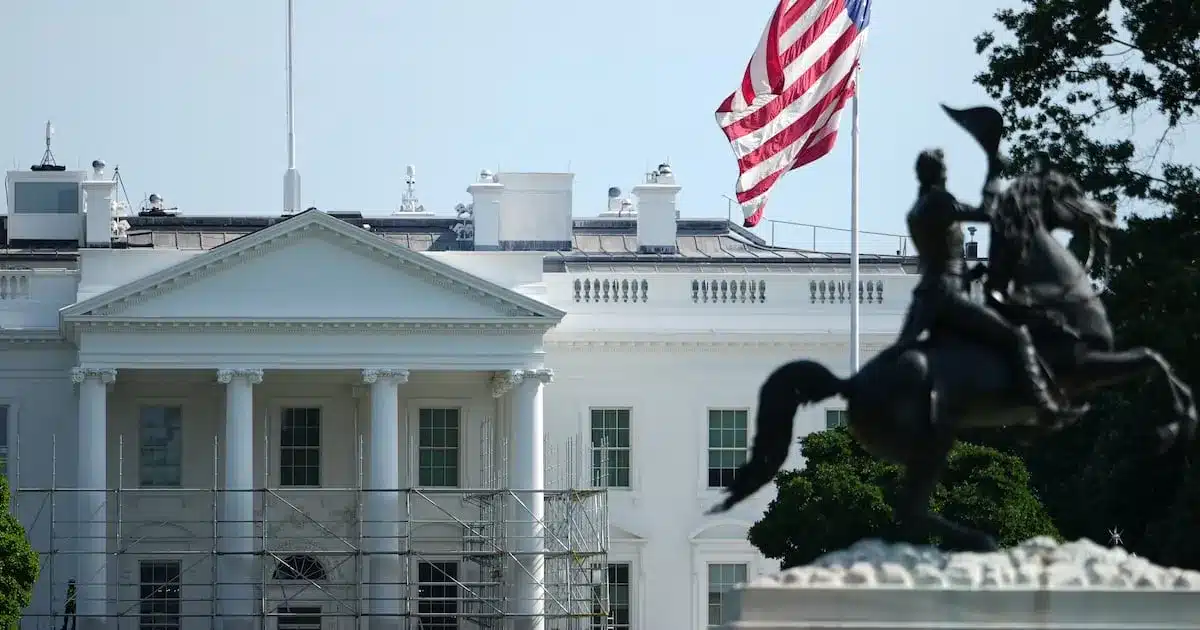
The U.S. White House has asserted that the South Korean government is specifically targeting American companies, citing the e-commerce giant Coupang as a prime example. This claim emerged in response to a report presented to the U.S. Senate Foreign Relations Committee, often referred to as the ‘Coupang Report’.
Allegations of Discriminatory Practices
A spokesperson for the White House stated that the Trump administration was deeply concerned about South Korea’s alleged practice of singling out U.S. technology firms. According to reports from Yonhap News Agency on the 2nd (local time), the spokesperson emphasized that regardless of the rationale, the Lee Jae-myung administration appears to be deliberately targeting Coupang. The spokesperson further added that the Trump administration would not tolerate unfair trade practices, including restrictions on market access for U.S. digital services.
The aforementioned 35-page report, released the previous day, detailed accusations that the South Korean government has been treating U.S. companies, including Coupang, in a discriminatory manner. The report, based on evidence and documents obtained by the committee, contended that South Korea has historically targeted U.S.-owned companies for decades, with this preferential treatment becoming even more pronounced recently.
Focus on the Coupang Case
The report specifically focused on the case of Coupang. It characterized the recent personal information leakage incident at Coupang as an ‘unauthorized access to a data system by a pre-existing employee, fueled by dissatisfaction.’ The report further alleged that the South Korean government used this incident as a pretext to launch a comprehensive offensive.
South Korea’s Rebuttal
In response to these allegations, South Korea’s Ministry of Foreign Affairs expressed regret, stating that the report unilaterally reflects the claims of Coupang. The ministry asserted that the report deviates from the facts and that South Korea’s official position and the facts presented to the U.S. Senate Foreign Relations Committee were not adequately reflected.
The South Korean government maintains that its actions are based on established legal and regulatory frameworks, and not on discriminatory intent. Officials have indicated that the report failed to consider the nuances of South Korean law and the specific circumstances surrounding the Coupang incident. They argue that the report presents an incomplete picture by focusing solely on the allegations without acknowledging the government’s perspective or the evidence provided by South Korean authorities.
Context of U.S.-South Korea Trade Relations
This exchange highlights ongoing tensions in the trade relationship between the United States and South Korea. While both nations are key economic partners, disagreements have arisen over market access, regulatory practices, and the treatment of foreign companies. The U.S. has historically advocated for a level playing field for its businesses operating abroad, while South Korea emphasizes its sovereign right to regulate its domestic market according to its own laws and policies.
The report’s focus on Coupang, a significant player in the South Korean e-commerce landscape, underscores the economic importance of the sector and the potential impact of trade disputes on major corporations. Coupang, which has invested heavily in logistics and technology in South Korea, is a prominent example of a U.S.-linked company operating within the Korean market.
The personal information leak incident at Coupang, mentioned in the report, involved unauthorized access to customer data. Such breaches are taken very seriously by regulatory bodies worldwide, and investigations typically follow to determine the cause and implement corrective measures. The South Korean government’s response to this incident, as framed by the U.S. report, has become a point of contention.
Broader Implications
The White House’s statement suggests a broader concern that South Korea’s regulatory environment may be creating barriers for U.S. companies. This could have implications for future investment and trade between the two countries. The U.S. administration has previously voiced concerns about trade imbalances and market access issues with several trading partners, and this instance with South Korea appears to be part of that ongoing dialogue.
South Korea, on the other hand, often argues that its regulations are designed to protect consumers and ensure fair competition within its market, and that foreign companies must adhere to these standards. The Ministry of Foreign Affairs’ response indicates a commitment to defending its regulatory autonomy and correcting what it perceives as misrepresentations in the U.S. report.
Moving forward, the differing perspectives on this issue will likely necessitate further diplomatic engagement. Both governments will need to address the specific concerns raised while upholding their respective trade principles and ensuring a stable economic relationship. The outcome of these discussions could influence how U.S. companies are treated in South Korea and vice versa, impacting the broader landscape of bilateral trade and investment.
