

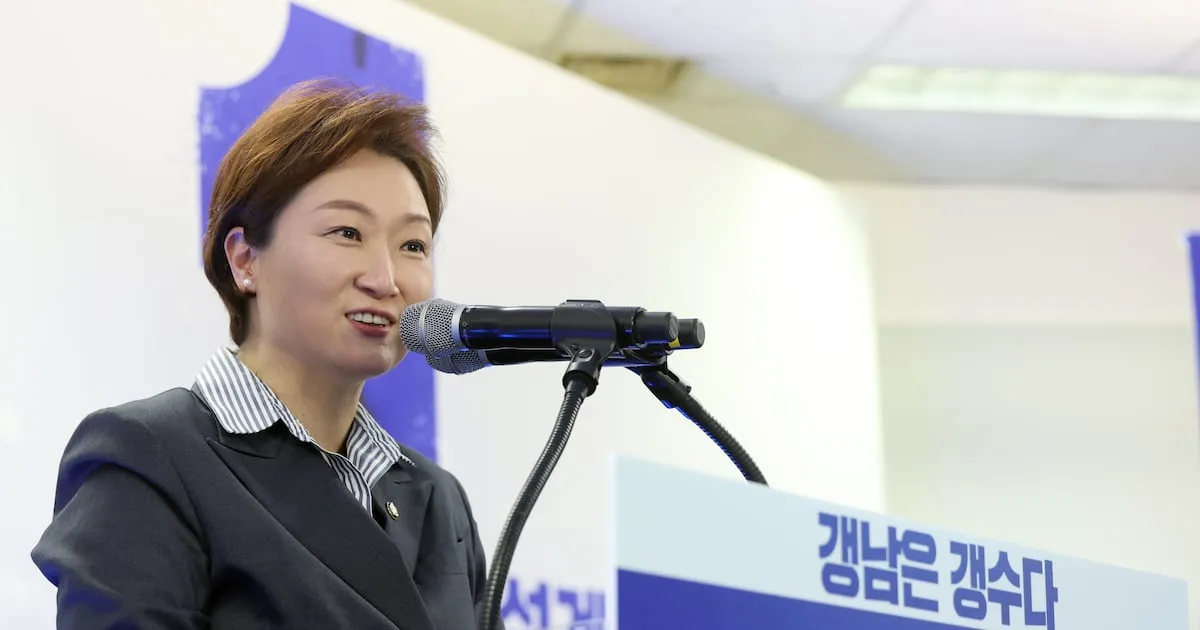
Lee Won-ju, a member of the Democratic Party of Korea, has voiced strong objections to her exclusion from key Assembly committee appointments, questioning the fairness of the process. She alleges that she was deliberately left out of consideration for positions such as the Standing Committee Chairmanship without proper explanation from her party’s leadership.
Lee Won-ju’s Grievance Over Committee Assignments
In a social media post on July 3rd, Lee Won-ju expressed her dismay, drawing parallels to a neighborhood gathering where fairness in seating arrangements is expected. She stated, “It feels like positions of authority within the National Assembly, like the Standing Committee Chairmanship, were divided up, and I was the only one left out.”
Lee elaborated on the traditional criteria previously used for assigning these roles. She noted that historically, assignments considered factors such as seniority (first term, second term, etc.), expertise, and gender representation. She pointed out that she, as an investment lawyer and someone with a background in industry, had expressed interest in chairing committees related to the economy and industry, such as the Industry Committee or the SMEs and Startups Committee. She believed her party’s leadership had acknowledged her interest.
“I asked what the criteria were, but I received no answer and no phone call,” Lee stated, emphasizing her frustration. “While it’s not mandatory to hold a chairmanship, shouldn’t there be at least a basic level of fairness and public accountability in how these decisions are made? Is this political retribution?” she questioned.
Allegations of Political Retribution and Defiance
Lee further suggested that divisive posts targeting her were circulating within certain online communities. She declared her refusal to engage in further political maneuvering or “defection,” a term sometimes used in Korean politics to describe lawmakers switching parties or factions. “If you want to push me out, go ahead. I won’t leave on my own,” she asserted.
Identifying herself as a representative of the “middle-of-the-road conservatives” within the Democratic Party, Lee referenced her consistent stance on various political issues. She recalled advocating for moving past divisive political battles, such as the controversy surrounding former Justice Minister Cho Kuk. “Many party members who stood with me then, and who now agree that my initial stance was correct, offer me great comfort,” she added.
Context of Assembly Committee Roles
The National Assembly committees play a crucial role in the legislative process. They are specialized bodies responsible for reviewing bills, conducting investigations, and holding hearings within their respective domains. Key committees include those focused on legislation, finance, foreign affairs, and industry. The selection of committee chairs and members is typically a strategic process influenced by party leadership, aiming to balance expertise, political considerations, and factional representation within the ruling and opposition parties.
Lee Won-ju’s background as an investment lawyer suggests a potential qualification for economic or industry-related committees. Her public statements indicate a belief that her qualifications and experience were overlooked in the recent appointment process, leading to her accusations of unfairness and potential political motivation behind the decision.
The situation highlights the internal dynamics and political considerations that often shape committee assignments within South Korean political parties. Lee’s public criticism underscores a debate about transparency and fairness in these internal party decisions, particularly when a lawmaker feels excluded without clear justification.
