

A legal vacuum may emerge regarding the ability of legal assistants, known as beopmusa in South Korea, to file complaints and statements with a new investigative agency, the Corruption Investigation Office for High-ranking Officials (CIO), as the Prosecutor’s Office is set to be abolished. This potential legal gap stems from a proposed amendment to the Beopmusa Act that designates the CIO as an authorized recipient of legal documents but omits it from the list of agencies legal assistants can serve.
Legislative Overhaul Creates Ambiguity for Legal Assistants
The impending dissolution of the Prosecutor’s Office on October 2, 2026, marks the creation of the CIO, a new body tasked with investigating corruption among high-ranking officials. However, a significant legal debate is brewing over whether beopmusa will be permitted to draft and submit legal documents, such as complaints and accusations, to this new agency. The crux of the issue lies in the wording of the proposed amendment to the Beopmusa Act, which is currently under review by the National Assembly’s Legislation and Judiciary Committee.
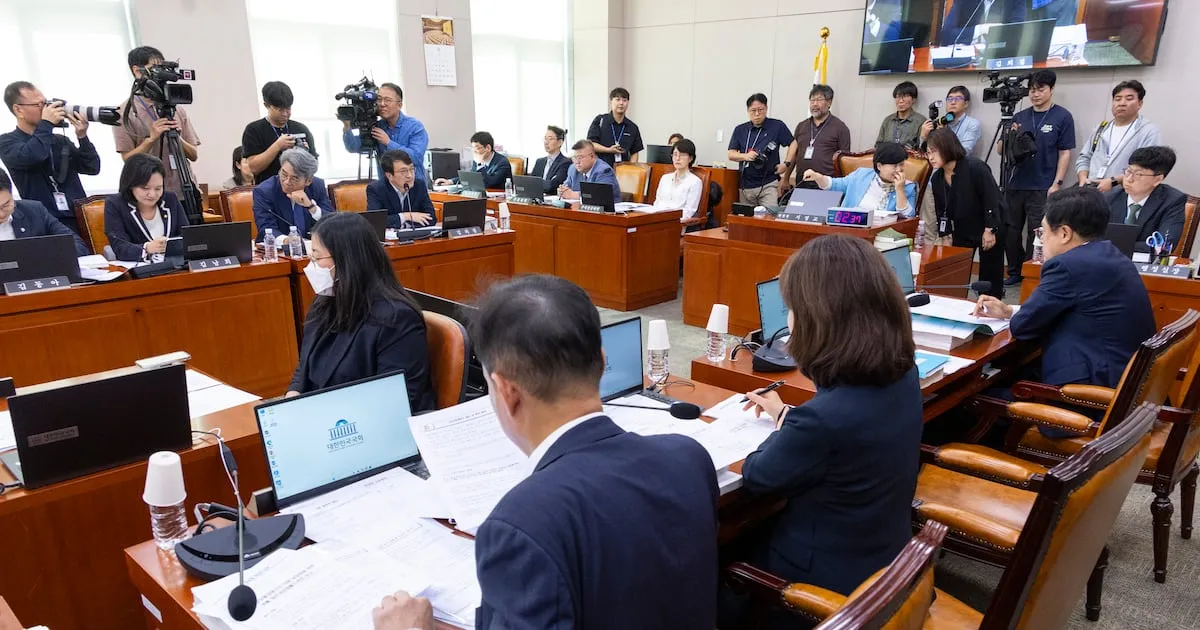
The amendment, spearheaded by Representative Kim Dong-a of the Democratic Party of Korea, aims to adapt the existing legal framework to the abolition of the Prosecutor’s Office. It is being considered alongside six other legislative proposals, including revisions to laws governing prosecutors and criminal procedure. The current Beopmusa Act allows these legal professionals to draft and submit documents to courts and the Prosecutor’s Office, as well as prepare related legal paperwork. While they cannot represent clients in trials like lawyers, their role in preparing documents such as complaint statements, counter-arguments, and preparatory briefs is well-established.
Shifting Legal Landscape: From Prosecutor’s Office to CIO
The complication arises with the disappearance of the Prosecutor’s Office. The amendment under consideration proposes replacing the term ‘Prosecutor’s Office’ with ‘CIO’ in the relevant sections of the Beopmusa Act. This change would redefine the scope of work for beopmusa to include drafting documents for the courts and the CIO, and preparing documents related to the work of these bodies. Crucially, the CIO, which is inheriting some of the investigative functions previously held by the Prosecutor’s Office, has not been explicitly named as an agency within the purview of beopmusa‘s document-filing authority.
Interestingly, even the current Beopmusa Act does not directly list the National Police Agency as an entity to which beopmusa can submit documents. However, the Supreme Court has previously interpreted that criminal complaint documents submitted to the police are, in effect, related to the criminal procedures of the courts and the Prosecutor’s Office. This interpretation has allowed beopmusa to continue preparing and submitting such documents to the police.
Potential for Legal Disputes Over CIO Document Filings
The situation with the newly established CIO, however, is perceived as different. There is a concern that significant legal disputes could arise over whether complaint or accusation documents submitted to the CIO can be classified as ‘documents related to the work of the CIO.’ This ambiguity stems from the fact that the CIO is being established as a distinct entity, taking over direct investigative powers from the Prosecutor’s Office, making it difficult to simply apply the existing precedent set for the police.
If the legal basis remains unclear, beopmusa could face disputes over their professional scope when drafting and submitting documents related to CIO cases. Furthermore, concerns have been raised that this issue has not been sufficiently addressed during the legislative review process. Reports from the expert committee of the Bar Association suggest that the potential legal vacuum created by the omission of the CIO from the list of authorized agencies was not specifically discussed.
The Korean Beopmusa Association’s Stance
The Korean Beopmusa Association has put forth a clear position: during the amendment process of the Beopmusa Act, the CIO, along with the National Police Agency, must be explicitly included as agencies to which beopmusa can submit documents. A representative from the association emphasized the importance of clearly reflecting the CIO’s role in the Beopmusa Act, given that it inherits the investigative functions of the Prosecutor’s Office.
The association argues that the legislative process should not result in limitations on legal services that citizens have come to rely on. “Many citizens who find hiring a lawyer burdensome have historically received assistance from beopmusa for tasks like drafting complaints and accusations at a relatively affordable cost,” stated the representative. “To ensure continued access to legal services for ordinary citizens, it is essential that the CIO is explicitly included in the list of agencies within the scope of beopmusa‘s work.” This call highlights the need for legislative clarity to maintain the accessibility and affordability of legal support for the public.
Conclusion: Ensuring Continuity of Legal Services
As South Korea transitions its prosecutorial and investigative landscape, the legislative framework governing beopmusa must evolve to prevent a disruption in legal services. The proposed amendment to the Beopmusa Act, while intending to adapt to the abolition of the Prosecutor’s Office, risks creating a legal gray area concerning the CIO. The explicit inclusion of the CIO and the National Police Agency in the list of authorized recipients for documents drafted by beopmusa is crucial. This will not only clarify the professional scope of legal assistants but also safeguard the public’s access to affordable legal assistance, ensuring that the transition does not leave citizens without vital support in navigating the legal system.
