

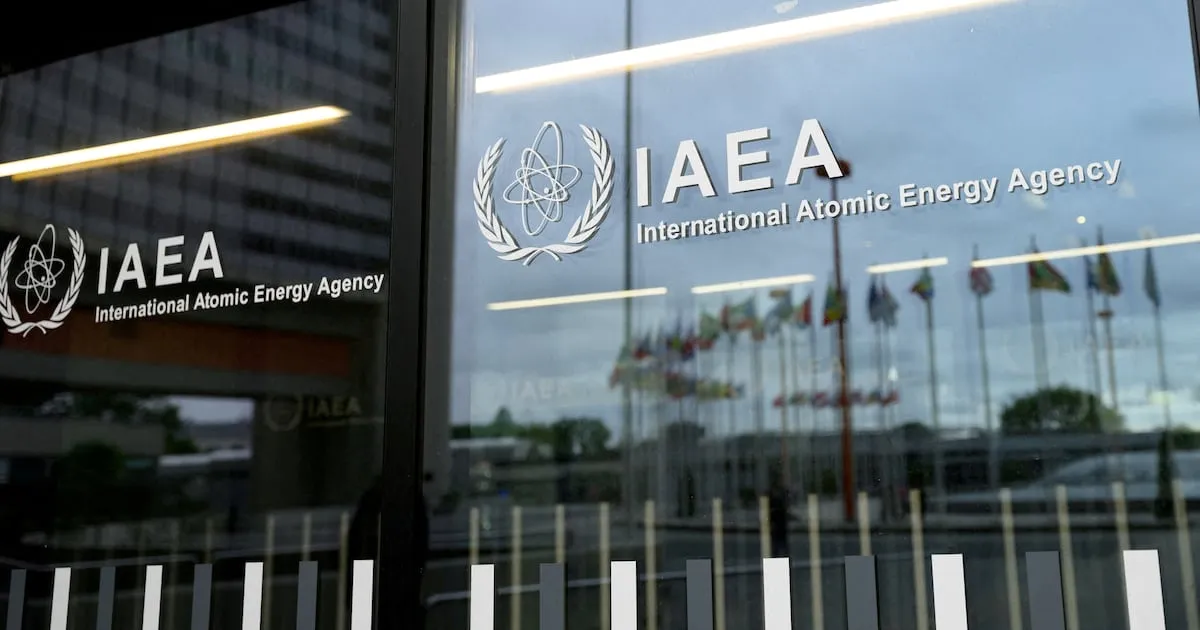
Mohammad Eslami, the head of Iran’s Atomic Energy Organization and a vice president, was slated to deliver a speech at the International Atomic Energy Agency (IAEA) General Conference in Vienna. However, his address was canceled after Austria reportedly denied him entry, a move attributed to strong objections from the United States. The incident highlights the ongoing international scrutiny and sanctions pressure surrounding Iran’s nuclear program.
Iran’s Nuclear Chief Denied Entry to IAEA Conference
Reports emerged on October 14th, local time, indicating that Eslami would not be attending the IAEA’s annual gathering, and his scheduled speech was consequently canceled. While Iran’s Mehr news agency had previously reported that Eslami had departed Tehran for the conference, it appears he was unable to enter Austria. According to Bloomberg, the Austrian government’s decision to deny Eslami entry was based on his status as a sanctioned individual under United Nations (UN) sanctions.
The Austrian government had reportedly requested an exemption from the UN Sanctions Committee for Eslami to allow his attendance. However, this request was allegedly rejected due to significant opposition from the United States. The US concern appears to stem from the perception that granting a temporary waiver for Eslami’s participation and speech at the IAEA could inadvertently legitimize Iran’s nuclear advancements and its ruling establishment. Such a move might be interpreted as lending credence to Iran’s nuclear activities and its political standing.
Background of Sanctions and Iran’s Nuclear Program
The sanctions against Eslami were reinstated in September of the previous year. This action was part of a broader “snapback” mechanism invoked by the E3 – France, Germany, and the United Kingdom – who are signatories to the 2015 Joint Comprehensive Plan of Action (JCPOA), commonly known as the Iran nuclear deal. The E3 countries believe Iran has been in significant violation of the JCPOA terms. The travel ban imposed on Eslami is a direct consequence of these reinstated UN sanctions.
The JCPOA, agreed upon in 2015, aimed to curb Iran’s nuclear program in exchange for sanctions relief. However, the agreement has faced considerable challenges, particularly after the United States withdrew from it in 2018 and reimposed its own sanctions. The subsequent actions by the E3 to reinstate UN sanctions underscore the persistent international concerns regarding the nature and scope of Iran’s nuclear ambitions.
IAEA Conference Agenda and US Stance
The IAEA General Conference, running from October 14th to 18th, was expected to address critical issues, including nuclear safeguards in the Middle East. The United States was anticipated to take a firm stance at the conference. U.S. Energy Secretary Chris Ford was expected to attend and emphasize the necessity for Iran to halt its nuclear program, refrain from developing nuclear weapons, and allow IAEA inspectors to resume their investigations at Iranian nuclear facilities.
The U.S. position reflects a broader international effort to ensure transparency and accountability in Iran’s nuclear activities. The IAEA plays a crucial role in monitoring and verifying that member states adhere to their non-proliferation commitments. The agency’s ability to conduct thorough inspections is vital for building confidence and preventing the diversion of nuclear material for non-peaceful purposes.
Regional Dynamics and Nuclear Safeguards
In parallel to these developments, attention is also focused on the potential engagement between Saudi Arabia and the IAEA. Saudi Arabia, which reached a nuclear cooperation agreement with the United States in July, may be considering discussions on adopting IAEA nuclear safeguards agreements (CSA) and additional protocols. This development is significant given the regional context and the broader implications for nuclear non-proliferation in the Middle East.
The Middle East remains a region of heightened concern regarding nuclear proliferation. The establishment of robust safeguards and verification mechanisms is considered essential for promoting stability and security. Saudi Arabia’s potential move towards greater cooperation with the IAEA could signal a shift in regional dynamics and a commitment to peaceful nuclear energy development under international oversight.
Conclusion
The cancellation of Mohammad Eslami’s speech at the IAEA General Conference, stemming from U.S.-led sanctions pressure and Austria’s denial of entry, underscores the complex geopolitical landscape surrounding Iran’s nuclear program. As the international community continues to grapple with verifying Iran’s compliance with nuclear agreements and sanctions, the IAEA remains a central forum for dialogue and verification. The ongoing discussions on nuclear safeguards, both concerning Iran and other regional players, will be critical in shaping the future of nuclear non-proliferation in the Middle East.
