

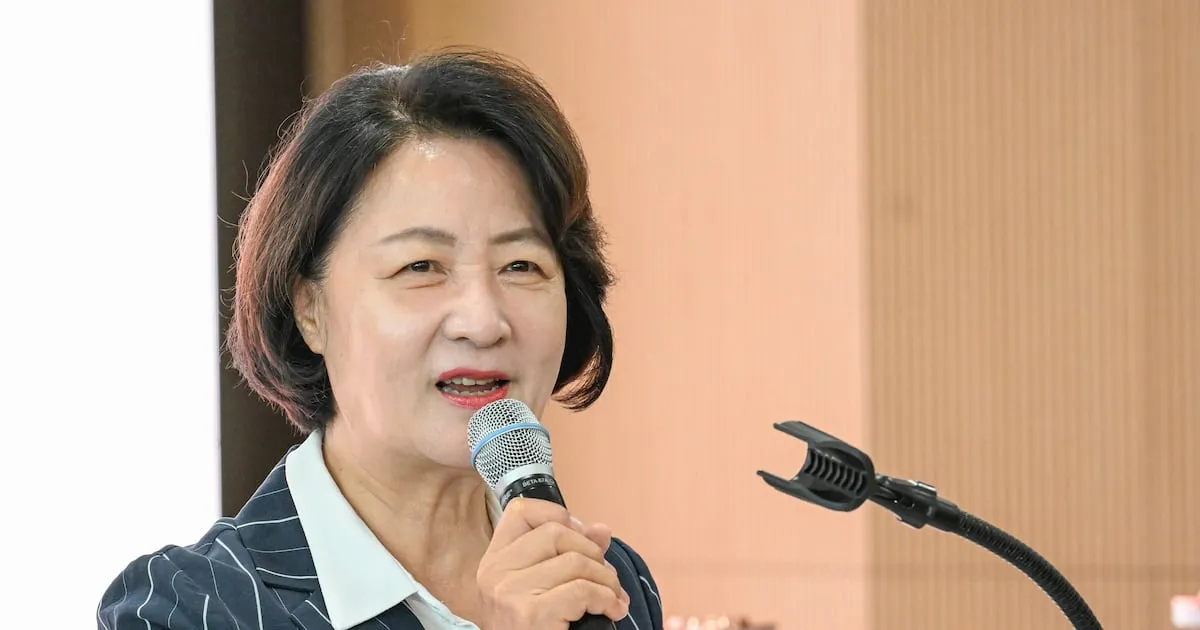
A petition demanding the ouster of Gyeonggi Province Governor Chu Mi-ae has surpassed the 10,000-signature threshold required for an official response. The movement stems from public backlash against significant budget reductions for various projects while allocating over 1.2 billion won for official residences.
Public Outcry Over Provincial Budget Decisions
The petition, initiated on the Gyeonggi Provincial Government’s official petition website, gained momentum rapidly. Titled ‘Petition for the Dismissal of Governor Chu Mi-ae,’ it officially crossed the 10,000-participant mark on the afternoon of the 11th.
Petitioners argue that Gyeonggi Province is not facing an immediate fiscal crisis, yet Governor Chu declared a state of financial emergency. They point to the approval of an additional budget that included 546.5 billion won for tax structure adjustments. This action, they contend, is contradictory to the severe austerity measures imposed elsewhere.
Controversial Spending on Official Residences
A key point of contention highlighted by the petitioners is the alleged discrepancy in spending priorities. They claim that while public servant incentives were cut by more than half, Governor Chu secured an official residence worth over 1.2 billion won, a spacious 47-pyeong apartment, for her personal use. This, according to the petition, demonstrates a disregard for the financial strain on residents, with the petition stating, “Unreasonable budget cuts are threatening the daily lives of the residents.”
Under Gyeonggi Province’s petition regulations, any proposal reaching 10,000 signatures necessitates a formal response from the Governor within 30 days. This means Governor Chu will be required to directly address the petition calling for her dismissal.
Precedent of Budgetary Disputes
This is not the first instance of public opposition to Gyeonggi Province’s fiscal decisions under Governor Chu’s leadership. The Gyeonggi Provincial Council’s Citizens’ Alliance for Economic Justice previously called for the cancellation of a rental contract for an official residence in Hwaseong and the reallocation of its associated budget. This demand was made on the 8th.
Furthermore, a prior petition opposing the discontinuation of postpartum care support services also garnered over 10,000 signatures, indicating a pattern of public dissatisfaction with the provincial government’s resource allocation.
Provincial Government’s Defense
In response to the mounting criticism, a spokesperson for the Gyeonggi Provincial Government issued a statement late on the day of the petition’s success. Hong Eun-kwang, the provincial representative, explained during a press briefing that the provincial budget for essential public services, approved in 2026, had only accounted for nine months of funding. Additionally, he noted that the province had already utilized a significant portion of its internal reserves and other grants, leaving little room for further financial flexibility.
The spokesperson expressed deep regret over what they described as a distortion of facts, stating, “We express deep regret for distorting the facts as if the current administration deliberately cut essential public service budgets that were fully approved.”
However, the provincial government did not offer a specific comment regarding the controversial official residence expenditure when addressing the broader budget concerns.
Looking Ahead
The successful petition triggers a formal response from Governor Chu Mi-ae, placing her directly in the spotlight to address the grievances concerning budget cuts and the allocation of funds for official housing. The situation highlights ongoing tensions between the provincial administration’s fiscal management strategies and the public’s expectations for essential services and responsible spending.
