

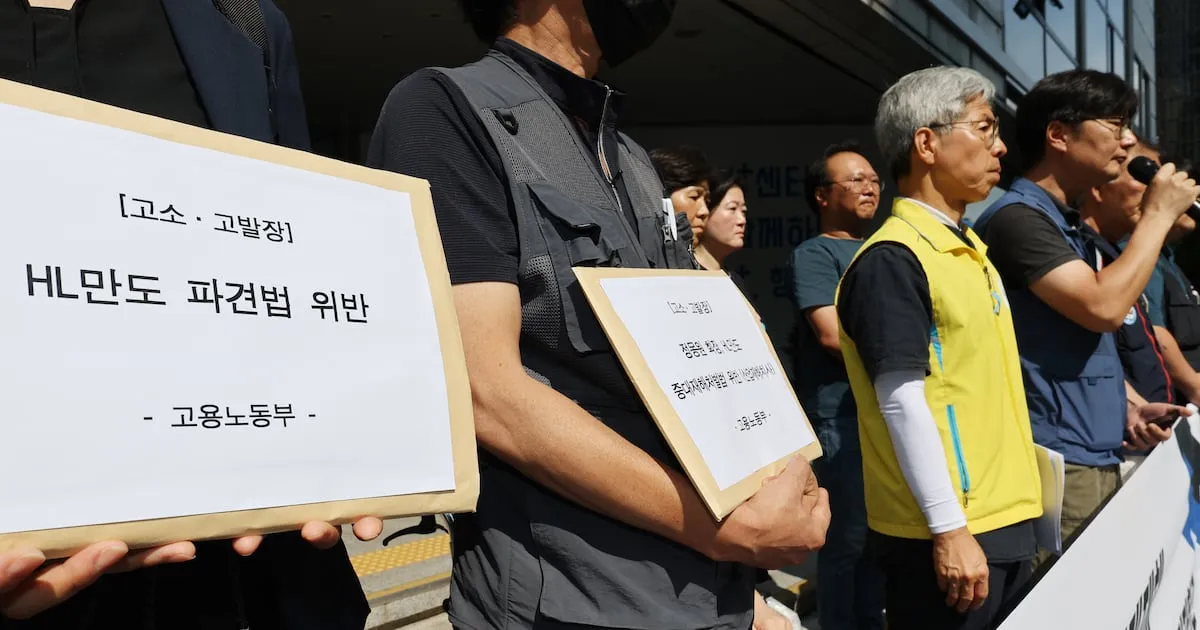
The Ministry of Employment and Labor has initiated a second inspection of HL Mando’s headquarters and its Pyeongtaek plant, following a fatal industrial accident that occurred at the Pyeongtaek facility. This renewed scrutiny aims to thoroughly investigate the circumstances surrounding the worker’s death and ensure compliance with safety regulations.
Second Inspection Launched at HL Mando Facilities
Officials from the Ministry of Employment and Labor’s Gyeonggi Provincial branch confirmed on November 14th that the inspection is currently underway at HL Mando’s headquarters in Pangyo, Seongnam City, Gyeonggi Province, as well as its Pyeongtaek plant. This action marks the second time the ministry has conducted a search of the company’s premises. The initial inspection took place on October 7th, shortly after a worker was tragically killed in an entrapment accident at the Pyeongtaek plant on July 22nd.
During this latest inspection, the ministry has deployed approximately 20 labor inspectors. Their primary objective is to secure crucial evidence, including data from relevant personnel’s computers, to reconstruct the events leading up to the accident. The investigation will focus on determining whether adequate safety measures were in place to prevent such entrapment incidents.
Focus on Safety Compliance and Legal Accountability
A significant aspect of the ministry’s investigation will be to meticulously examine HL Mando’s adherence to safety management systems, particularly concerning the prevention of serious accidents. This includes scrutinizing the company’s compliance with the Occupational Safety and Health Act and the Serious Accidents Punishment Act. The ministry intends to verify if the company has established and effectively implemented a robust safety and health management framework.
A representative from the Ministry of Employment and Labor emphasized the gravity of the situation, stating, “We are acutely aware of the seriousness of entrapment accidents that repeatedly occur at manufacturing sites. If there are any violations of the Occupational Safety and Health Act or the Serious Accidents Punishment Act, such as the failure to secure safety, we plan to take strict measures.”
The ministry has indicated its intention to utilize strong investigative measures, including searches and detentions, if similar accidents continue to occur due to a lack of adherence to minimal safety standards, especially in cases involving major fatalities. This approach underscores the government’s commitment to enhancing workplace safety and holding companies accountable for preventing serious industrial incidents.
Background of the Pyeongtaek Plant Accident
The tragic incident on July 22nd involved a worker at the HL Mando Pyeongtaek plant who became trapped. While details of the specific machinery or process involved have not been extensively released, the accident prompted an immediate response from labor authorities. The subsequent investigation revealed potential shortcomings in the safety protocols at the facility, leading to the initial inspection in early October.
HL Mando, a prominent manufacturer of automotive components, operates several facilities across South Korea. The Pyeongtaek plant is a key production site, and any safety lapses there have significant implications for the company’s operations and its workforce. The company has not yet issued a detailed public statement regarding the ongoing investigations, but it is expected to cooperate fully with the Ministry of Employment and Labor.
Broader Implications for Industrial Safety
This second inspection at HL Mando highlights a broader trend of increased regulatory oversight in South Korea’s industrial sector. The government has been strengthening enforcement of safety laws, particularly after a series of high-profile industrial accidents in recent years. The Serious Accidents Punishment Act, enacted in January 2022, imposes significant penalties on business owners and management if their negligence leads to serious workplace accidents, including fatalities.
The ministry’s firm stance suggests a zero-tolerance policy towards companies that fail to prioritize worker safety. The repeated nature of entrapment accidents in manufacturing environments is a particular concern, indicating systemic issues that require more than just superficial corrective actions. The ministry’s strategy involves not only investigating individual incidents but also assessing the overall safety culture and management systems within companies.
Moving forward, the findings from this second inspection will be critical in determining the extent of HL Mando’s liability and the necessary remedial actions. The ministry’s investigation will likely delve into management practices, training programs, and the implementation of safety equipment and procedures. The outcome could serve as a precedent for how similar cases are handled across the industry, reinforcing the importance of robust safety management in preventing future tragedies.
Conclusion
The Ministry of Employment and Labor’s second inspection of HL Mando’s Pyeongtaek plant and headquarters signifies a determined effort to uncover the root causes of the fatal entrapment accident and ensure accountability. By focusing on safety compliance and the effective implementation of management systems, the ministry aims to prevent recurrence and uphold the safety of all workers in the manufacturing sector. The investigation’s findings will be crucial in shaping future safety protocols and regulatory enforcement within the industry.
