

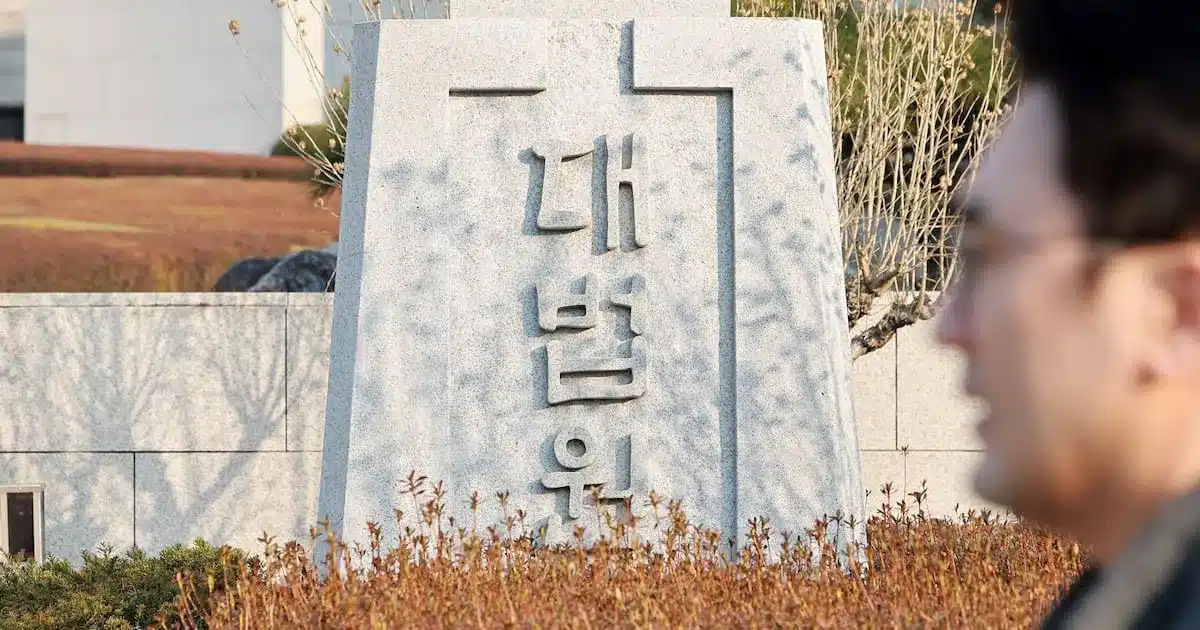
The Supreme Court of South Korea has ruled that retired bus drivers may have a legitimate expectation of re-employment under contract terms, even after reaching the mandatory retirement age. This landmark decision came in a case involving a city bus company, identified as Company A, and two former drivers, Mr. B and Mr. C, who were denied contract-based re-employment after turning 61 in February 2022.
Background of the Case
Mr. B and Mr. C had been employed as bus drivers by Company A for many years. Upon reaching the retirement age of 61, they sought to continue their employment through contract positions. The labor union representing the drivers had communicated their desire for continued employment, either through contract extensions or by being rehired on a contract basis if extensions were not feasible. However, Company A terminated their employment citing the mandatory retirement age, without providing a specific response to the union’s request.
Company A’s employment regulations and the collective bargaining agreement stipulated a retirement age of 61. Crucially, these documents also included provisions allowing for the preferential re-hiring of union members who had passed the retirement age into contract positions, often referred to as “project-based” or “task-based” roles.
Dissatisfied with the refusal to re-employ them on a contract basis, Mr. B and Mr. C filed complaints with the labor relations commission. Initially, both the regional labor relations commission and the central labor relations commission ruled in favor of the drivers, acknowledging their right to expect re-employment as contract workers.
Company’s Defense and Lower Court Rulings
Company A argued that due to reduced bus operations and revenue caused by the COVID-19 pandemic, they had no plans to hire contract workers. However, the initial rulings did not accept this reasoning. Evidence presented showed that in 2022, 26 employees retired, while 36 new employees were hired, suggesting that hiring was indeed occurring.
The central labor relations commission, in its second review (2nd instance ruling), took a different stance. It noted that out of 38 employees who reached retirement age in 2021-2022, only 18 were re-employed on a contract basis. This lower rate of re-employment led the commission to conclude that the drivers’ expectation of re-employment was difficult to recognize.
Supreme Court’s Decision and Rationale
The Supreme Court, however, overturned the central labor relations commission’s decision. The High Court, presided over by Justice Uhm Sang-pil, ruled in favor of the drivers, sending the case back to the Daejeon High Court for retrial. The Supreme Court’s decision hinges on the establishment of a trust relationship between Company A and its bus drivers.
The Supreme Court stated that a trust relationship had been formed between Company A and its bus drivers, where drivers could reasonably expect to be re-employed as fixed-term employees if they met certain conditions, even after reaching retirement age. The court specifically pointed to the fact that, excluding Mr. B, Mr. C, and one other individual, all other drivers who applied for contract re-employment after retiring in 2021-2022 were indeed re-hired. This pattern of consistent re-employment for most applicants was a key factor in the Supreme Court’s determination.
Implications of the Ruling
By overturning the initial ruling, the Supreme Court has effectively reinstated the drivers’ claim for re-employment. The case will now be re-examined at the Daejeon High Court to determine the validity of Company A’s refusal to re-employ Mr. B and Mr. C. This decision could set a precedent for how retirement and re-employment policies are applied in similar situations within the public transportation sector and potentially other industries in South Korea.
The core of the Supreme Court’s reasoning lies in the principle of legitimate expectation. When an employer’s past practices create a reasonable belief among employees that certain conditions of employment, such as contract re-employment after retirement, will continue, the employer may be bound by that expectation. This ruling emphasizes the importance of consistent and fair application of employment policies and the potential legal consequences of deviating from established practices without sufficient justification.
Future Proceedings
The case’s return to the Daejeon High Court means that the legal battle over the re-employment of Mr. B and Mr. C is not yet over. The lower court will now reassess the company’s decision to deny them contract positions, taking into account the Supreme Court’s directive regarding the established trust and expectation of re-employment. The outcome of this retrial will be closely watched, as it could significantly impact the rights and expectations of older workers seeking continued employment after reaching retirement age.
This legal development underscores the complex interplay between mandatory retirement ages, contractual employment, and the evolving nature of workforces. It highlights the judiciary’s role in ensuring that employment practices are not only compliant with regulations but also fair and consistent with the reasonable expectations fostered by employers over time.
