

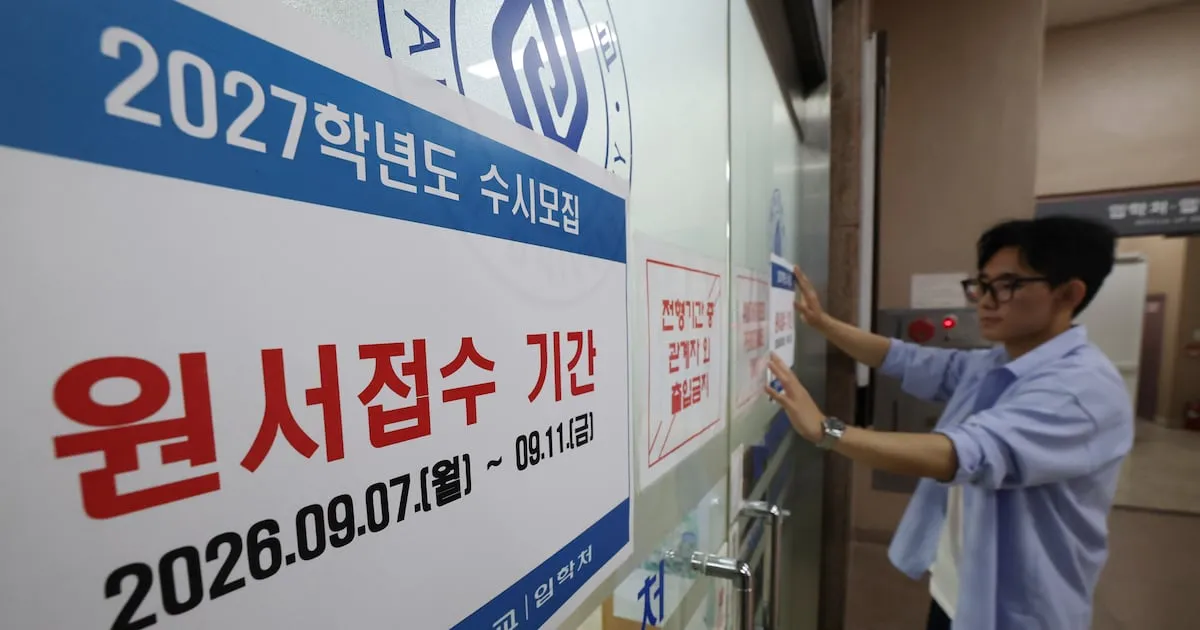
A major technical glitch during the application submission deadline for the 2027 academic year college admissions has ignited a debate over fairness and equal opportunity among prospective students. The system failure, which occurred on the final day for applications, led to a one-hour extension of the submission period, causing significant disruption and raising concerns about the integrity of the admissions process.
System Failure and Extension
The incident unfolded on September 11th, just minutes before the scheduled 5:00 PM deadline. A server operated by Uwayapply, one of the major online platforms handling college applications in South Korea, experienced a complete shutdown. Reports indicate that the server became overloaded due to a surge of applicants attempting to submit their materials simultaneously in the final moments. The system did not recover until approximately 6:20 PM.
In response to the widespread technical difficulties, the Korea Council for University Education (KCUE) decided to extend the application deadline by one hour, to 7:00 PM. However, this extension has not fully resolved the concerns of all applicants. For students who were unable to complete their submissions even with the extended time, KCUE has stated that individual reviews will be conducted based on evidence such as the creation log of their application documents.
Concerns Over Fairness and Competitive Rates
The disruption has led to accusations that the fairness of the application process has been compromised. Students who were meticulously planning their final submission strategies felt their efforts were undermined by the unexpected system failure and subsequent extension. The intense competition for limited spots in popular majors and prestigious universities means that even minor advantages or disadvantages can significantly impact an applicant’s chances.
The extended submission window, in particular, has become a focal point of the controversy. Some argue that it created an uneven playing field. For instance, certain universities released their application statistics by major at the original 6:00 PM deadline. Students who had already submitted their applications before the system crash might have been disadvantaged if they could not adjust their strategies based on this real-time data. Conversely, those who benefited from the extension and were able to strategize based on the released statistics may have gained an unfair advantage.
The situation is particularly sensitive for highly competitive programs. In fields with high competition rates, applicants often engage in last-minute strategic adjustments. An unexpected hour-long extension could potentially alter the entire landscape of applications for these sought-after programs, leading to a recalculation of competitive rates and admission probabilities.
Impact on Applicants and Future Measures
The immediate aftermath of the system crash saw many students expressing frustration and anxiety. The inability to submit applications on time, due to technical issues beyond their control, led to fears of missing out on their desired educational opportunities. While the KCUE and the application service provider are discussing measures to compensate affected students, the process of determining individual remedies is expected to take several days, given that over 100 universities are involved in the admissions process.
The incident highlights the critical reliance on stable online systems during high-stakes periods like college admissions. The KCUE has indicated plans to investigate the root cause of the server failure and implement preventative measures to avoid similar disruptions in the future. The Ministry of Education is also expected to review the incident and develop policies to ensure the robustness and fairness of the online application system.
Looking Ahead
This event underscores the need for robust technological infrastructure and contingency planning in educational administration. The KCUE’s decision to extend the deadline and consider individual remedies aims to mitigate the immediate impact on students. However, the long-term implications for trust in the admissions system and the fairness of the process remain a significant concern for students, parents, and educational institutions alike. The focus will now shift to how effectively the KCUE and involved universities can implement fair resolutions and strengthen their systems against future technical failures, ensuring that the pursuit of higher education remains an equitable endeavor.
