

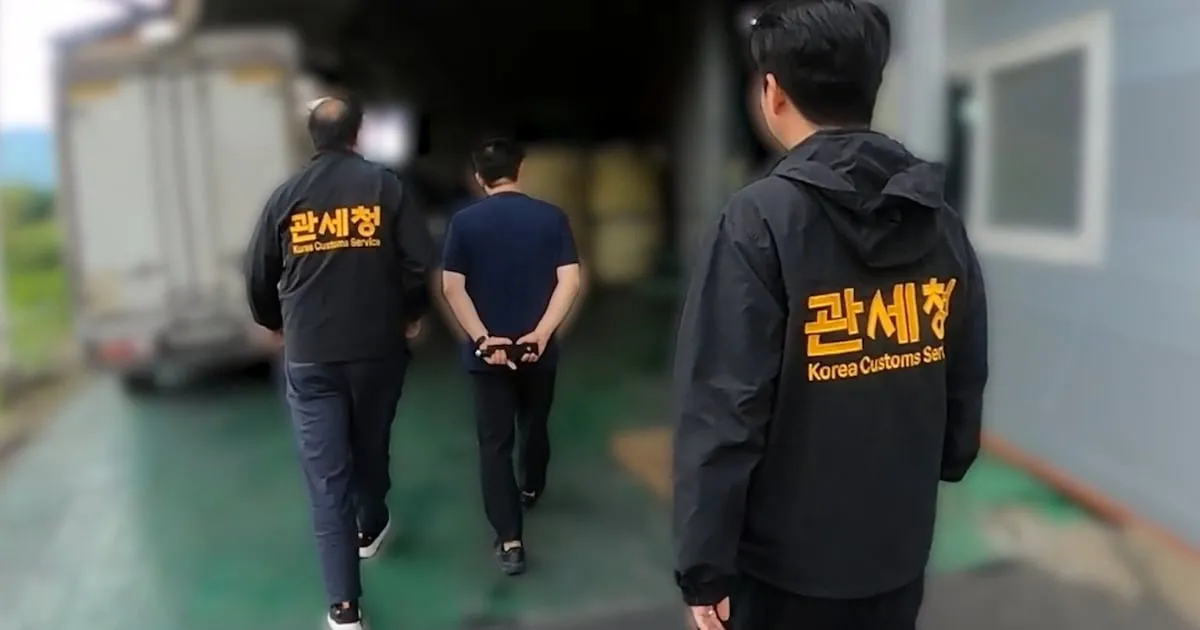
Customs officials in Busan, South Korea, have apprehended two Sri Lankan nationals for allegedly smuggling a potent form of hashish paste, known as ‘heshi,’ into the country for distribution. The suspects, identified as Mr. A and Mr. B, both in their 30s, were arrested on suspicion of violating drug control laws.
Details of the Smuggling Operation
Authorities revealed that the two individuals are suspected of importing approximately 85.25 grams of heshi and 30 grams of a hashish paste derivative, collectively valued at over 13 million South Korean won (approximately $9,800 USD). The shipment was reportedly sent via international express mail in March. Customs officials estimate the seized heshi could be used for 850 to 1,220 individual doses.
What is ‘Heshi’?
Heshi is a highly concentrated cannabis product derived from the dried and compressed resin of the marijuana plant. It is known for its significantly higher psychoactive compound content compared to standard marijuana, with potency reportedly ranging from 3 to 4 times stronger, and in some cases, over 10 times stronger. This high concentration leads to a strong potential for addiction and dependence.
‘Madana Modakara’ Paste
The other substance seized, a paste sometimes referred to as ‘Madana Modakara,’ is reportedly made in Sri Lanka by mixing hashish with various local herbs. In its country of origin, it is consumed as a traditional aphrodisiac or health supplement. However, in South Korea, it is classified as a type of hashish, making its import and distribution illegal.
Investigation and Arrests
Busan Customs stated that this is the first time heshi has been detected being smuggled through Busan. The suspects attempted to conceal the drugs within kimchi jars and other preserved foods to evade detection during customs inspections.
Following the initial detection, customs officials launched a thorough investigation. Mr. A was apprehended in Yangsan, Gyeongnam Province. A digital forensic analysis of his mobile phone revealed that he and Mr. B had planned to distribute the smuggled drugs to foreign nationals in neighboring areas at high prices.
Investigators believe the two men designated the vacant residences of other Sri Lankan nationals, who had temporarily stayed in South Korea before departing, as the delivery points for their illicit shipments to avoid suspicion.
The Pursuit of Mr. B
Upon Mr. A’s arrest, Mr. B attempted to evade capture by turning off his mobile phone and going into hiding. However, after a four-month intensive pursuit, customs officials located and apprehended him at a factory in Gyeongju, Gyeongbuk Province.
Initially, Mr. B denied the smuggling charges. His confession came only after a preliminary drug test on the seized paste yielded a positive result for hashish, and customs presented evidence, including Facebook chat logs detailing the smuggling plan.
Background of the Suspects
The two friends entered South Korea in 2015 on employment visas. Their visas expired – Mr. A’s in 2020 and Mr. B’s in 2016 – but they did not leave the country. Instead, they remained in South Korea, working short-term, low-wage jobs in small factories while living as undocumented immigrants.
Customs Warning and Conclusion
Yeom Seung-yeol, head of the Busan Customs Investigation Bureau, commented on the successful operation, stating, “Through persistent investigation, customs were able to seize the drugs and prevent their spread within the country.”
He issued a stern warning to foreign nationals residing in South Korea: “Foreign laborers staying in the country must be aware that even if a substance is commonly used as medicine or food in their home country, it is subject to severe penalties if it contains drug components like hashish, and is imported into South Korea.”
The investigation is ongoing to determine the full extent of the distribution network and identify any other potential accomplices involved in the smuggling operation.
