

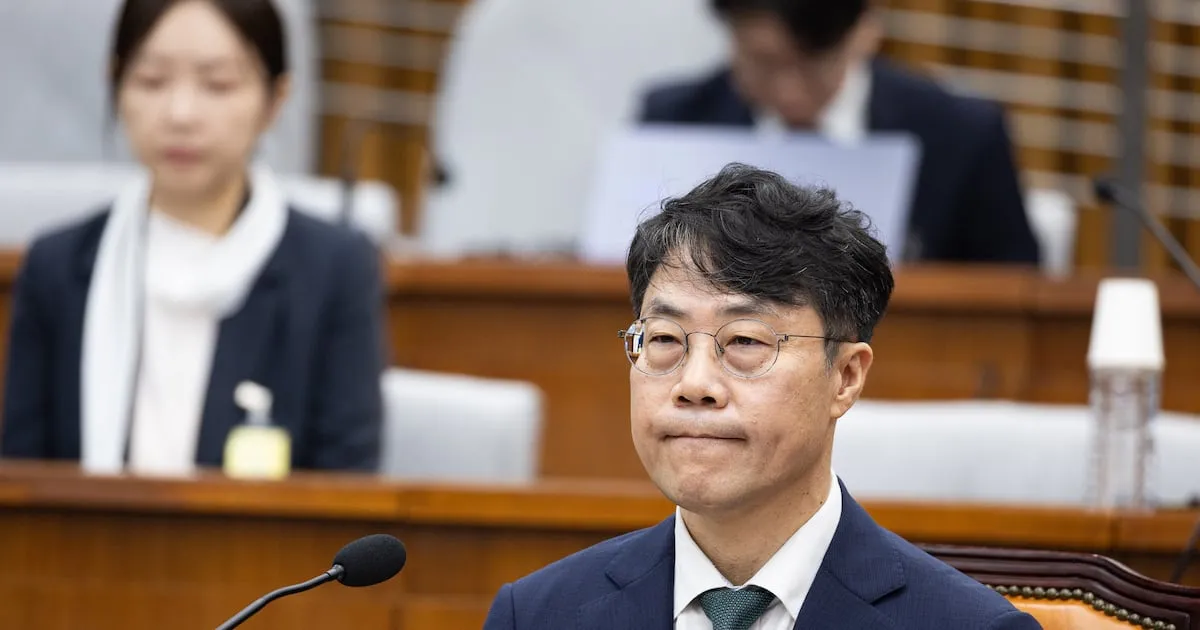
Kim Seong-soo, a nominee for Supreme Court Justice, has stated that the speed at which a case concerning alleged violations of election law during the presidential campaign of Lee Jae-myung was handled by the Supreme Court could be considered “excessive.” His remarks came during a confirmation hearing at the National Assembly on the 14th.
Concerns Over Case Handling Speed
During the hearing, Democratic Party lawmaker Chae Hyun-il questioned Kim Seong-soo about the feasibility of the Supreme Court concluding its review of the election law case, which involved Lee Jae-myung, then the Democratic Party’s presidential candidate, in just nine days. Kim, in his response, acknowledged that the pace could indeed be seen as “excessive.”
However, Kim Seong-soo also emphasized that the specific details of any case require thorough examination by the appellate division, taking into account all circumstances, before a procedural decision is made. “It is difficult for me to say at this moment whether it was appropriate,” he added, referring to the specific timeline of the case.
Judicial Review and Re-examination
Another lawmaker, Joo Ho-young of the People Power Party, raised a question regarding the Supreme Court’s practice of remanding cases to lower courts for retrial. He asked if the second trial would continue based on the initial decision if the Supreme Court decided to send the case back for retrial. Kim Seong-soo explained that remanding a case implies a need to re-examine the facts from the beginning. Therefore, even if the legal aspects are clear, a comprehensive re-evaluation of the evidence is necessary, and this is how such cases are handled.
Joo Ho-young further probed Kim Seong-soo regarding a reported request from the President to Supreme Court Chief Justice Cho Hee-dae to re-nominate Kim as a Supreme Court Justice. He questioned whether the Supreme Court was subordinate to the President. Kim Seong-soo responded by stating that both the President and the Supreme Court Justice hold positions that require mutual respect.
Background of the Election Law Case
The case in question stemmed from allegations of election law violations during the 2022 South Korean presidential election. Lee Jae-myung, who was the Democratic Party’s candidate, faced scrutiny over certain campaign activities and statements. Election law cases, particularly those involving high-profile political figures, are often subject to intense public and media attention due to their potential impact on the political landscape.
The Supreme Court’s role in such cases is to ensure that election laws are applied fairly and consistently, upholding the integrity of the democratic process. The speed of judicial review can be a critical factor, as prolonged legal battles can create uncertainty and affect public trust. Conversely, a rushed process might raise concerns about thoroughness and due diligence.
The Role of the Supreme Court
The Supreme Court, as the highest judicial body, plays a crucial role in interpreting laws and ensuring their uniform application across the country. Its decisions set precedents that guide lower courts and shape legal understanding. In election-related matters, the court’s rulings are particularly significant, as they can validate or invalidate election outcomes and influence future electoral practices.
The nominee’s comments highlight the delicate balance the judiciary must strike between efficiency and meticulousness. While swift resolution of cases is desirable to avoid protracted legal disputes, it must not come at the expense of a comprehensive and fair review of the facts and legal arguments. The nominee’s acknowledgment of the potential for “excessive” speed suggests an awareness of this challenge and a commitment to ensuring that justice is served through rigorous examination.
Confirmation Hearings and Judicial Independence
Confirmation hearings for judicial nominees, such as the one attended by Kim Seong-soo, are critical stages in the appointment process. They provide an opportunity for lawmakers to assess a nominee’s qualifications, legal philosophy, and understanding of judicial principles, including the importance of judicial independence. The exchange between Kim Seong-soo and lawmakers like Joo Ho-young underscores the scrutiny nominees face regarding their views on the judiciary’s relationship with other branches of government.
The nominee’s response regarding mutual respect between the President and the Supreme Court Justice reflects the constitutional principle of separation of powers, while also acknowledging the need for cooperation and deference where appropriate. Ensuring the independence of the judiciary is paramount to maintaining public confidence in the legal system, and nominees are often pressed on their commitment to this principle.
Conclusion
Kim Seong-soo’s remarks during his Supreme Court nominee confirmation hearing have shed light on the procedural aspects of a significant election law case. His acknowledgment of the potential for an “excessive” pace in the Supreme Court’s handling of the matter, coupled with his explanations on the necessity of re-examining facts in remanded cases and the principle of mutual respect between judicial and executive branches, provides insight into his judicial perspective. These discussions are vital components of the confirmation process, aiming to ensure that future justices possess the judgment and integrity required for their high office.
