

South Korean political parties have reached a consensus on 32 pieces of legislation aimed at addressing public livelihood issues, with plans to pass them during the upcoming regular legislative session. However, significant disagreements persist regarding proposed amendments to the Urban Development Act, which would increase incentives for private reconstruction and redevelopment projects, and reforms to the National Pension Fund structure. These contentious points are expected to be subjects of further debate.
Legislative Progress and Key Agreements
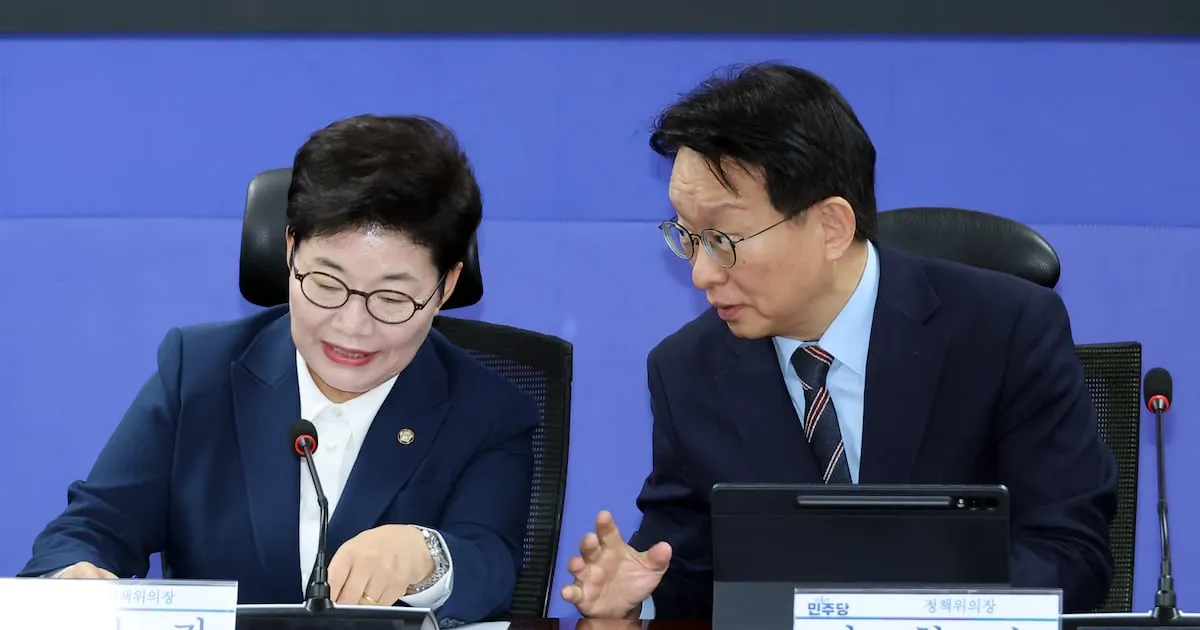
Officials from the Democratic Party and the People Power Party’s policy committees convened on the 15th for a joint meeting on livelihood policies. Following the session, Kwon Chil-seung, Policy Committee Chairman for the Democratic Party, announced that a total of 32 legislative proposals had been agreed upon. Among the key agreements is an amendment to the National Finance Act. This amendment aims to raise the standards for government Social Overhead Capital (SOC) reserve fund investigations to promote balanced regional development. Specifically, the threshold for total project costs will be increased from 50 billion KRW to 100 billion KRW, and the criteria for national subsidies will be raised from 30 billion KRW to 50 billion KRW. Projects falling below these new financial thresholds will be exempt from reserve fund investigations.
Further legislative agreements include amendments to the Capital Market Act to strengthen protections for minority shareholders by introducing a mandatory public offering system for certain share acquisitions. The parties also agreed to advance revisions to the Special Act on the Succession of Small and Medium-sized Enterprises, expanding the scope of business succession to include third-party acquisitions and mergers (M&A). Additionally, a bill concerning digital disaster prevention, which includes mandates for the secure management of AI-based digital infrastructure, was included in the consensus.
Other agreed-upon measures encompass revisions to the Emergency Medical Services Act to prevent the depletion of emergency room resources, and amendments to the Foreign Investment Promotion Act to clarify investment procedures for foreign entities. A special act aimed at supporting the development of housing for the elderly was also part of the agreement.
Persistent Disagreements on Real Estate and Pensions
Despite the broad agreement on many fronts, the National Pension Act and the Urban Development Act remain points of contention. Im Jae-seung, Policy Committee Chairman for the People Power Party, explained the nuances of the ongoing discussions. While both parties agreed to extend the period recognized for National Pension contributions during childbirth and to expand the military service credit to cover the entire period of service, a fundamental disagreement exists on the necessity of structural reforms to the National Pension Fund. This divergence means further negotiations are required on the pension system’s future.
The most significant deadlock appears to be over real estate-related legislation, particularly the proposed increase in incentive ratios for private reconstruction and redevelopment projects under the Urban Development Act. The Democratic Party has indicated a willingness to accept an increase up to 1.2 times the original ratio, whereas the People Power Party is advocating for a higher increase to 1.3 times. This difference highlights a gap in their approaches to stimulating urban renewal and housing supply.
Mechanism for Ongoing Dialogue
To facilitate continuous communication and negotiation, the policy committee leaders also agreed to establish a one-on-one liaison system. Im Jae-seung proposed that vice-chairpersons from each party’s policy committee be designated as responsible liaisons. This system aims to create a dedicated channel for ongoing discussions on livelihood issues.
Kwon Chil-seung responded positively to this proposal, stating that efforts would be made to operationalize the system promptly after resolving internal opinions. This structured approach to dialogue is intended to help bridge the remaining divides and ensure that legislative progress can continue efficiently.
Conclusion
The agreement on 32 legislative items signifies a degree of bipartisan cooperation on issues directly impacting citizens’ daily lives. However, the unresolved disputes over crucial real estate incentives and the fundamental structure of the National Pension Fund underscore the challenges that remain in achieving comprehensive legislative consensus. The newly established liaison system is expected to play a vital role in navigating these complex issues and moving forward with critical policy reforms in the upcoming legislative session.
