

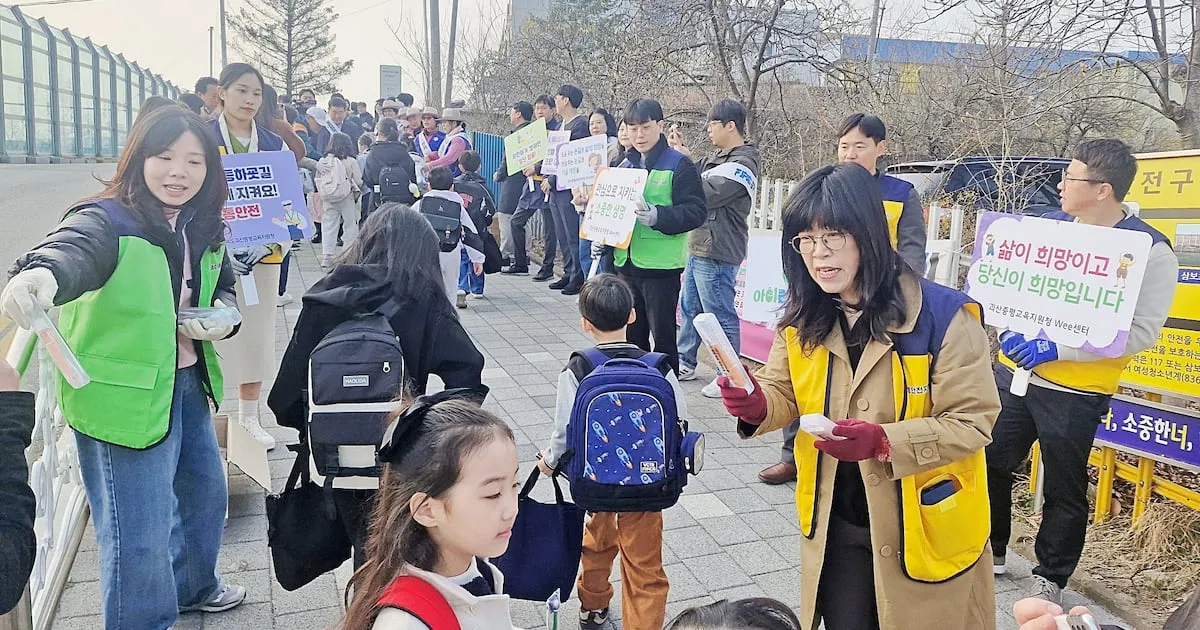
The Ministry of Education has selected 276 schools to participate in its ‘School Violence Prevention: Eowoolim Plus Model School’ initiative, aimed at fostering a safer and more positive school environment. This program, often referred to as ‘Seondo Hakgyo’ (Model Schools), focuses on raising awareness about school violence and equipping all members of the school community with the knowledge and skills to prevent and respond to it effectively. The ministry plans to expand the number of these model schools to 400 next year, indicating a strong commitment to this preventative approach.
Core Components of the Model School Program
The ‘Seondo Hakgyo’ program operates on a dual-track system of mandatory and elective tasks. Mandatory tasks are designed to be implemented by all stakeholders, including teachers, students, parents, and the school administration, ensuring a unified approach to prevention and response. Elective tasks allow schools to tailor their activities to their specific circumstances and needs, promoting flexibility and relevance.
Through structured lessons, students are encouraged to develop crucial social-emotional skills. These include empathy, effective communication, emotional regulation, and conflict resolution. A significant part of the program involves active participation in role-playing exercises and other interactive activities that teach students practical methods for non-violent behavior and de-escalation. The overarching goal is to empower students to become active agents in maintaining their own safety and fostering positive relationships within the school.
Student-Led Initiatives for a Safer School Culture
To further cultivate a culture of mutual respect and support, the program encourages student-led initiatives. ‘Eowoolim Student Supporters’ groups are formed, linking student self-governance and club activities to the prevention of school violence. These groups provide students with opportunities to plan and execute their own prevention and anti-violence activities. Additionally, ‘TtoRae Counseling’ clubs are supported, focusing on fostering a culture of listening and empathy, where students are encouraged to support peers facing difficulties. The name ‘TtoRae’ evokes the idea of a supportive circle, emphasizing mutual care and understanding.
Promoting ‘Smartphone-Free School’ Culture
A notable aspect of the initiative is the promotion of a ‘smartphone-free school’ culture. This involves actively encouraging a variety of alternative activities that students can enjoy together, moving away from excessive smartphone use. Instead of being engrossed in their devices, students are guided towards engaging in traditional games like ‘TtoRae’ (a type of traditional Korean game), artistic pursuits, and physical education activities. This aims to revitalize face-to-face interactions and shared experiences among students.
Out of the 276 selected model schools, 46 have chosen to implement the ‘smartphone-free school’ program. This specific focus highlights a growing concern about the impact of constant digital connectivity on social development and interpersonal relationships among young people. By offering engaging alternatives, the program seeks to help students build stronger bonds and develop a healthier relationship with technology.
Official Perspective on School Violence Prevention
Shim Min-cheol, Director of Student Health and Safety Policy at the Ministry of Education, emphasized the foundational principle of the program. “The starting point for preventing school violence lies in creating relationships of mutual respect within the school,” he stated. “We aim to foster a school culture where the entire educational community looks out for one another and acts responsibly. Our goal is to build schools where all students can live safely and with peace of mind.”
This comprehensive approach, integrating student empowerment, peer support, and a re-evaluation of technology’s role in the school environment, seeks to create a robust framework for combating school violence. By investing in these model schools, the Ministry of Education is signaling its dedication to cultivating a positive and secure educational landscape for all students.
Broader Implications and Future Outlook
The ‘Eowoolim Plus Model School’ initiative represents a significant step towards a more proactive and holistic approach to school safety. By moving beyond reactive measures, the program aims to embed principles of respect, empathy, and responsible behavior into the very fabric of school life. The expansion plans for next year suggest that the initial outcomes are viewed positively, with a desire to replicate the success across a wider range of educational institutions.
The emphasis on student-led activities is particularly noteworthy, as it recognizes the agency of young people in shaping their own environment. Empowering students to take ownership of prevention efforts not only enhances the effectiveness of the programs but also fosters a sense of responsibility and leadership. The inclusion of peer counseling and support networks further strengthens the social infrastructure within schools, providing students with accessible avenues for help and understanding.
Furthermore, the focus on reducing smartphone dependency addresses a contemporary challenge faced by many educational systems. In an era where digital devices are ubiquitous, encouraging a balance between online and offline interactions is crucial for healthy social and emotional development. The success of the ‘smartphone-free school’ component will likely depend on the availability and appeal of alternative activities that genuinely engage students and foster meaningful connections.
Ultimately, the Ministry of Education’s initiative underscores a commitment to building not just schools free from violence, but also communities where students feel valued, supported, and empowered. The success of these 276 model schools will serve as a critical benchmark for future efforts to create safer and more nurturing educational environments nationwide.
