

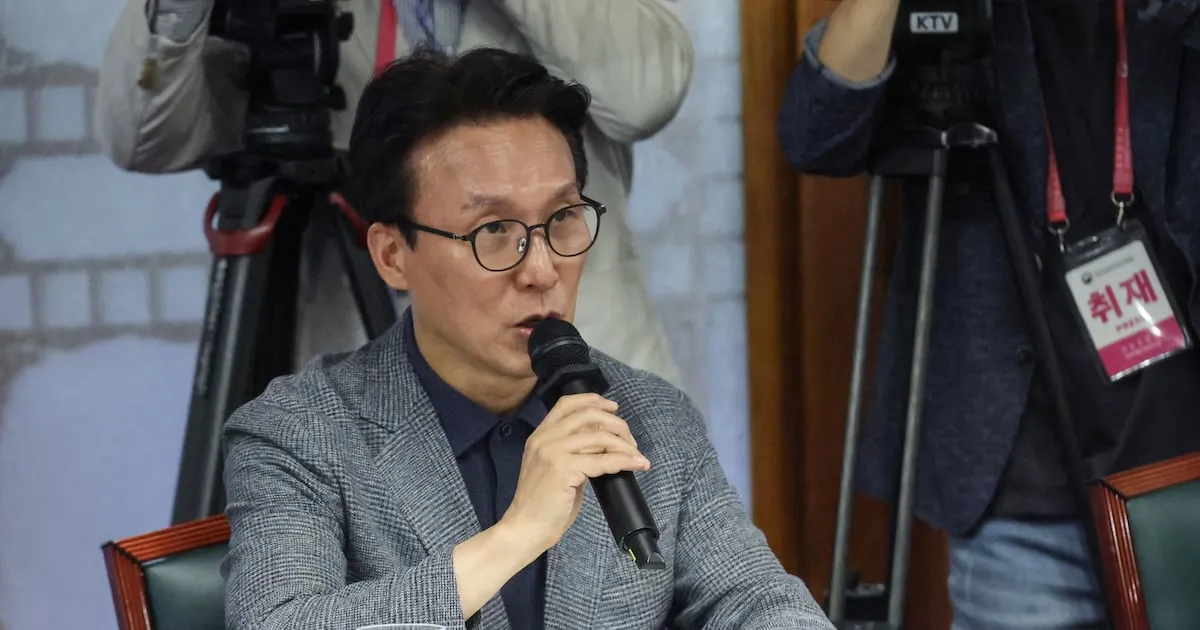
Kim Min-seok, the leader of the Democratic Party of Korea (DP), has signaled a strategic shift towards engaging with progressive forces and initiating political reforms. Speaking at a high-ranking party meeting, Kim explicitly mentioned a potential alliance with figures like Yong Hye-in, a former member of the Basic Income Party who recently withdrew her candidacy for the Seongpyeong District. This move indicates a broader effort to consolidate and energize the progressive wing of South Korean politics.
Dialogue with Progressive Elements and Political Overhaul
During a joint meeting of senior party officials held in Samcheong-dong, Seoul, Kim Min-seok outlined his vision for a comprehensive political overhaul. He stated, “We will initiate internal party discussions on forging alliances with progressive forces, including Representative Yong and the Basic Income Party, and on political reform.” Kim emphasized that these discussions would aim to address what he described as “abnormalities” across political, economic, and social sectors that hinder South Korea’s normalization. The outcomes of these internal deliberations are intended to be presented to the public.
The party leader’s remarks suggest a proactive approach to redefining the DP’s political identity and expanding its coalition. By reaching out to figures and parties associated with progressive ideologies, the DP appears to be seeking common ground on key policy issues and electoral strategies. This initiative could be interpreted as an effort to counter political polarization and build a broader base of support.
Addressing Corruption Allegations and Restoring Public Trust
Kim Min-seok also addressed the controversy surrounding the nomination of Kim Sung-won as Minister of Justice, specifically concerning allegations of lobbying for an experimental COVID-19 drug. Kim vowed to thoroughly investigate what is being referred to as the “Handonghun Gate,” an alleged illegal leak of investigative documents. “We will put an end to political investigations,” Kim declared, signaling a commitment to transparency and accountability within the justice system.
This stance on alleged corruption underscores a broader commitment to reforming the prosecution and ensuring that legal processes are fair and unbiased. The DP leader’s remarks aim to reassure the public that the party is taking allegations of misconduct seriously and is committed to upholding the rule of law.
Strategies for Rebuilding Party Support
Addressing the current decline in approval ratings for both the current administration and the DP, Kim Min-seok articulated a strategy focused on tangible results and public welfare. “We will consistently implement the party’s core principles of livelihood, practicality, and growth,” he stated. Kim expressed his determination to work diligently and sincerely to achieve a turnaround in public trust.
This commitment to practical governance and policy implementation is seen as a direct response to public concerns about the economy and daily life. The DP leader’s emphasis on “livelihood, practicality, and growth” suggests a focus on policies that directly benefit citizens and contribute to economic stability and expansion. The party aims to demonstrate its effectiveness and relevance by delivering concrete improvements.
The Path Forward: Reform and Reconnection
The proposed engagement with progressive forces and the commitment to political reform signal a significant moment for the Democratic Party. By seeking alliances and initiating internal dialogues, Kim Min-seok appears to be charting a course aimed at revitalizing the party and strengthening its progressive credentials. The focus on addressing corruption and rebuilding public trust through practical governance further highlights the DP’s strategic objectives.
The success of these initiatives will likely depend on the party’s ability to translate its stated intentions into concrete actions and to effectively communicate its vision to the electorate. The coming months will be crucial as the DP navigates these proposed reforms and seeks to reconnect with voters by demonstrating a commitment to both ideological alignment and effective governance.
Ultimately, Kim Min-seok’s pronouncements suggest a party looking to consolidate its progressive base, address systemic issues within the political landscape, and regain public confidence through a combination of strategic alliances and a renewed focus on policy delivery. The emphasis on “political reform” and “dialogue with progressive forces” indicates a desire to move beyond traditional political boundaries and forge a more unified and effective progressive movement in South Korea.
