

South Korea’s ruling party, the government, and the presidential office have agreed to significant changes in the structure of the newly established Prosecutors’ Office, set to launch on October 2nd. Following President Lee Jae-myung’s directive upon returning from France, the contentious ‘Criminal Trials Department’ will be renamed ‘Misconduct Investigation Department,’ and the roles of ‘Criminal Investigation Officer’ and ‘Major Crimes Investigation Officer’ are being considered for abolition.
Revising the Prosecutors’ Office Structure
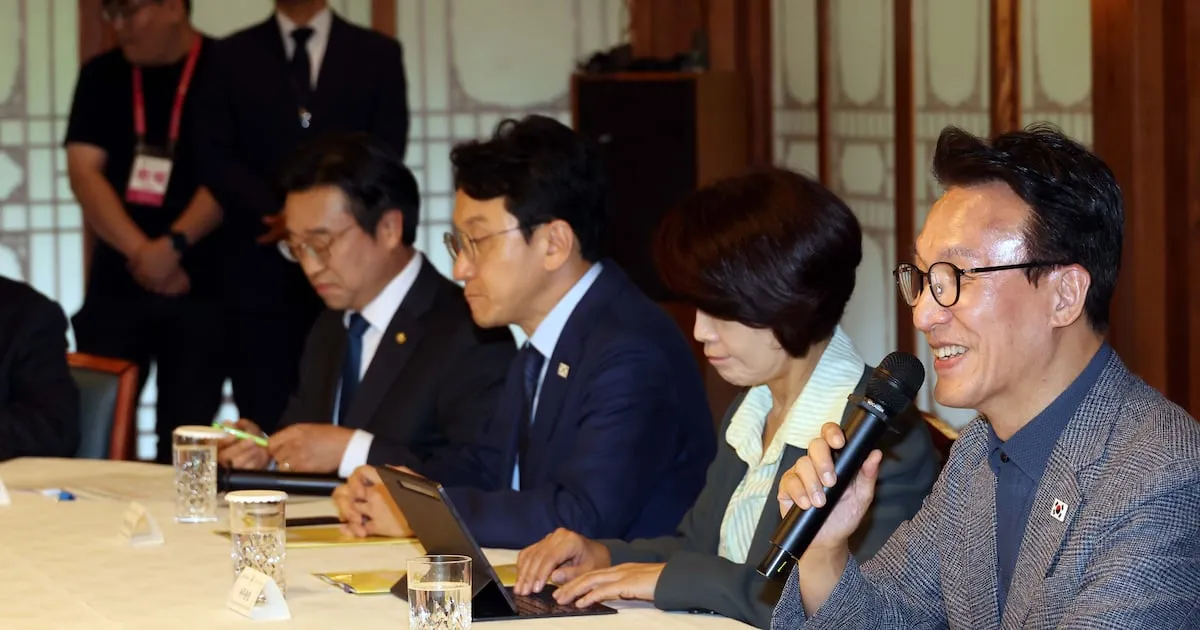
The decision to revise the initial plan for the Prosecutors’ Office came just four days after President Lee instructed the Ministry of Justice to re-examine the proposed organizational structure. The Democratic Party’s spokesperson, Lee Yong-woo, announced the proposed changes after a party meeting on September 13th. He stated, “We have decided to actively consider renaming the ‘Criminal Trials Department,’ which has raised concerns, to the ‘Misconduct Investigation Department,’ and to abolish the positions of ‘Criminal Investigation Officer’ and ‘Major Crimes Investigation Officer.'”
The original proposal by the Ministry of Justice had faced strong opposition, particularly from hardline factions within the Democratic Party. Critics argued that naming the department responsible for investigating cases dismissed by the police as the ‘Criminal Trials Department’ could be perceived as an attempt by the prosecution to retain influence over investigations, even after losing primary investigative authority in certain areas. Concerns were also raised that this name could lead to misunderstandings regarding the department’s actual functions.
Addressing Concerns Over Prosecutorial Influence
The core of the controversy revolved around the perception that the new structure might allow the prosecution to exert undue influence over other investigative bodies. The proposed ‘Criminal Trials Department’ was seen by some as a way for prosecutors to maintain oversight, despite legislative reforms aimed at shifting investigative powers. The initial plan also included maintaining the current number of prosecutors, which drew criticism from the ruling party.
President Lee himself had voiced concerns about the proposed structure before departing for France and reiterated his call for revisions upon his return on September 10th. He reportedly felt that the name ‘Criminal Trials Department’ was potentially misleading and excessive given its intended functions. Similarly, his directive regarding the prosecutor headcount was seen as a call to reassess the actual staffing needs.
Presidential Senior Secretary for Public Relations, Kang Cheol-gyu, explained the President’s stance at the time, stating, “The President instructed that areas causing national concern or inconvenience should be minimized and re-examined more closely.” The President’s direct intervention came amid ongoing internal debate within the ruling party regarding the reform of the prosecution system.
Changes to Prosecutor Numbers and Future Steps
While the name of the department and the abolition of certain officer roles are being actively considered, the issue of reducing the overall number of prosecutors has not yet reached a concrete conclusion. A ruling party official noted, “During the meeting, there was an opinion that reducing the total number of prosecutors requires a revision of the law, as it is a matter stipulated by statute.”
The organizational structure of the Prosecutors’ Office can be adjusted by presidential decree. However, the total number of prosecutors, currently set at 2,292, is defined by law. Therefore, any reduction would necessitate legislative action by the National Assembly.
The Democratic Party is now focused on expediting the remaining procedures necessary for the launch of the new office, including finalizing its organizational structure, budget allocation, and subordinate regulations. The party also plans to consult with various societal stakeholders during this process.
Operational Details of the New Structure
The new Major Crimes Investigation Agency will consist of a headquarters and six regional offices, with a total staff of 2,874. It is scheduled to commence operations on October 2nd. The agency will specialize in investigating seven major crime categories. Plans are also underway to recruit special contract investigators this month to ensure sufficient staffing by the launch date.
The proposed budget for the agency in 2027 has been set at 472.4 billion won. Funds related to major crime investigations, previously part of the Prosecutor General’s Office budget, will be transferred to this new agency’s budget.
Broader Reforms and Public Safety Initiatives
In response to the recent disappearance case in Jeju, the government is also establishing specialized investigative units for missing persons within the National Police Agency and city/provincial police agencies. Initially, the Seoul Metropolitan Police Agency will increase its night shift staffing to ensure at least two officers are always on duty for missing persons cases.
Furthermore, legislative efforts are being pursued to allow authorities to track the location and financial transactions of individuals suspected of high-risk offenses, such as suicide, without a warrant. This initiative aims to improve response times in critical situations.
To stabilize prices during the Chuseok holiday, the government plans to allocate over 193 billion won to agricultural and fishery product discounts, more than double last year’s 90 billion won. Additionally, 185,000 tons of essential goods will be supplied.
The ruling party is prioritizing the swift passage of key legislation, including the “Mega-Tax Bill.” For non-contentious bills related to people’s livelihoods and the economy, the party aims for rapid resolution through bipartisan cooperation.
