

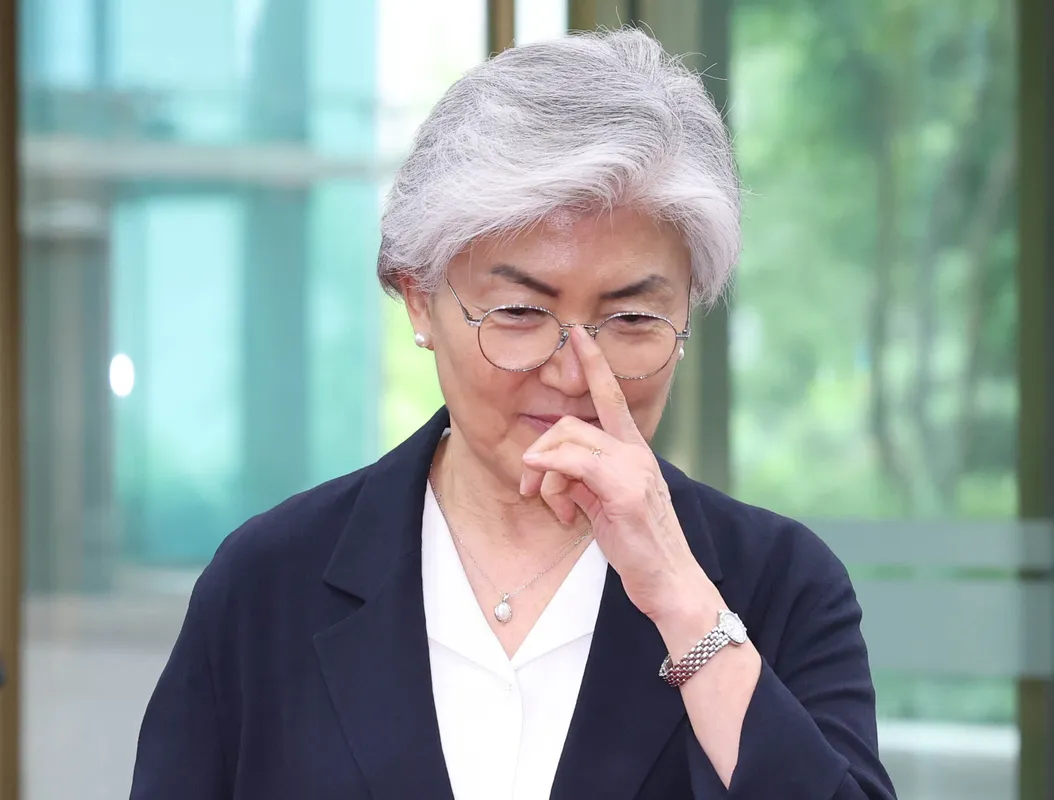
Seoul, South Korea – The South Korean Presidential Office announced on the 16th that a National Security Council (NSC) standing committee meeting was convened to discuss current issues in South Korea-U.S. trade and security cooperation. Notably, the meeting included Ambassador to the U.S. Kang Kyung-wha, who had recently returned from Washington D.C., alongside officials from the Ministry of Economy and Finance, the Ministry of Trade, Industry and Energy, and the Fair Trade Commission. The participation of Ambassador Kang, who made a temporary return to South Korea, in an NSC meeting is considered an unusual step.
Ambassador’s Return Highlights US Concerns
Ambassador Kang’s presence is believed to be a move to convey the sentiment from the U.S. administration and Congress regarding key issues. These include the delayed fulfillment of a $350 million U.S. investment pledge and the designation of Coupang Inc. Chairman Kim Beom-seok as an individual subject to sanctions by the U.S. Treasury Department. The Ministry of Trade, Industry and Energy, responsible for overseeing U.S. investments, and the Fair Trade Commission, which imposed a significant fine on Coupang, were both represented.
During the meeting, a senior official emphasized the need for close, inter-agency cooperation to advance South Korea-U.S. relations. This statement was interpreted as a call for a unified government response to address U.S. concerns. These concerns reportedly include South Korea’s pursuit of nuclear fuel processing capabilities, the acquisition of uranium enrichment rights, and cooperation on U.S. military base maintenance, all of which are linked to the broader security alliance.
The U.S. side has reportedly been sending signals of dissatisfaction regarding several trade and policy matters. These include the Coupang data privacy issue and the implementation of amendments to the Telecommunications Business Act. When the government’s response was perceived as insufficient, the Ministry of Foreign Affairs reportedly summoned Ambassador Kang back to Seoul to ensure her participation in the NSC meeting.
Foreign affairs sources suggest that Ambassador Kang’s return and participation were intended to send a dual message: to the U.S., signaling that Seoul is actively addressing concerns, and to domestic stakeholders, emphasizing the gravity of the situation. One source commented, “Perhaps the message to the U.S. is ‘We are responding diligently, so please don’t intensify pressure,’ while to domestic entities, it’s ‘The situation is truly serious.'”
Underlying Tensions in the Alliance
While high-level interactions between South Korean and U.S. leaders have generally maintained a positive tone, tensions have surfaced at the administrative and congressional levels. President Lee Jae-myung, for instance, mentioned a golf outing with then-U.S. President Donald Trump during the G7 summit in France last month. President Trump also indicated an intention to review Korean companies for potential reinvestment in the U.S. following his election.
However, differing perspectives on issues like the Coupang case and the delayed U.S. investment have created friction. Ambassador Kang reportedly described the situation as “quite serious” during a meeting with foreign ministry officials, stressing the need for “persuasive explanations” to the U.S. side.
High-ranking sources indicate that some in the U.S. view the current state of South Korea-U.S. relations as having reached a critical point. They suggest that Ambassador Kang’s return was a strategic move to bring these pressing issues into public discourse, especially as some developments have become difficult for the foreign ministry to manage alone.
Coupang Data Dispute Fuels U.S. Frustration
The dispute involving Coupang’s data privacy practices has become a significant point of contention. In November of last year, Coupang was fined 624.7 billion won by the Personal Information Protection Commission for a data breach. President Lee Jae-myung addressed this issue, stating that the government’s policy is to strengthen penalties for personal information leakage. He also alluded to companies arguing that current penalties are merely symbolic, implying that Coupang’s argument against the fine, based on its adherence to regulations, might be perceived as such.
The U.S. reportedly views the fine imposed on Coupang as disproportionately high compared to penalties levied against Chinese e-commerce platforms like Temu and AliExpress for similar privacy violations. From the U.S. perspective, Coupang is seen as a representative American company competing against Chinese firms in South Korea and Taiwan. The perception that the South Korean government is treating a U.S. company more harshly than Chinese competitors has fueled U.S. frustration.
Furthermore, the U.S. House of Representatives’ Subcommittee on National Security has released a report suggesting Coupang is facing discriminatory attacks. Representative Baek A-kwon stated that Coupang is being “symbolically targeted by the current South Korean government.” President Lee’s remarks are interpreted as an attempt to convince the U.S. that South Korea’s actions against Coupang are not discriminatory but are in line with established laws and policies.
The U.S. also reportedly views the National Intelligence Service’s (NIS) repeated contact with Coupang as undue pressure from a foreign intelligence agency on an American company. Coupang has alleged that the NIS coerced and directed the retrieval of notebooks from its former Chinese employees, framing it as a national security threat. While the NIS maintains its actions were aimed at preventing large-scale information leakage by foreign nationals and ensuring cooperation, the U.S. House subcommittee cited over 200 phone calls initiated by the NIS as evidence against this claim.
Investment Delays and Security Cooperation Issues
Beyond the Coupang issue, the U.S. administration is reportedly dissatisfied with the lack of progress on the $350 million (approximately 517 billion won) investment in the U.S. pledged by South Korea during a summit last year. Several other factors have also contributed to U.S. distrust, including statements by former Unification Minister Cho Myung-gyon regarding the potential dismantling of North Korean uranium enrichment facilities, South Korea’s request for the division and management of the Demilitarized Zone (DMZ), and the implementation of the revised Telecommunications Business Act.
These issues have reportedly hampered progress on follow-up security cooperation talks, such as securing rights for uranium enrichment, processing spent nuclear fuel, and importing raw materials. The urgency felt by officials like former Minister Cho, stemming from these stalled security talks, is seen as a reason for summoning Ambassador Kang.
Sources within the foreign ministry suggest that while the pro-alliance faction within the government acknowledges the seriousness of U.S.-South Korea relations, other factions, particularly those focused on economic and trade issues, may be prioritizing their own agendas. The summoning of Ambassador Kang is interpreted as an attempt to convey the “on-the-ground urgency” to the government before the U.S. midterm elections, after which security cooperation talks might become more challenging.
