

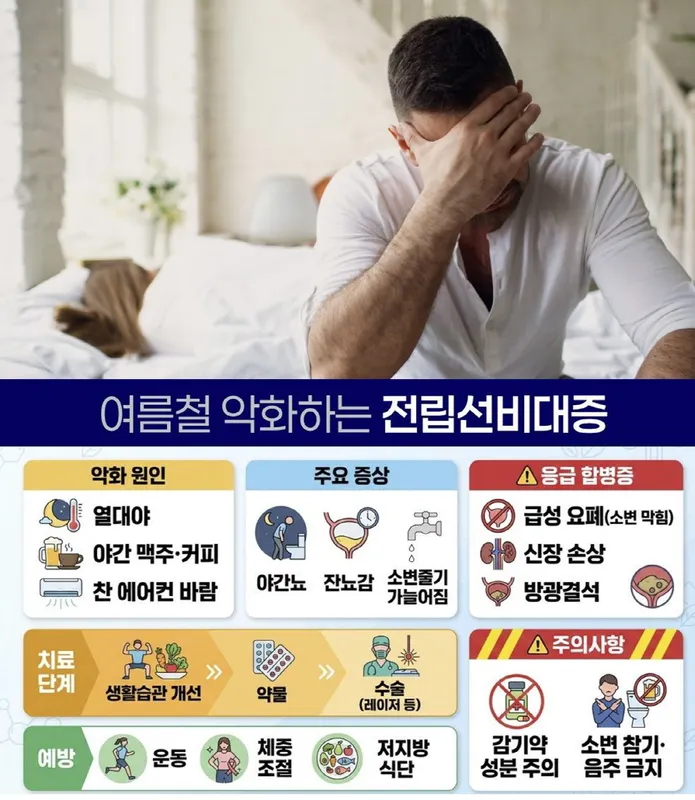
As summer heatwaves persist, an increasing number of middle-aged men are experiencing disrupted sleep and frequent nighttime trips to the restroom. This surge in nocturia, or waking up at night to urinate, is often linked to benign prostatic hyperplasia (BPH), a common condition affecting the prostate gland.
Understanding Benign Prostatic Hyperplasia (BPH)
BPH is a non-cancerous enlargement of the prostate gland, a small organ situated just below the bladder that surrounds the urethra. As the prostate grows, it can compress the urethra, obstructing urine flow and leading to a range of urinary symptoms. This condition typically begins to manifest in men over 40, with its prevalence increasing significantly with age. By their 60s, 60-70% of men experience BPH, and by their 70s and beyond, it affects the vast majority.
Recent data from the Health Insurance Review & Assessment Service indicates a notable rise in BPH diagnoses. The number of patients diagnosed with BPH grew from 1,304,329 in 2020 to 1,583,627 in 2024. This escalating figure underscores the growing impact of BPH on men’s health.
Factors Worsening Symptoms
Several factors can exacerbate BPH symptoms, particularly during warmer months. High nighttime temperatures can make it difficult to achieve restful sleep. When the prostate is enlarged, even a small amount of urine in the bladder can trigger a strong urge to urinate, leading to frequent awakenings. Additionally, lifestyle choices and environmental factors play a role:
- Dietary Habits: Consuming alcohol, particularly beer, or caffeine late in the evening can irritate the bladder and increase urine production.
- Environmental Factors: Overuse of air conditioning, which can lead to cold extremities, may also contribute to bladder constriction and worsen symptoms.
- Medications: Certain medications, especially those containing anticholinergic components (often found in cold remedies), can impair bladder function and should be used with caution by individuals with BPH.
Symptoms and Potential Complications
In its early stages, BPH may present with no noticeable symptoms. However, as the prostate continues to enlarge, men may begin to experience:
- A weak or interrupted urine stream.
- Difficulty starting urination.
- A feeling of incomplete bladder emptying.
- Frequent urination, especially at night (nocturia).
- Urgency to urinate.
- Straining to urinate.
Ignoring these symptoms can lead to more serious complications. If the enlarged prostate completely obstructs urine flow, it can necessitate emergency measures, such as catheterization, to drain the bladder. Furthermore, incomplete bladder emptying can lead to the formation of bladder stones and urinary tract infections. In severe cases, untreated BPH can result in kidney damage, bladder damage, or even blood in the urine.
Dr. Jun-seong Jeon, a urologist at A+ Yangji Hospital, emphasizes the potential severity: “If the prostate is severely enlarged and completely blocks urine output, a situation may arise where a catheter must be inserted to facilitate urination.”
When to Seek Medical Attention
While not every man with an enlarged prostate requires immediate treatment, medical intervention should be strongly considered if BPH significantly impacts daily life or leads to complications like urinary tract infections or bladder stones. The primary goal of treatment is to manage the progression of BPH and prevent these adverse outcomes.
For men experiencing mild symptoms, a “watchful waiting” approach may be recommended, involving regular check-ups (once or twice a year) to monitor the condition. During this period, lifestyle modifications are crucial. These include reducing fluid intake after dinner to minimize nighttime urination and making other adjustments to sleep hygiene.
Treatment Options for BPH
If symptoms become more severe or complications arise, various treatment options are available:
- Medication: Medications can help relax the bladder neck muscles or shrink the prostate, improving urine flow.
- Minimally Invasive Procedures: For moderate to severe cases, minimally invasive procedures can offer relief. These include transurethral resection of the prostate (TURP), where excess prostate tissue is removed, or laser vaporization of the prostate.
- Surgery: In cases of very large prostates or when other treatments are ineffective, surgical removal of the enlarged prostate tissue may be necessary. Modern surgical techniques, including Holmium laser enucleation and robotic-assisted surgery, aim to minimize complications and reduce recovery time compared to traditional open surgery.
Holmium laser surgery, for instance, offers the advantage of separating the enlarged prostate tissue from its capsule, which can reduce the recurrence rate of BPH.
Preventive Measures and Lifestyle Adjustments
For individuals diagnosed with BPH, it is essential to avoid holding urine for extended periods. Furthermore, limiting the intake of alcohol and strong stimulants like caffeine is advised. It is crucial to inform healthcare providers about BPH when receiving prescriptions, as some medications can negatively affect urinary function.
Dr. Jeon adds, “BPH is primarily caused by hormonal changes associated with aging, making it difficult to address the root cause directly. However, research suggests that diets high in saturated fat and cholesterol may be risk factors. Therefore, maintaining a healthy weight through diet and exercise is beneficial for prevention.”
