

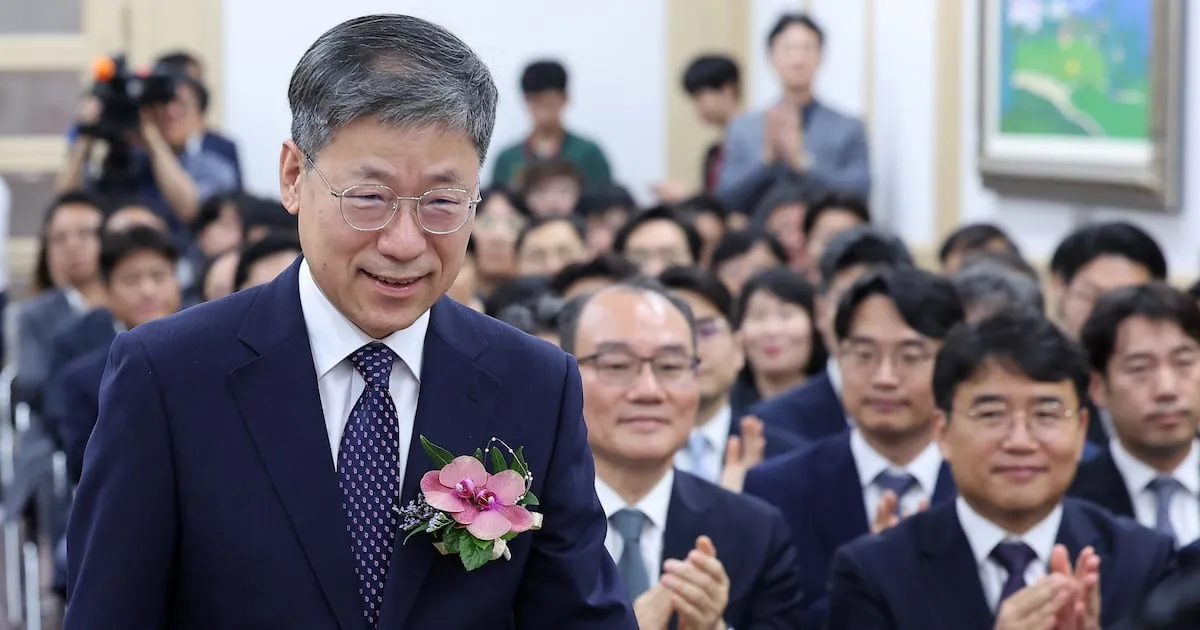
The newly appointed Chief of the Court Administration, Noh Kyung-pil, has voiced concerns regarding increasing external pressures that are making it difficult for judges to independently conduct trials and for court staff to perform their duties stably. Speaking at his inauguration ceremony on August 14th at the Supreme Court’s Mugunghwa Hall, Noh, who is the 23rd member of the judicial service, pledged to create a robust environment where all court personnel can conscientiously carry out their duties in accordance with the law and principles.
Addressing Challenges to Judicial Independence
Noh Kyung-pil began his remarks by acknowledging the recent, deeply regrettable passing of a judge who had diligently served. He offered profound condolences to all court members who silently endured the difficulties and sorrow associated with this event. The late Judge Shin Jong-oh of the Seoul High Court, who had presided over the appeal of the Kim Keon-hee case, was found deceased in his office at the Supreme Court in May. Reports indicated that he had expressed significant distress to colleagues about an overwhelming workload prior to his death.
The appointment of Noh Kyung-pil as Chief of the Court Administration follows a four-month vacancy after the resignation of the previous Chief Justice, Park Young-jae. Park had stepped down after facing intense legislative scrutiny over what was termed the ‘Three Judicial Acts’ – namely, the establishment of the High-Speed Trial System, the introduction of the Judicial Research and Training Institute, and an increase in the number of Supreme Court justices. These legislative changes were perceived by some as potentially undermining the judiciary.
Reflecting on Public Trust and Judicial Reform
Addressing the recent significant shifts in the judicial system, Noh stated, “This serves as a profound moment for deep reflection on whether our judicial system has adequately met the public’s attention and expectations.” He emphasized that his mission would begin with a dedicated effort to listen attentively to every voice of the public, to genuinely understand their sentiments, and to incorporate those wishes into the court’s operations.
Noh outlined his vision for the future, highlighting the potential of leveraging artificial intelligence (AI) to enhance the judicial system. He believes that such advancements will not only improve the efficiency of trial proceedings but also significantly increase public access to justice and convenience. Furthermore, he indicated plans to develop various reform measures to ensure that human rights are protected and fair trials are conducted throughout the entire judicial process, from investigation to sentencing.
Background of Chief Justice Noh Kyung-pil
Noh Kyung-pil, born in Haenam, Jeollanam-do, is an alumnus of Gwangju High School and Seoul National University’s College of Law. He was appointed as a judge in 1997. His career path includes significant roles such as a research judge at the Supreme Court, a judge at the Seoul High Court, Deputy Presiding Judge at the Gwangju High Court, and Deputy Presiding Judge and Senior Deputy Presiding Judge at the Suwon High Court. He was appointed as a Supreme Court Justice in August 2024.
The Chief of the Court Administration plays a crucial role in managing the administrative functions of the judiciary, ensuring the smooth operation of courts, and supporting judges in their judicial duties. The position requires a deep understanding of legal principles and a commitment to upholding the rule of law. Noh’s appointment comes at a time when the judiciary is navigating complex challenges, including public scrutiny and legislative reforms, making his leadership and vision for judicial independence particularly significant.
The emphasis on external pressures highlights a persistent concern within judicial circles about maintaining impartiality amidst political and societal influences. The late judge’s case serves as a stark reminder of the immense pressure that can be placed upon individuals within the judicial system. Noh’s commitment to creating a “robust environment” suggests a focus on strengthening the internal support systems for judges and court staff, thereby enabling them to perform their duties without undue external interference.
His acknowledgment of the judiciary’s potential shortcomings in meeting public expectations is a critical step towards rebuilding trust. By pledging to listen to the public and incorporate their feedback, Noh signals a move towards a more responsive and transparent judicial system. This approach is vital in a democratic society where the judiciary’s legitimacy is intrinsically linked to public confidence.
The proposed integration of AI into the judicial system is a forward-looking initiative. While AI can offer efficiency gains, the focus on ensuring human rights protection and fair trials within this technological framework is paramount. This dual approach—embracing innovation while safeguarding fundamental legal principles—will be key to the success of these reforms. The goal is to enhance the judicial process for all stakeholders, ensuring that technology serves justice rather than compromising it.
Ultimately, Noh Kyung-pil’s inaugural address sets a tone of introspection, resilience, and forward-thinking. His tenure is expected to be marked by efforts to bolster judicial independence, foster public trust through responsiveness, and modernize the judicial system through technological integration, all while upholding the core tenets of justice and human rights.
