

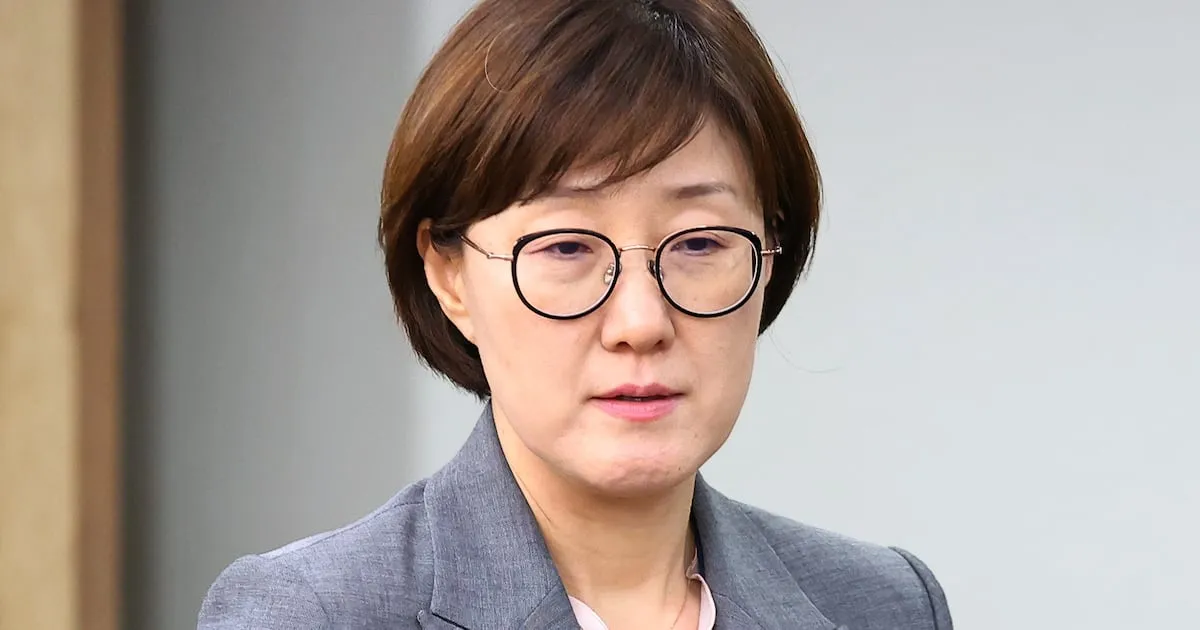
A publisher accused of spreading defamatory falsehoods about Kim Hyun-ji, the First Deputy Secretary of the Presidential Secretariat, has been indicted. The Seoul Metropolitan Police Agency’s Financial and Economic Crimes Investigation Division announced on the 13th that they had sent the case to the prosecution without detention on May 26th. The individual in question, identified as Heo Mo, the representative director of Hanmi Ilbo, faces charges of defamation under the Act on Promotion of Information and Communications Network Utilization and Information Protection, among other offenses.
Allegations of Defamatory Reporting
Heo Mo is alleged to have authored and published articles containing false information concerning Kim Hyun-ji. These reports reportedly included baseless accusations of illicit affairs, infidelity, embezzlement of state funds, and collusion with intelligence agencies. These claims form the basis of the defamation charges.
The Democratic Party’s National Assembly Steering Committee had previously filed a complaint against Heo Mo and Hanmi Ilbo with the Seoul Metropolitan Police Agency in October of the previous year. The complaint cited violations of the Act on Promotion of Information and Communications Network Utilization and Information Protection.
Previous Detention Request Denied
During the investigation, the police sought an arrest warrant for Heo Mo. However, the Seoul Central District Court denied the request on April 10th, stating that there were insufficient grounds to believe the suspect posed a flight risk or was likely to destroy evidence.
Background of the Publisher
Heo Mo is understood to have previously worked at the conservative online news outlet Sky Daily. After leaving that position, he founded Hanmi Ilbo. His journalistic career includes a report published on January 16th of the previous year during his tenure at Sky Daily. This report claimed that during a non-combat status alert on December 3rd, the military had apprehended 99 Chinese nationals suspected of espionage near the central line and handed them over to the U.S. Forces Korea.
In relation to this earlier report, an arrest warrant was sought last May on charges of obstructing the execution of duty due to a false report. However, this warrant was also ultimately dismissed by the court.
The Role of the Presidential Secretariat
The Presidential Secretariat serves as a crucial administrative body supporting the President of South Korea. It is responsible for managing presidential affairs, coordinating policy, and facilitating communication between the President and various government agencies, as well as the public. The First Deputy Secretary, a high-ranking official within this secretariat, plays a significant role in the day-to-day operations and strategic planning directed by the President.
Allegations of defamation against such a high-profile official can have serious implications, not only for the individuals involved but also for public trust in institutions and the media. The legal proceedings aim to ascertain the veracity of the claims made and to uphold the principles of accurate reporting and protection of reputation.
Legal Framework for Defamation
Defamation laws, such as the Act on Promotion of Information and Communications Network Utilization and Information Protection in South Korea, are designed to protect individuals from reputational harm caused by false statements. These laws typically require that a statement be false and that it cause damage to the subject’s reputation. In cases involving public figures, the legal standards can sometimes differ, with a greater emphasis placed on public interest and the extent to which the statements were made with malice or reckless disregard for the truth.
The investigation and subsequent indictment underscore the legal mechanisms in place to address alleged journalistic misconduct. The prosecution will now review the evidence gathered by the police to determine whether to proceed with a trial. The outcome of this case could have broader implications for media accountability and the protection of public officials from unsubstantiated accusations.
Conclusion
The indictment of the Hanmi Ilbo publisher marks a significant development in the case involving allegations of defamation against a key presidential aide. The legal process will continue as prosecutors examine the evidence. This situation highlights the ongoing tension between freedom of the press and the protection of individual reputations, particularly for those in public service. The court’s decision on whether to proceed to trial will be closely watched.
