

The South Korean government’s plan to establish a major semiconductor cluster in the Muan-gun area of Jeollanam-do province hinges on the relocation of the existing military airport. This ambitious project, backed by significant investment pledges from industry giants like Samsung Electronics and SK Hynix totaling approximately 800 trillion won, is now at a critical juncture. The final decision rests with local government heads, but local resident opposition could pose a substantial hurdle to the relocation proposal.
The Semiconductor Cluster Initiative
The proposed semiconductor cluster is envisioned as a vital industrial hub, aiming to leverage substantial private sector investment. The cornerstone of this plan is the relocation of the current military airport in Gwangju. This move is a prerequisite for developing the designated area into a state-of-the-art semiconductor manufacturing and research complex. The scale of investment, estimated at 800 trillion won, underscores the national economic significance attached to this project.
Muan-gun Selected as a Potential Relocation Site
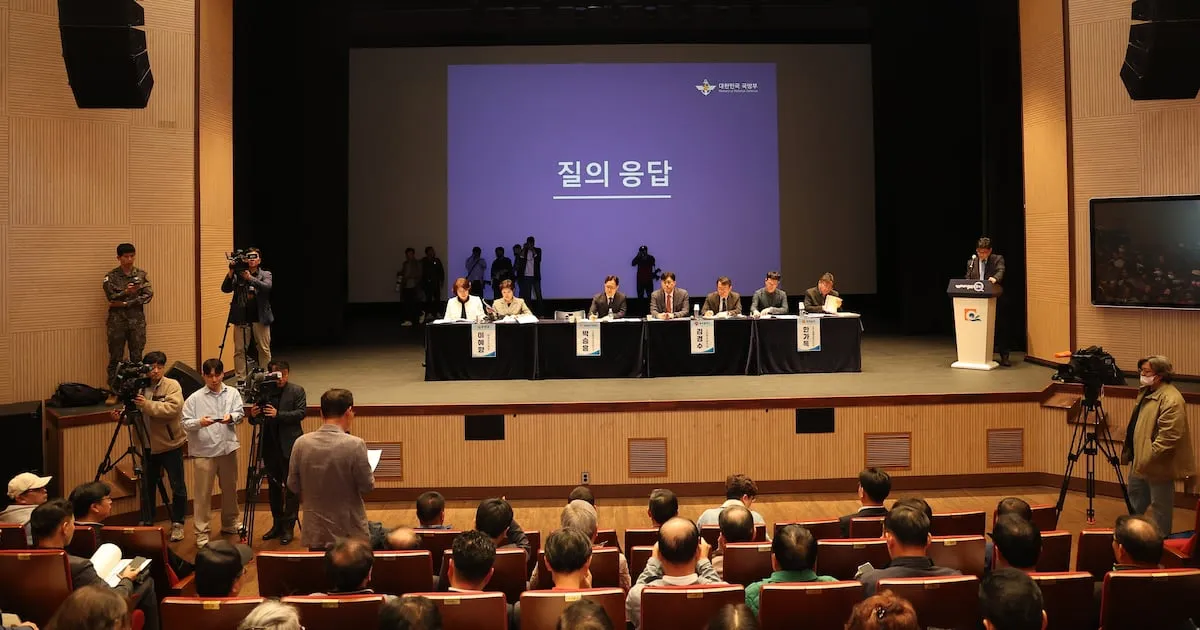
In April, the Ministry of National Defense identified Muan-gun’s military airport as a “preliminary relocation candidate site” following public hearings. This designation marks the initial phase in the complex process of relocating the military airport. The Ministry’s role at this stage is to assess the suitability of the proposed site for the airport’s relocation. Subsequent steps involve finalizing the relocation site, developing support plans, and crucially, conducting a resident referendum and application for hosting the new facility.
The Importance of Resident Opinion
The success of the military airport relocation hinges significantly on the will of the local residents. According to the Military Airport Relocation Act, local government heads can request a resident referendum once a potential relocation site is designated. This referendum is designed to gauge public opinion on hosting the military airport. However, it’s important to note that the referendum results do not automatically determine the relocation site. The law does not mandate that local government heads must proceed with the relocation application based solely on the referendum outcome.
A legal interpretation from the Ministry of Government Legislation clarifies that even if a referendum is held, the local government head is not legally bound to base their decision on the referendum’s results when deciding whether to apply for hosting the relocated airport.
Challenges in Previous Relocation Efforts
A significant challenge in such relocation projects lies in the reluctance of local government officials to make decisions that contradict the wishes of their constituents. A notable precedent is the proposed relocation of the military airport in Suwon, Gyeonggi Province. Suwon City officially proposed the relocation to the Ministry of National Defense in 2014. In 2017, Hwaseong City’s Hwaseo district was selected as a preliminary relocation candidate. However, due to strong opposition from Hwaseong City and its residents, the relocation project has been stalled for nearly a decade.
An official familiar with the Suwon case commented that the decision to designate a candidate site was made unilaterally without fully consulting local residents. The current Governor of Gyeonggi Province, along with the mayors of Suwon and Hwaseong, are all members of the Democratic Party. This situation illustrates that even within the same political party, local government heads find it difficult to disregard the opinions of their residents.
Muan-gun’s Approach to the Relocation
In light of these challenges, Muan-gun plans to actively solicit resident opinions regarding the military airport relocation. A representative from Muan-gun stated, “The relocation of the military airport will have a profound impact on the future of the region and the lives of its citizens. Therefore, we will ensure transparency throughout the entire process and respect the decision made by the citizens through the most democratic method, the resident referendum.”
Key Conditions for Relocation
Muan-gun has also outlined specific conditions that must be met for the relocation to proceed. These core requirements include the relocation of Gwangju’s civilian airport, a 1 trillion won investment from Gwangju City, and the provision of national-level incentives. Muan-gun officials believe that without the fulfillment of these three key conditions, it will be difficult to gain the support of the local populace.
During a public hearing held in April concerning the preliminary relocation site, some residents expressed concerns about the military airport’s relocation through silent protests, highlighting the sensitivity and importance of this issue to the community.
Economic Implications and Future Outlook
The successful establishment of the semiconductor cluster in Muan-gun could significantly boost the regional economy, creating jobs and fostering technological development. The substantial investment from major semiconductor companies promises a ripple effect across various related industries. However, the project’s realization is contingent upon resolving the complex issue of the military airport’s relocation, which requires navigating local political dynamics and securing genuine community consensus.
The government’s commitment to transparency and democratic processes, particularly through resident referendums, is crucial. The experience of Suwon serves as a cautionary tale, emphasizing the need for thorough public engagement and consideration of local sentiment. As Muan-gun moves forward, the dialogue between the government, industry, and residents will be paramount in determining the future of this significant national project.
