

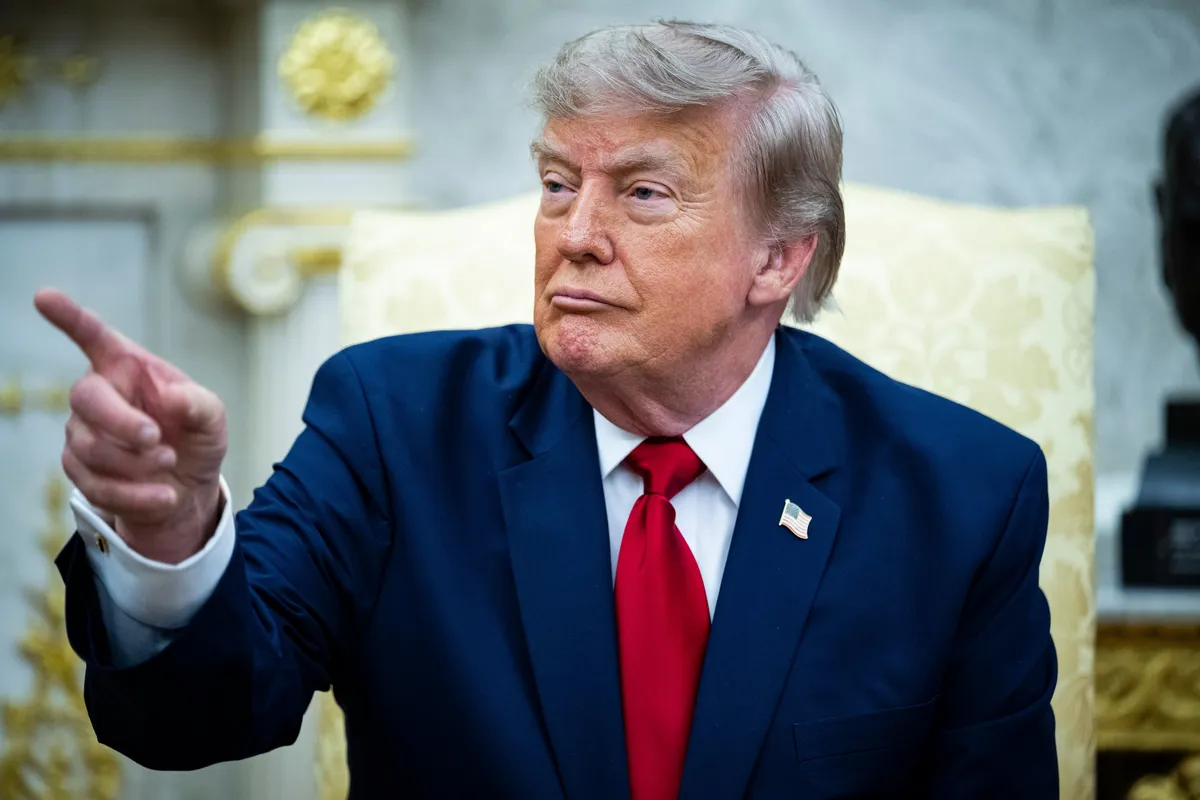
The U.S. government is reportedly exploring the possibility of intervening in a defamation lawsuit filed by former President Donald Trump against the British Broadcasting Corporation (BBC). The lawsuit, which seeks $10 billion in damages, centers on a BBC documentary that Trump alleges misrepresented his words and damaged his reputation concerning the January 6th Capitol riot. This potential government involvement raises significant legal and political questions.
Background of the Lawsuit
Former President Donald Trump initiated the defamation lawsuit against the BBC late last year. The core of his claim revolves around a BBC documentary that covered the events of January 6th, 2021, at the U.S. Capitol. Trump asserts that the documentary deliberately edited and distorted his statements, thereby defaming him and causing substantial harm to his reputation. To seek redress for this alleged damage, he filed a complaint in the U.S. District Court for the Southern District of Florida, demanding $10 billion in compensation. This figure is equivalent to approximately 14.8 trillion South Korean Won.
U.S. Government’s Potential Involvement
Recent reports indicate that the U.S. government has filed court documents suggesting it is considering becoming directly involved in the legal proceedings. According to information obtained by the Financial Times, the government’s rationale for this potential intervention stems from the BBC’s request for document submissions from multiple entities, including U.S. government agencies. The BBC reportedly sought these documents in 48 separate instances. The government’s consideration of intervention highlights the complex intersection of a former president’s personal legal action and the interests of the federal government.
Legal Considerations for Intervention
The U.S. government’s potential participation in the lawsuit is a complex matter. While Trump filed the suit in his individual capacity, his status as the current President at the time of the documentary’s broadcast and its alleged impact means the federal government’s interests could be seen as intertwined. The government’s argument for intervention suggests that because U.S. public institutions were among those from whom the BBC requested documents, the government has a vested interest in the proceedings. This perspective posits that it is difficult for federal agencies to remain entirely detached from actions that could potentially affect the sitting president or the administration’s standing.
BBC’s Response to Government Intervention
The BBC has expressed strong opposition to the U.S. government’s potential involvement in the case. The broadcaster argues that the lawsuit is a personal matter for Donald Trump and that the government should not be drawn into it. They maintain that the documentary was not broadcast in the United States, questioning the jurisdiction of U.S. courts to hear the case. The BBC has formally requested that the lawsuit be dismissed on these grounds, citing a lack of standing for U.S. legal bodies to adjudicate the matter.
BBC’s Stance on the Documentary and Lawsuit
While the BBC has publicly apologized to Donald Trump for any offense caused by the editing methods used in the documentary, they remain resolute in their defense against the defamation lawsuit. The organization has stated its intention to vigorously contest the claims. The BBC has also pointed out that Trump has not provided financial documentation to support his claims of damage to his brand, assets, or business interests, despite alleging such harm occurred due to the documentary.
Documentary Editing and Public Apology
The controversy stems from the BBC’s documentary, which examined the events surrounding the January 6th Capitol riot. Trump’s legal team contends that the documentary’s producers manipulated his words and context to create a narrative that was damaging to his reputation. In response to these allegations, the BBC issued an apology regarding the specific editing techniques employed. However, this apology was carefully worded, distinguishing between the manner of presentation and the substance of the claims made in the lawsuit.
Legal Strategy and Dismissal Request
The BBC’s legal strategy involves challenging the jurisdiction of U.S. courts. They argue that since the documentary was not aired within the United States, American legal bodies lack the proper grounds to hear the case. This procedural argument aims to have the lawsuit dismissed before it proceeds to a substantive review of the defamation claims. The broadcaster emphasizes that the alleged harm occurred in relation to a program not shown domestically, thereby undermining the basis for a U.S. legal challenge.
Financial Claims and Evidence
The $10 billion figure sought by Donald Trump is substantial and represents a significant claim for reputational damage. For such a claim to be successful, Trump would typically need to provide concrete evidence of the financial losses incurred as a direct result of the BBC’s reporting. The BBC has highlighted that, to date, Trump has not furnished the necessary financial records or evidence to substantiate his claims of damage to his business ventures, personal brand, or assets.
Substantiating Damages
In defamation law, proving damages is a critical component of a successful claim. This often requires demonstrating a quantifiable loss, such as a decline in revenue, loss of business opportunities, or damage to professional standing that can be directly linked to the defamatory statements. The BBC’s assertion that Trump has not provided relevant financial data suggests a potential hurdle for his legal case. Without such evidence, it may be challenging for Trump to meet the burden of proof required to secure such a large sum in damages.
BBC’s Position on Financial Disclosure
The BBC’s public statements indicate they are scrutinizing Trump’s claims of financial harm. By pointing out the lack of financial documentation, they are implicitly questioning the validity and scale of the damages Trump is seeking. This stance suggests that the BBC is prepared to challenge the factual basis of Trump’s claims, not just the legal jurisdiction or the editing practices.
Conclusion
The potential intervention of the U.S. government in Donald Trump’s $10 billion defamation lawsuit against the BBC adds another layer of complexity to an already high-profile case. While the BBC has apologized for editing methods, it stands firm against the lawsuit and questions U.S. jurisdiction. The government’s consideration of involvement, driven by requests for documents from U.S. agencies, underscores the sensitive nature of the case. As the legal battle unfolds, the focus will remain on the evidence presented, the arguments regarding jurisdiction, and the ultimate decision on whether the U.S. government will formally enter the fray.
