

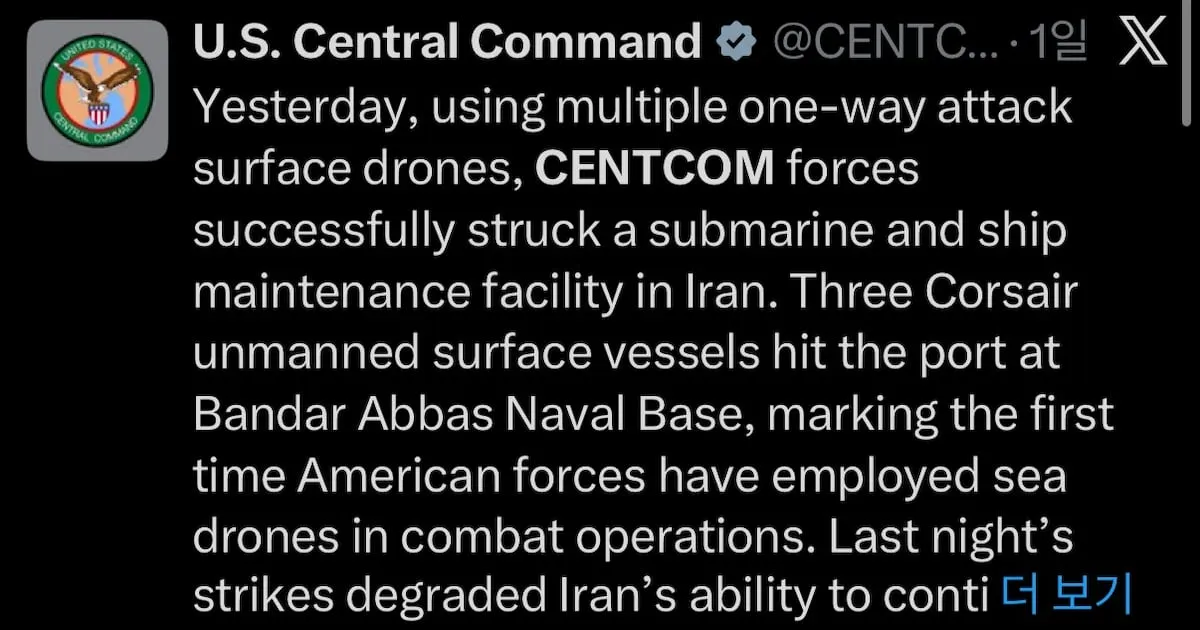
U.S. military forces have conducted airstrikes targeting Iranian drone facilities, aiming to degrade the nation’s capacity for launching attacks. The operation, carried out by U.S. Central Command (CENTCOM), reportedly struck facilities used for drone storage and launch, as well as coastal defense systems. This action comes amid ongoing tensions and a series of military confrontations between the United States and Iran.
Details of the U.S. Airstrike Operation
CENTCOM announced on X, formerly Twitter, that the strikes were executed on the morning of October 15th, local time, concluding around 7:30 AM Central Daylight Time. The operation involved the deployment of precision-guided munitions against Iranian coastal defense and drone storage and launch sites located on Greater Tunb Island. According to CENTCOM’s statement, the strikes lasted approximately 90 minutes.
The U.S. military asserted that this targeted action significantly diminishes Iran’s capability to threaten commercial shipping in the Strait of Hormuz. The Strait is a vital waterway for global oil transportation, and Iran has previously been accused of harassing or seizing commercial vessels transiting through it. By neutralizing these drone and defense assets, the U.S. aims to enhance maritime security and deter further aggressive actions by Iran in this critical region.
Context of U.S.-Iran Military Engagements
The recent airstrikes are part of a broader pattern of military engagements between the U.S. and Iran. U.S. forces have been conducting strikes against Iranian targets for several days. These actions are often framed as responses to perceived threats or provocations by Iran or its proxies in the region.
Iran has reported casualties resulting from these recent U.S. operations. The Iranian government stated that over the past few days, at least 30 civilians and more than 7 military personnel have died as a consequence of U.S. strikes. These figures highlight the escalating nature of the conflict and the human cost involved.
The Strategic Importance of the Strait of Hormuz
The Strait of Hormuz is a narrow chokepoint connecting the Persian Gulf to the Gulf of Oman. Approximately 20-30% of the world’s oil, including crude oil and refined products, passes through this strait daily. Its strategic significance makes any disruption to shipping traffic a matter of global economic concern.
Iran’s alleged harassment of commercial vessels in this area has been a persistent issue, drawing international condemnation and prompting responses from naval forces, including those of the United States. The U.S. military’s stated objective in conducting strikes like the recent one on Greater Tunb Island is to ensure freedom of navigation and protect international commerce.
Iranian Drone and Missile Capabilities
Drones, officially known as Unmanned Aerial Vehicles (UAVs), have become increasingly important military assets for Iran. They are utilized for reconnaissance, surveillance, and offensive operations. Iran has developed and deployed a range of drone models, some of which have been used in attacks against regional adversaries and, according to U.S. and allied intelligence, have been supplied to groups operating in various conflict zones.
In addition to drones, Iran possesses a significant arsenal of ballistic and cruise missiles. These capabilities are often seen as a key component of its asymmetric warfare strategy, allowing it to project power and deter potential adversaries. The U.S. strikes specifically targeted facilities related to drone operations, indicating a focus on degrading this particular aspect of Iran’s military power.
U.S. Central Command’s Role
U.S. Central Command (CENTCOM) is responsible for military operations in a vast region encompassing the Middle East, North Africa, and Central Asia. Its mission includes deterring aggression, responding to crises, and supporting U.S. national interests within this area.
CENTCOM’s public statements, often made via social media platforms like X, serve to inform the public and international community about its operations and strategic objectives. The command’s emphasis on precision strikes and the degradation of enemy capabilities reflects a deliberate military strategy aimed at achieving specific security outcomes while attempting to minimize collateral damage.
International Reactions and Maritime Security Concerns
The ongoing tensions in the Strait of Hormuz and the broader Persian Gulf region are closely monitored by the international community. Major maritime powers and international organizations have repeatedly called for de-escalation and adherence to international maritime law.
Ensuring the safety and security of commercial shipping lanes is a shared responsibility. The U.S. military’s actions are often conducted in coordination with allies and partners who also have a vested interest in maintaining stability in the region. However, such military engagements also carry the risk of unintended escalation, making diplomatic efforts to resolve underlying disputes crucial.
Conclusion
The U.S. military’s recent strikes against Iranian drone facilities represent a significant move to counter perceived threats to maritime security in the Strait of Hormuz. By degrading Iran’s offensive capabilities, particularly its drone program, the U.S. aims to enhance the safety of commercial shipping and deter further aggressive actions. While these operations are presented as necessary measures to protect international interests, they occur within a complex geopolitical landscape marked by ongoing tensions and the risk of escalation. The situation underscores the critical importance of both military deterrence and diplomatic engagement in maintaining regional stability and ensuring the free flow of global commerce.
