

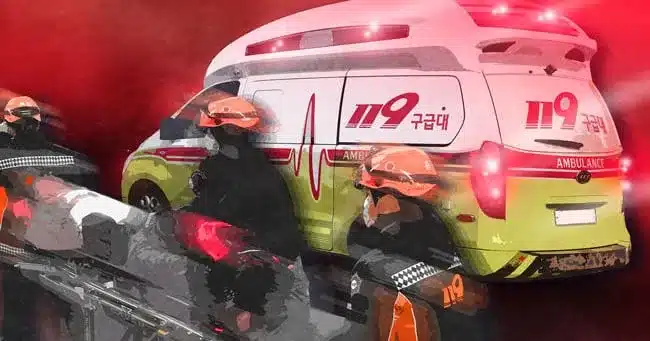
A tragic incident unfolded in Anseong City, Gyeonggi Province, when a truck veered into a bustling flea market, resulting in multiple injuries. The accident occurred around 11:18 AM on the 19th, near a library where a flea market was in full swing. A 1-ton truck reportedly drove into the crowded event, striking six individuals and causing serious harm.
Details of the Flea Market Accident
Emergency services were immediately dispatched to the scene. Among the injured, a male in his 10s and a female in her 20s were found in critical condition, suffering cardiac arrest. Both were rushed to the hospital for urgent medical attention. Additionally, four other individuals sustained significant injuries. These included a male and female in their 20s, and a male in his 60s, who suffered fractures, including a broken leg, and other severe wounds. They were also transported to nearby medical facilities for treatment.
Ongoing Investigation into the Cause
Authorities, including the police and fire department, are currently conducting a thorough investigation to determine the exact cause of the accident. The driver of the truck and witnesses are being interviewed to piece together the sequence of events that led to the vehicle entering the crowded market area. The focus of the investigation includes understanding the driver’s state at the time of the incident and any potential mechanical failures or external factors that may have contributed to the loss of control.
Community Impact and Safety Concerns
The incident has sent shockwaves through the local community, raising concerns about safety at public gatherings and markets. Flea markets, often held in open or semi-open spaces, attract a diverse range of visitors, including families and the elderly. The suddenness and severity of this accident highlight the potential risks associated with vehicular traffic in pedestrian-heavy areas. Local officials are expected to review safety protocols for such events in light of this tragedy.
Preventing Future Incidents
Following such a devastating event, discussions often turn to preventative measures. Experts in traffic safety and event management suggest several strategies that could be implemented to mitigate risks at future markets and similar public gatherings:
- Designated Entry and Exit Points: Clearly marking and controlling vehicle access points to prevent unauthorized or accidental entry into market areas.
- Physical Barriers: Installing temporary or permanent barriers, such as bollards or sturdy fencing, to create a safe buffer zone between market stalls and any adjacent roadways or parking areas.
- Traffic Management Plans: Developing comprehensive traffic management plans for events, including speed limits, designated routes for service vehicles, and adequate signage.
- On-Site Security and Monitoring: Employing trained personnel to monitor the event space, enforce safety regulations, and respond quickly to any emerging risks.
- Vehicle Inspections: Ensuring that any vehicles permitted within or near the event perimeter are thoroughly inspected for mechanical soundness.
- Driver Screening: Implementing procedures to ensure drivers operating vehicles in proximity to public events are fit to drive, potentially including checks for fatigue or impairment.
The Role of Emergency Services
The swift response of the emergency services was crucial in providing immediate medical aid to the victims. Firefighters and paramedics worked diligently at the scene to stabilize the injured before transporting them to hospitals. Their efforts played a vital role in managing the critical conditions of those suffering cardiac arrest and providing initial treatment for severe injuries. The coordination between different emergency units is often a key factor in minimizing casualties during large-scale accidents.
Looking Ahead: Investigation and Accountability
The investigation into this unfortunate event is ongoing. Law enforcement agencies are committed to uncovering all contributing factors, whether they relate to driver error, vehicle malfunction, or inadequate safety measures at the market. The findings of this investigation will be critical not only for determining accountability but also for informing future safety guidelines and regulations for public events. The community awaits the results with the hope that such a tragedy can be prevented from happening again.
The incident serves as a stark reminder of the importance of vigilance and robust safety planning in all public spaces, especially those that attract large crowds. The well-being of attendees at markets, festivals, and other public gatherings must remain a paramount concern for organizers and authorities alike.
