

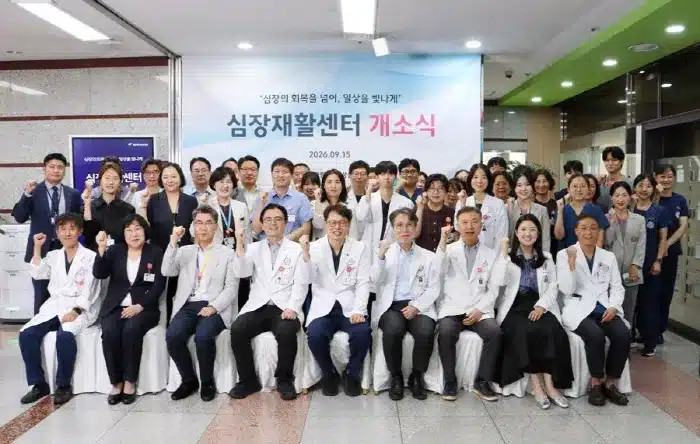
Hallym University Sacred Heart Hospital has officially opened its new Cardiac Rehabilitation Center, marking a significant step forward in providing systematic care for patients with cardiovascular conditions. The center aims to offer comprehensive support, focusing on recovery, rehabilitation, and the prevention of future cardiac events.
Comprehensive Cardiac Rehabilitation Program Launched
The inauguration of the Cardiac Rehabilitation Center on [Date – e.g., October 15th, 2023, based on context] was attended by approximately 30 individuals, including Hospital Director Kim Hyung-soo, key medical staff from the departments of Rehabilitation Medicine, Cardiology, and Cardiovascular Surgery, as well as educational personnel. This initiative underscores the hospital’s commitment to a holistic approach to cardiovascular patient care.
Cardiac rehabilitation is a crucial component of recovery for patients who have undergone treatment for acute myocardial infarction and other heart conditions. It involves a structured program designed to help patients safely regain physical function and exercise capacity, while also reducing the risk of recurrent heart disease. The primary beneficiaries are individuals who have experienced conditions such as heart failure, myocardial infarction, or unstable angina, or those who have undergone cardiac surgeries like coronary artery bypass grafting, angioplasty, or valve surgery, and subsequently face limitations in their physical and exercise capabilities.
Personalized Treatment Plans and Advanced Monitoring
Medical professionals at the center conduct thorough assessments of each patient’s condition. This evaluation includes analyzing cardiac function, exercise capacity, co-existing conditions, and risk factors. Based on these comprehensive assessments, individualized exercise methods and intensity levels are determined for each patient.
The Hallym University Sacred Heart Hospital Cardiac Rehabilitation Center provides a seamless experience, from initial assessment to the actual rehabilitation therapy, all within a single, integrated facility. Patients first receive medical guidance and education from the healthcare team. They then undergo cardiopulmonary exercise testing (CPET) using specialized equipment, including a tilting table, blood pressure monitors, respiratory analyzers, and a pulse oximeter. During exercise, vital signs such as heart rate, blood pressure, and electrocardiogram (ECG) readings are closely monitored. Respiratory function is analyzed to evaluate the patient’s exercise capacity and overall cardiac function.
Using the data gathered from these tests, the medical team formulates personalized exercise prescriptions. This involves considering the patient’s underlying condition, current cardiac function, physical capabilities, and response to exercise. The prescribed exercise intensity and methods are tailored to promote optimal recovery and minimize risks.
State-of-the-Art Facilities and Multidisciplinary Collaboration
Following the prescription phase, patients engage in progressive exercise therapy utilizing specialized equipment within the center, such as treadmills and cycle ergometers. For patients with mobility challenges or a high risk of falls, exercise methods and assessment techniques are adjusted to accommodate their specific physical status and ensure safety.
For individuals with heart conditions, monitoring exercise is not just about the duration or intensity, but critically about the safety of the activity. The center is equipped with a robust monitoring system that allows for continuous and meticulous observation of the patient’s physiological responses during exercise. This system enables immediate intervention in case of any adverse events or emergencies, with dedicated emergency medical equipment and response protocols in place.
The center is staffed by experienced nurses and physical therapists who oversee the entire process of patient examination and exercise therapy. They continuously monitor the patient’s condition and response to exercise, gradually adjusting the exercise intensity according to the medical team’s prescriptions. A key strength of the center is its multidisciplinary approach, fostered through close collaboration between rehabilitation medicine specialists, cardiologists, and cardiovascular surgeons. This collaborative framework ensures that patient care is coordinated and comprehensive.
Integrated Care Pathway for Cardiovascular Patients
Each specialist shares crucial information regarding patient progress and condition, creating a connected care pathway. This ensures that patients requiring cardiac rehabilitation receive timely and appropriate treatment. Through this integrated system, Hallym University Sacred Heart Hospital aims to strengthen its comprehensive cardiovascular care system, extending beyond initial treatments like medication, procedures, and surgery to encompass a full cycle of ‘treatment-recovery-recurrence prevention-return to daily life’.
Commitment to Long-Term Patient Well-being
Hospital Director Kim Hyung-soo emphasized the importance of sustained care beyond the critical phase. “Treating the critical moment of a cardiovascular event is important, but equally vital is the ongoing management that enables patients to return to a healthy daily life and prevent recurrence,” he stated. “The Cardiac Rehabilitation Center will serve as the core of our efforts to integrate the expertise of rehabilitation medicine, cardiology, and cardiovascular surgery. We are committed to providing safe, systematic, and personalized cardiac rehabilitation therapies to all patients who seek our care.”
This enhanced cardiac rehabilitation program signifies the hospital’s dedication to improving patient outcomes and promoting long-term cardiovascular health within the community.
