

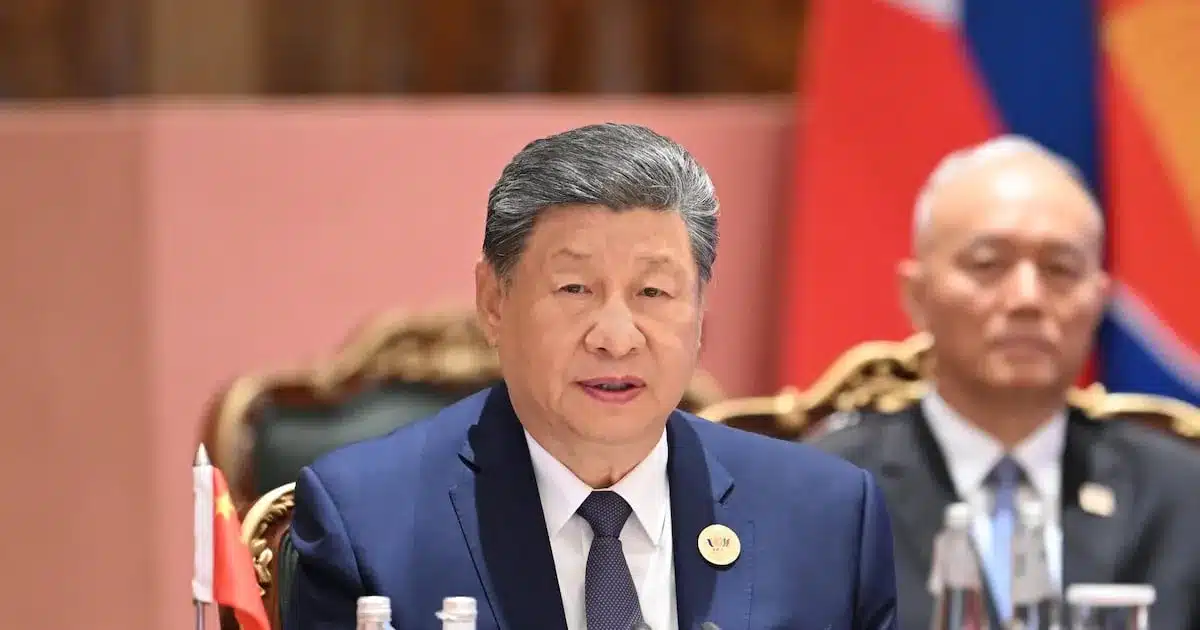
Speculation surrounding the health of Chinese President Xi Jinping has resurfaced following his absence from a gala dinner at the recent BRICS summit. The 73-year-old leader is scheduled to visit the United States on October 24th for a summit with President Donald Trump.
Xi Jinping Misses BRICS Gala Dinner
According to a report by The Wall Street Journal on September 18th, President Xi was slated to attend the BRICS summit gala dinner in New Delhi, India, on September 12th. However, he withdrew at the last minute. The Journal, citing sources familiar with the matter, indicated that Xi’s physical condition was not optimal, leading Chinese Foreign Minister Wang Yi to attend in his stead.
This absence has drawn particular attention given the context of Xi’s visit to India. It marked his first trip to the country in seven years, and he had already met with Indian Prime Minister Narendra Modi. Following the event, social media buzzed with rumors that President Xi had suffered a stroke or a similar medical incident.
However, the Indian Ministry of External Affairs dismissed these claims as untrue. India’s state-run news agency PTI reported that President Xi had returned to his hotel to rest. Furthermore, footage was released showing him ascending an aircraft staircase without assistance, seemingly countering the more severe health concerns being circulated. The Wall Street Journal also noted that there was no concrete evidence to support the health speculation.
Upcoming US Visit and Potential Impact
President Xi is expected to meet with U.S. President Donald Trump at the White House in Washington D.C. on October 24th. This meeting, the first face-to-face encounter between the two leaders in four months since their summit in Beijing, is anticipated to cover a range of critical issues. These include tariffs, the trade war, the conflict in Iran, North Korea, and artificial intelligence (AI).
Should President Xi’s health issues prevent his U.S. visit, it could significantly impact U.S.-China relations. The Chinese government has not responded to inquiries from The Wall Street Journal regarding President Xi’s health status.
Past Health Rumors and Expert Caution
This is not the first time President Xi’s health has been the subject of public speculation. In July, during his visit to Kyrgyzstan, images circulated showing him holding the hand of his wife, Peng Liyuan, as he slowly descended an aircraft staircase. This visual also fueled concerns about his well-being.
Despite these instances, experts caution against overinterpreting gait or brief appearances as definitive indicators of serious health problems. They emphasize that such observations alone should not be the basis for widespread conclusions about a leader’s physical condition. The complexities of international diplomacy often involve demanding schedules and the need for leaders to maintain a public image, which can sometimes lead to misinterpretations of their physical state.
Broader Implications for International Relations
The BRICS group, comprising Brazil, Russia, India, China, and South Africa, represents a significant bloc of emerging economies. The participation and presence of its leaders are crucial for the summit’s effectiveness and for projecting a unified front on global economic and political matters. President Xi’s absence, even if temporary, can lead to questions about leadership continuity and the stability of major global players.
The upcoming U.S.-China summit is particularly critical. The two nations are the world’s largest economies, and their bilateral relationship influences global trade, security, and technological development. Discussions on trade imbalances, technological competition, and geopolitical flashpoints are vital for maintaining international stability. Any disruption to these high-level dialogues, whether due to health concerns or other factors, carries substantial weight.
While official sources have downplayed the recent health rumors, the recurring nature of such speculation highlights the intense global interest in the well-being of President Xi Jinping. His health is intrinsically linked to the direction of Chinese policy and its interactions with the rest of the world. As the U.S. visit approaches, observers will be closely monitoring not only the political agenda but also President Xi’s public appearances for any further clues regarding his health.
The Chinese Foreign Ministry’s silence on the matter, while not unusual in response to media queries about leaders’ health, only serves to fuel further conjecture. In the absence of clear official statements, the international community relies on a combination of official reports, media observations, and expert analysis to form an understanding of the situation. The coming weeks will likely provide more clarity as President Xi proceeds with his international engagements.
