

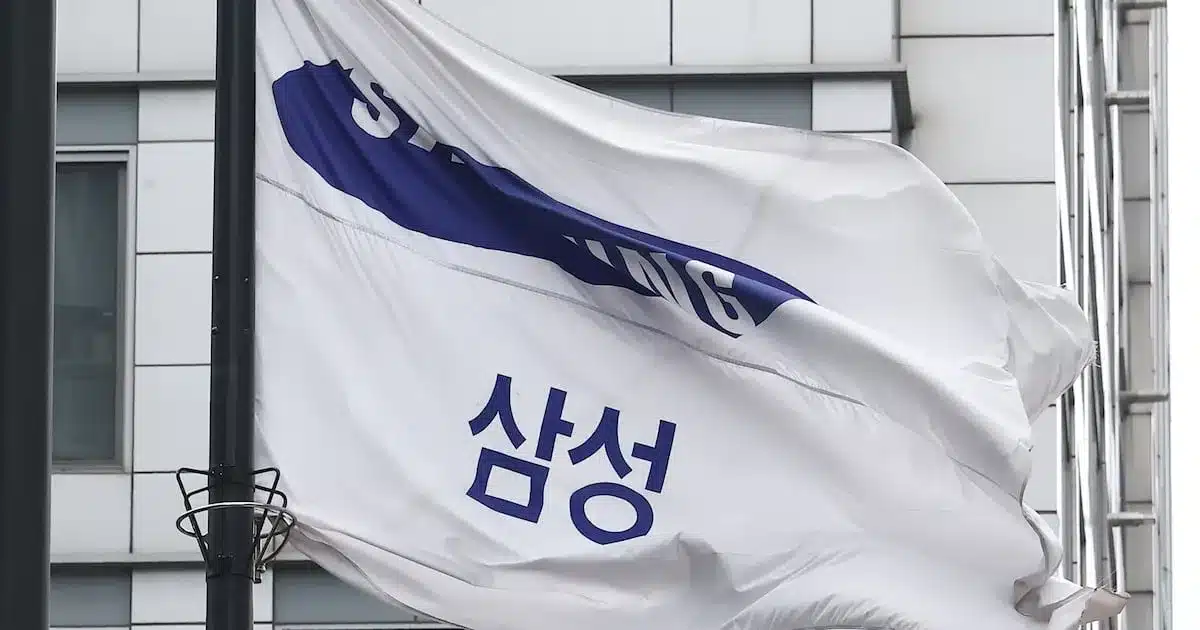
The largest labor union at Samsung Electronics, the Samsung Group Early Business Union (also known as the Early Business Union), is undergoing a significant transformation. It will now exclusively represent workers within the semiconductor (DS) division, effectively becoming a dedicated ‘Semiconductor Union.’ This division follows a period of internal conflict stemming from disagreements over performance-based pay during this year’s wage negotiations, which ultimately led to the split.
Union Restructures Amidst Internal Disagreements
The decision to restrict membership to the DS division was formalized following the ‘2026 5th General Meeting’ of the Early Business Union. According to the results announced on the 19th, a proposed amendment to the union’s articles of association, limiting eligibility to DS division employees, passed with an overwhelming 96.3% approval from 28,680 voting members. The voter turnout was 55.9%.
Further underscoring the internal divisions, no-confidence votes were also passed against two key figures within the Device eXperience (DX) division: Vice Chairman Lee Song-yi and Gwangju Branch Manager Lee Won-il. These votes garnered 95.7% and 96.2% support, respectively. The union stated that these no-confidence motions were raised due to allegations that the two executives leaked information about their company’s contract dealings with the chairman’s affiliated businesses and discussed the chairman’s resignation to prevent the reorganization of the DS division.
As a consequence of this vote, DX division members who remained in the Early Business Union will be processed for departure, and the two executives will lose their positions. This outcome signifies the departure of both dissenting DX members and leadership from the union’s structure.
Implications of the Semiconductor Union’s Formation
The shift to a dedicated Semiconductor Union is interpreted as a move to solidify the principle that ‘each business division should manage its own profits and distribute them accordingly.’ The Early Business Union had been gaining traction by advocating for performance-based compensation for the semiconductor division, similar to SK Hynix, especially amidst the booming semiconductor market.
Moving forward, the union plans to pursue separate negotiations specifically for the DS division. Having already lost its status as a company-wide union, the organization intends to seek a division of bargaining units within the Labor Relations Commission to establish itself as the representative union for the DS sector.
If this division is recognized, Samsung Electronics will operate under a structure where the DS and DX divisions engage in separate labor negotiations within the same company.
Roots of the Conflict: Performance-Based Pay Disparities
The current conflict originated during this year’s wage negotiations. The core issue revolved around the disparity in performance-based pay. Under a system where operating profit is the benchmark for performance bonuses, employees in the memory semiconductor business, assuming an operating profit of 300 trillion won, were projected to receive approximately 600 million won per person (based on an annual salary of 100 million won, including company stock). In stark contrast, employees in the DX division were estimated to receive only around 6 million won, primarily in the form of company stock.
This significant pay gap fueled resentment among DX and non-memory semiconductor workers. Consequently, the union’s membership, which once exceeded 76,000, dropped below 50,000 by early June as many DX members departed.
The DX-focused Donghaeng Union had previously left the joint negotiation council, demanding a company-wide distribution of performance-based pay. In response, the Early Business Union is set to add a ‘Company-Wide Performance Pay Distribution Demand’ to its agenda for its general meeting scheduled for the 6th of next month.
Meanwhile, the Donghaeng Union is continuing its sit-in protest in front of the residence of Lee Jae-yong, the executive chairman, demanding joint negotiations for both the DS and DX divisions. The situation highlights a deep-seated division within Samsung Electronics’ labor force regarding compensation structures and representation.
