

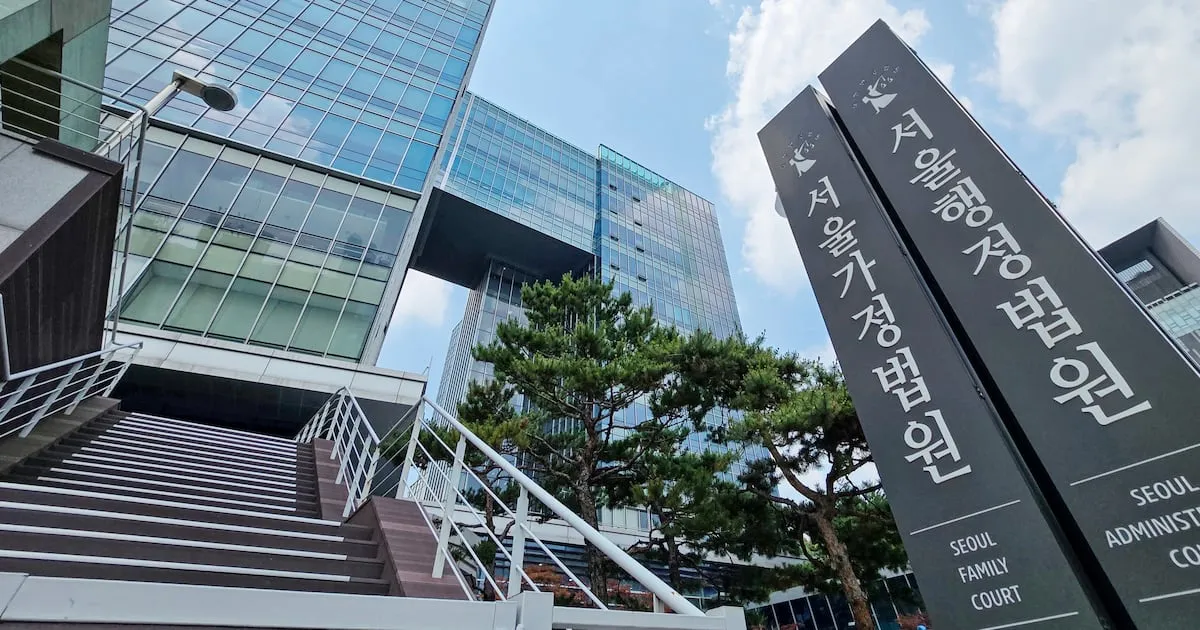
A Seoul court has temporarily suspended the effectiveness of a National Labor Relations Commission (NLRC) decision that would have separated collective bargaining units for subcontractors of POSCO and Donghee Auto. This marks the first time a court has accepted an administrative stay request related to the “Yellow Envelope Law,” a contentious piece of legislation. The Seoul Administrative Court, presided over by Judge Lee Sang-deok, granted the stay requests filed by POSCO on October 18th. The court acknowledged an urgent need to halt the NLRC’s decision to prevent “irreparable harm” to POSCO, stating that the suspension would not significantly impact public interest. A similar rationale was applied to the Donghee Auto case.
Background of the Dispute
The dispute began in March when the Korean Confederation of Trade Unions’ (KCTU) metal workers’ union demanded collective bargaining with POSCO. Subsequently, other subcontractor unions, affiliated with the Federation of Korean Trade Unions (FKTU), applied to the NLRC to separate their bargaining units from the main contractor. The Gyeongbuk Regional Labor Relations Commission initially accepted these separation requests for unions like the FKTU’s metal workers and the national construction workers’ union, recognizing the distinct nature of their work and interests, which necessitated separate negotiations with the parent companies.
NLRC’s Initial Decision and Subsequent Appeal
This decision to allow separate bargaining units was upheld by the NLRC in June. However, POSCO contested this ruling, filing an administrative lawsuit seeking to nullify the NLRC’s decision. Alongside the lawsuit, POSCO submitted the administrative stay request, which the court has now granted. The core legal question of whether the NLRC’s decision to permit separate bargaining units was lawful will be addressed in the main trial.
Understanding the “Yellow Envelope Law” and its Implications
The “Yellow Envelope Law” (officially the Fair Trade Act and the Act on the Prevention of Unfair Support and Protection of Business Partners) aims to strengthen the rights of subcontractors and prevent unfair practices by larger companies. One of its key provisions allows for the separation of collective bargaining processes for subcontractors. Proponents argue that this empowers smaller unions, enabling them to negotiate more effectively with powerful prime contractors without being overshadowed by the larger unions of the parent companies. They contend that distinct work environments, safety regulations, and operational scopes often warrant separate bargaining channels.
Arguments for Separation
The unions that sought separation argued that their working conditions, the specific nature of their tasks, and their relationship with the subcontractors differed significantly from those of the main contractor’s employees. They believed that negotiating independently would lead to fairer outcomes tailored to their specific circumstances. For instance, the metal workers’ union and the national construction workers’ union at POSCO highlighted that their operations involved specialized skills and safety protocols distinct from the core steel manufacturing processes. Similarly, at Donghee Auto, subcontractor unions pointed to unique challenges in the automotive parts manufacturing chain.
Concerns Regarding the Law
Conversely, the prime contractors, such as POSCO and Donghee Auto, have raised significant concerns. They argue that allowing multiple, fragmented bargaining units among their subcontractors could lead to chaotic labor relations and hinder efficient business operations. The primary concern is the potential for repeated, disruptive labor disputes across various subcontractor groups, making it difficult to maintain stable production schedules. Furthermore, they argue that the law could inadvertently weaken the overall bargaining power of labor by fragmenting their efforts and potentially creating inter-union conflicts. The administrative stay granted by the court suggests that these concerns about potential irreparable harm to business operations are being taken seriously.
The Court’s Reasoning for the Stay
In granting the stay, the Seoul Administrative Court emphasized the need to prevent irreversible damage to the companies involved. The court’s decision implies that forcing the companies into separate bargaining processes immediately, based on the NLRC’s ruling, could cause significant operational disruptions and financial losses that would be difficult to rectify later. The court also noted that suspending the NLRC’s decision would not cause substantial harm to the public interest. This suggests a balancing act, where the court weighed the immediate potential negative impacts on the companies against the broader public good, finding the former to be more pressing in this interim stage.
Legal Precedent and Future Proceedings
This case is significant as it is the first time a court has granted an administrative stay related to the “Yellow Envelope Law.” The court’s acceptance of POSCO’s request sets a precedent for how such disputes will be handled in the future. The main trial will now delve deeper into the legality of the NLRC’s decision and the interpretation of the “Yellow Envelope Law” concerning subcontractor bargaining units. The outcome of this trial could have far-reaching implications for labor relations in South Korea, particularly within the subcontracting structures prevalent in major industries like steel and automotive manufacturing.
Broader Impact on Industrial Relations
The “Yellow Envelope Law” was enacted with the intention of fostering a more equitable relationship between prime contractors and their subcontractors. However, its implementation has proven complex, sparking debate among labor unions, businesses, and legal experts. The court’s temporary suspension highlights the ongoing legal and practical challenges in applying the law. While the law aims to empower smaller unions, the court’s decision to grant the stay indicates a recognition of the potential for disruption to established business operations. The final verdict in the main trial will be crucial in determining the future landscape of collective bargaining for subcontractors in South Korea, potentially reshaping how labor rights are balanced with industrial stability and economic efficiency.
Conclusion
The temporary halt on the NLRC’s decision regarding separate bargaining units for POSCO and Donghee Auto subcontractors underscores the complex legal and industrial relations issues surrounding the “Yellow Envelope Law.” The court’s intervention, citing the risk of irreparable harm to the companies, temporarily pauses a significant shift in labor negotiation structures. As the case proceeds to a full trial, the judiciary’s interpretation will be critical in defining the boundaries of subcontractor union rights and their impact on corporate operations, ultimately shaping the future of labor-management relations in South Korea’s key industries.
