

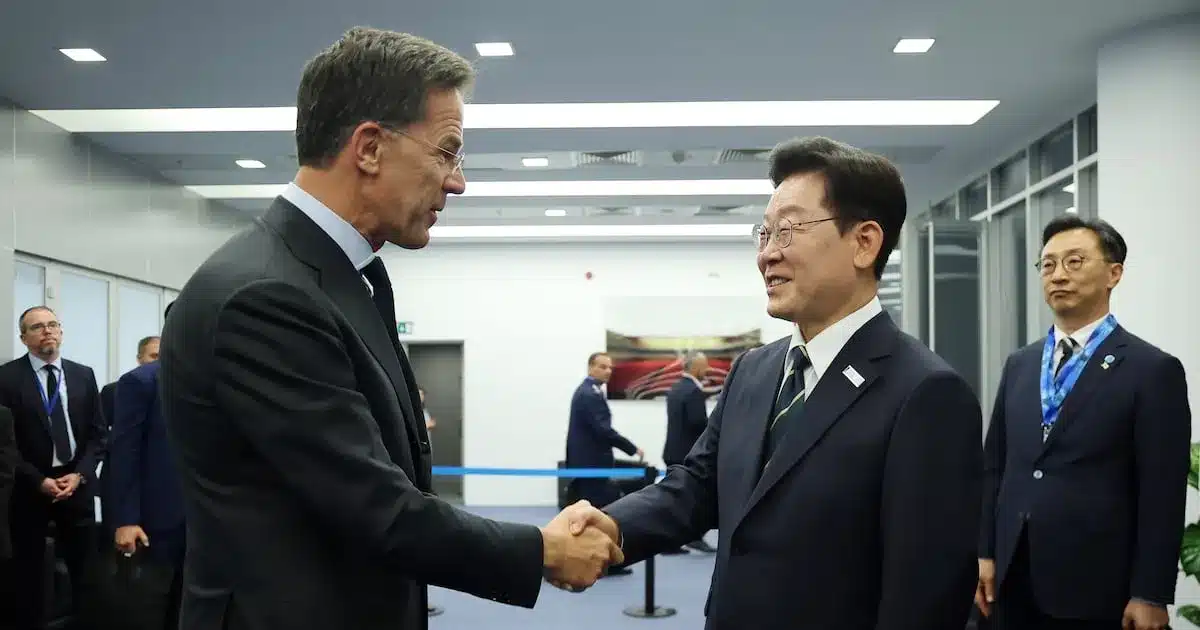
South Korean President Yoon Suk-yeol commenced his four-day overseas trip on July 7th (local time) with a significant meeting alongside NATO Secretary General Jens Stoltenberg. The high-level discussion, held in Ankara, Turkey, marked President Yoon’s first encounter with the NATO chief since taking office, underscoring a growing emphasis on international security partnerships. The meeting was convened at the invitation of Secretary General Stoltenberg.
Secretary General Stoltenberg warmly welcomed President Yoon, expressing gratitude for his efforts in strengthening the relationship between South Korea and the North Atlantic Treaty Organization. “I am grateful for President Yoon’s dedication to ensuring that the relationship between South Korea and NATO continues to grow stronger,” Stoltenberg stated. President Yoon reciprocated the sentiment, noting his pleasure in meeting the Secretary General in person after two previous phone conversations.
The leaders have previously engaged in discussions regarding South Korea-NATO cooperation through two phone calls, one in July of the previous year and another in February. This latest in-person meeting was anticipated to delve into more concrete collaboration avenues, particularly in the defense industry. The potential for joint ventures and technology sharing in defense manufacturing was a key focus.
Expanding Security Dialogue: South Korea and NATO
The meeting between President Yoon and Secretary General Stoltenberg represents a pivotal moment in the evolving security landscape. As global challenges become increasingly complex and interconnected, nations are seeking to bolster their defense capabilities and strategic alliances. South Korea, a significant player in the Indo-Pacific region with advanced technological and industrial capacities, is strategically positioned to contribute to and benefit from enhanced cooperation with NATO, a cornerstone of transatlantic security.
NATO, an alliance of 32 member states, has been actively seeking to broaden its partnerships beyond its traditional geographical scope. This outreach is driven by a recognition that contemporary security threats, such as cyber warfare, terrorism, and the proliferation of advanced weaponry, transcend national borders and require collective responses. The alliance has identified key partners in the Indo-Pacific region, including South Korea, Japan, Australia, and New Zealand, as crucial allies in addressing these global security challenges.
Defense Industry Collaboration: A Key Focus
A central theme of the discussions was the potential for collaboration within the defense sector. South Korea boasts a robust and innovative defense industry, capable of producing a wide range of advanced military equipment, from artillery systems and armored vehicles to naval vessels and aircraft components. NATO members, in turn, possess cutting-edge military technologies and extensive operational experience.
The synergy between these capabilities presents numerous opportunities. Potential areas for cooperation could include:
- Joint Research and Development: Pooling resources and expertise to develop next-generation defense technologies.
- Co-production and Manufacturing: Establishing frameworks for the joint production of military hardware, potentially lowering costs and increasing interoperability.
- Supply Chain Integration: Exploring ways to integrate defense supply chains to ensure resilience and efficiency.
- Training and Exercises: Conducting joint military training exercises to enhance tactical proficiency and interoperability between South Korean and NATO forces.
- Cybersecurity Cooperation: Sharing intelligence and best practices to counter cyber threats targeting defense infrastructure.
Such collaboration not only strengthens the defense capabilities of both South Korea and NATO members but also contributes to regional and global stability by deterring potential adversaries and enhancing collective security measures.
Broader Strategic Engagement in the Indo-Pacific
Following the bilateral meeting with Secretary General Stoltenberg, President Yoon participated in a trilateral summit involving leaders from Japan, New Zealand, and Australia. This meeting, part of the Indo-Pacific Partners (IP4) summit, is designed as a top-level forum for dialogue and cooperation between NATO and its key partners in the strategically vital Indo-Pacific region.
The Indo-Pacific region has become increasingly important in global security discussions due to its dynamic geopolitical environment and its role in international trade and commerce. The IP4 summit provides a platform for these nations to align their strategic perspectives, coordinate their policies, and identify areas for joint action on issues ranging from maritime security and freedom of navigation to economic stability and resilience against emerging threats.
South Korea’s active participation in such forums highlights its commitment to playing a constructive role in regional and global security architecture. By engaging with NATO and like-minded partners, President Yoon aims to foster a more secure and stable international environment, contributing to peace and prosperity not only in Northeast Asia but across the globe.
Conclusion: A Strengthened Transatlantic and Trans-Pacific Partnership
The meeting between President Yoon Suk-yeol and NATO Secretary General Jens Stoltenberg, alongside the subsequent IP4 summit, signifies a deepening of security ties between South Korea and the transatlantic alliance, as well as with key Indo-Pacific partners. The focus on concrete defense industry collaboration and broader strategic dialogue underscores a shared commitment to addressing contemporary security challenges. As the international order continues to evolve, these strengthened partnerships are poised to play a crucial role in maintaining peace, stability, and security on a global scale.
