

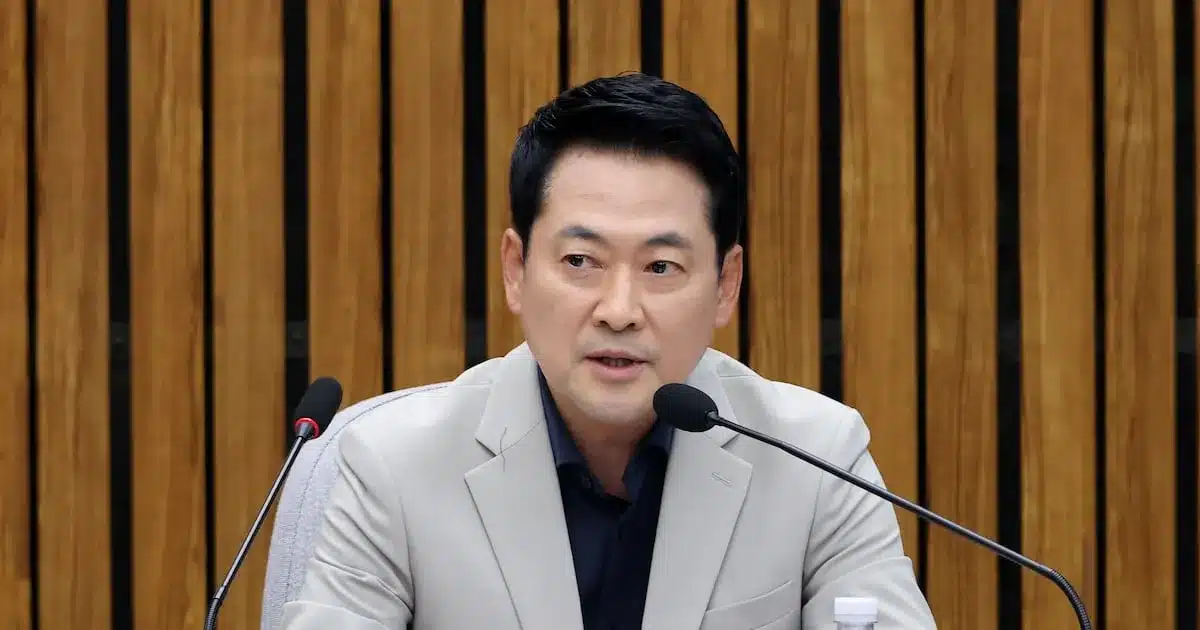
The People Power Party (PPP) is set to reconvene its disciplinary committee on June 6th, signaling a potential resurgence of internal disciplinary actions following the June 3rd local elections. The committee will review disciplinary cases submitted by party members, with a particular focus on individuals who accompanied interim leader Han Dong-hoon during his election campaign activities. This move has raised concerns about escalating internal conflicts within the party.
Focus on ‘Pro-Yoon’ Factions and Potential Sanctions
Sources within the PPP indicate that members associated with factions perceived as loyal to President Yoon Suk-yeol are likely to be the primary targets of these disciplinary proceedings. Specifically, several lawmakers who joined Han Dong-hoon on a campaign trail in Daegu in March are reportedly under consideration for disciplinary action. These lawmakers include Kim Ye-ji, Ahn Sang-hoon, Jin Jong-oh, Jeong Seong-kuk, Bae Hyun-jin, Woo Jae-joon, and Park Jeong-hoon.
Additionally, members of the reformist group ‘Daegangwa Mirae’ (Pledge and Future), which publicly called for the resignation of then-leader Jang Dong-hyuk, are also potential candidates for disciplinary review. Rep. Kim Jae-sup, who served as a joint committee member for Seoul Mayor Oh Se-hoon’s campaign, is another individual reportedly being considered.
The PPP’s disciplinary committee possesses a range of sanctions it can impose, including expulsion from the party, suspension of party membership, freezing of party rights, and reprimands. The committee’s chairperson, Professor Yoon Min-woo of Cheonnam University, was appointed on January 6th. Earlier, on January 13th, the committee had expelled former interim leader Han Dong-hoon, citing his posting of content on the party’s online bulletin board.
Concerns Over ‘Disciplinary Politics’
The prospect of renewed disciplinary actions has sparked apprehension among some party members who view it as a form of ‘disciplinary politics,’ a term used to describe the strategic use of party discipline for political maneuvering. They are concerned that such actions could further deepen existing rifts within the party.
Rep. Chung Jin-sik, the interim floor leader, expressed caution regarding the potential for ‘disciplinary politics’ during a KBS appearance on June 2nd. He stated, “The process from the initiation of disciplinary action to its conclusion must be handled with utmost seriousness.”
Similarly, Rep. Na Kyung-won, speaking on SBS on June 2nd, voiced her reservations, commenting, “Engaging in politics through disciplinary measures is not desirable.” Her remarks suggest a sentiment that the party should focus on broader political strategies rather than internal purges.
Background of Internal Strife
The People Power Party has experienced periods of internal tension, particularly concerning leadership transitions and policy directions. The appointment of Han Dong-hoon as interim leader was a significant move aimed at revitalizing the party’s image and electoral prospects. However, his campaign activities and the subsequent focus on disciplinary actions against certain members highlight the ongoing challenges in maintaining party unity.
The June 3rd local elections provided a crucial test for the party, and the outcomes are now influencing internal dynamics. The disciplinary committee’s role in addressing perceived transgressions or disloyalty is being closely watched as a barometer of the party’s internal health and its ability to navigate post-election challenges.
Potential Impact on Party Unity
The decisions made by the disciplinary committee could have significant ramifications for the PPP’s unity and public perception. If the actions are perceived as overly partisan or retaliatory, they could alienate members and voters alike. Conversely, if handled judiciously and seen as necessary for upholding party principles, they might strengthen the party’s resolve.
The committee’s mandate is to uphold the party’s rules and standards. However, the timing and targets of its actions inevitably carry political weight. The PPP is at a critical juncture, and its approach to internal discipline will likely shape its trajectory in the coming months.
Looking Ahead: Navigating Internal Challenges
As the disciplinary committee prepares to convene, the PPP faces the delicate task of balancing the need for accountability with the imperative of maintaining party cohesion. The outcomes of these proceedings will be a key indicator of the party’s internal political landscape and its capacity to move forward cohesively.
The focus on members who accompanied Han Dong-hoon underscores the party’s internal power dynamics and the ongoing debates about leadership and loyalty. The PPP’s ability to manage these internal discussions constructively will be crucial for its future electoral success.
