

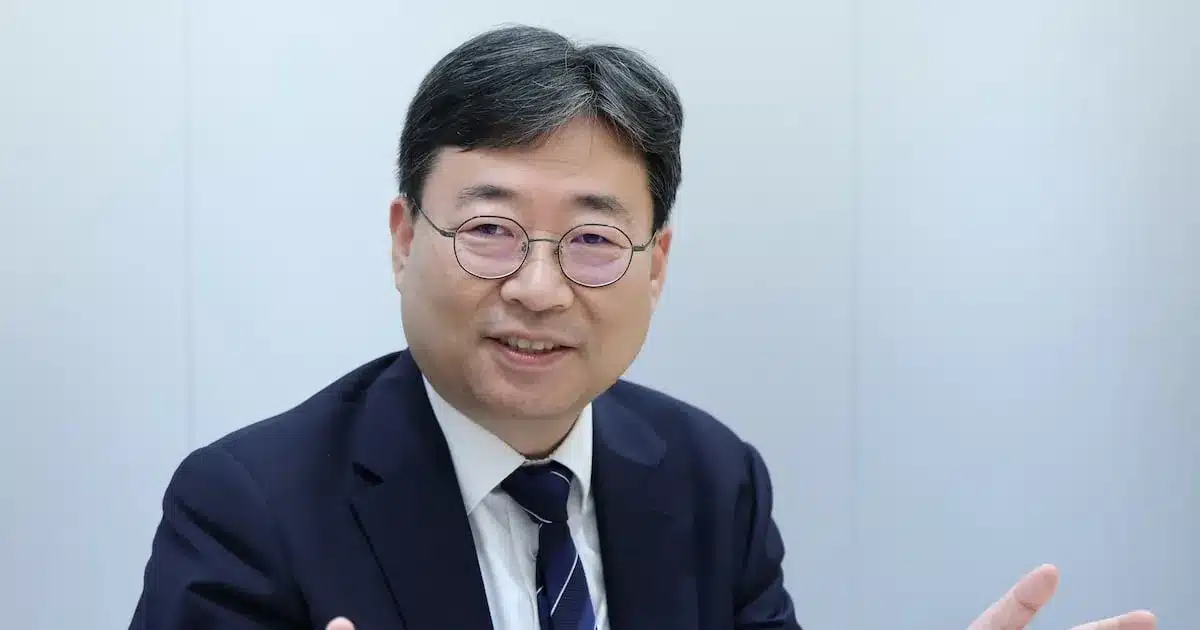
Ha Joon-kyung, the Senior Economic Secretary to the President, stated on April 4th that the government’s proposed ‘3 Major Mega Projects’ for regional investment are comparable in scale to the industrialization efforts during the Park Chung Hee era. He also conveyed that major corporations participating in these projects expressed gratitude towards President Lee Jae-myung.
Scale and Significance of Mega Projects
Speaking on the YouTube channel ‘Jeong Joon-hee’s Saturday Talk,’ Ha Joon-kyung drew a parallel between the current mega projects and the nation’s first industrialization drive. “If we call the industrialization of the past, during the Park Chung Hee era, the first industrialization, then this is the second industrialization,” he explained. “I believe the mega projects are of that magnitude.”
Ha elaborated on the transformative nature of these initiatives, contrasting them with past development models. “While past industrialization was unbalanced, this time it is about balanced industrialization,” he asserted. “It’s not a follower-type industrialization, trailing behind developed nations, but a leading-type industrialization where we forge ahead.” He emphasized the potential for significant changes and growth opportunities for various regions across the country.
The economic secretary highlighted the immediate economic benefits, stating, “We aim to construct these projects at the highest possible speed.” He added, “The process of building factories itself will create a substantial number of jobs and provide considerable economic assistance.”
Corporate Gratitude and Regional Development
Ha Joon-kyung shared that the executives of the large corporations involved in the investment expressed deep appreciation for President Lee Jae-myung. “The CEOs of these companies are immensely grateful to President Lee Jae-myung,” he said. “This has likely served as an opportunity for them to consider the balanced development of the entire nation, something they might not have regularly contemplated.”
He further explained the corporate perspective, suggesting that executives, upon reflection, recognized the necessity of such regional investments. “They probably thought, ‘We must do this (regional investment),” Ha stated. He described a situation where companies were struggling to find suitable domestic locations with all the necessary conditions for their operations. “Companies were contemplating whether they had to move their production bases overseas because they couldn’t easily find places domestically that met all the requirements,” he revealed.
Addressing Concerns and Future Outlook
In response to criticisms that the projects might favor large corporations, Ha Joon-kyung addressed the government’s approach. “Because of this, we are responding very strongly against collusion or unfair transactions,” he stated. “We have made it difficult for large corporations to conduct business in the old ways, encouraging them instead to innovate.”
Regarding the energy supply for the planned semiconductor cluster in the Honam region, Ha acknowledged potential challenges. “It is certain that the renewable energy sector will become more active, but it might be difficult to meet all demands solely through renewables, so a nuclear power plant might be necessary,” he commented. He pointed to recent technological advancements that have improved the safety of nuclear power generation.
Fiscal Policy and Growth Potential
Addressing the recent controversy surrounding a potential ‘national debt’ increase, Ha Joon-kyung clarified the government’s stance. “We are not in a situation where we are recklessly trying to do something,” he assured. “We are contemplating how to best utilize the given tax revenue and expenditures.”
He reiterated the President’s clear directive on fiscal matters. “The President’s explicit directive is to use these funds to ‘increase the potential growth rate,'” Ha concluded. This underscores the administration’s focus on long-term economic expansion and structural improvements through strategic investments and fiscal management.
