

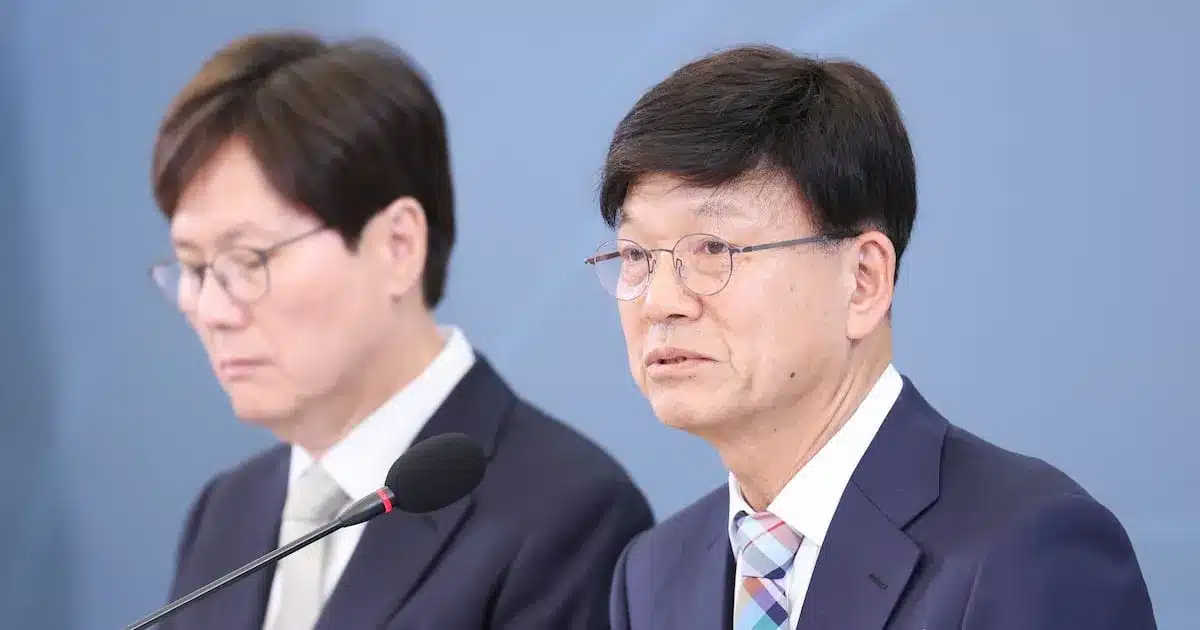
Lee Byung-tae, vice chairman of the Presidential Commission for National Integration, stated on July 4th that even chants of “Long live Kim Il-sung” should be permitted in the heart of Seoul. He made these remarks in response to calls for his dismissal from the ruling party following his controversial comments comparing the current situation to North Korea.
Freedom of Expression and Baseball Chants
In a Facebook post titled “Freedom of Expression and Baseball Chants,” Lee Byung-tae elaborated on his stance, asserting that freedom of expression is a fundamental right allowing individuals to voice opinions that may not be widely accepted, without fear of punishment. He emphasized that the core of this freedom lies not in censorship, but in trust in the “power of truth to settle.” According to Lee, society should tolerate not only correct and righteous speech but also incorrect, nonsensical, and even false statements.
He further argued that the “crazy talk of a minority” is ultimately resolved by the “truth of the majority.”
Rejection of Dismissal Calls
Lee Byung-tae directly refuted the calls for his dismissal from the ruling party, which stemmed from his earlier comments that likened the disciplinary action against baseball player Bae Ji-hwan to North Korean practices. While acknowledging that opinions on the appropriateness of Bae’s chants might differ, Lee stated, “If it was inappropriate, then criticism is sufficient. That criticism is also freedom of expression, but punishing speech is a denial of fundamental rights.”
He contended that denying the right to punish speech is equivalent to denying the democracy championed by the Gwangju Democratization Movement. “A society where fundamental rights are not protected is not a democratic society. The demand for strict punishment stems from ideological bias,” Lee asserted.
Upholding Democratic Principles
Lee Byung-tae affirmed his belief that the participants and martyrs of the Gwangju Democratization Movement fought for the democracy of the nation. “If you agree with this, you must not deny the freedom of expression, a universal fundamental right of democracy,” he stated. He concluded by saying, “Protecting fundamental rights is what completes the Gwangju Democratization Movement. Therefore, I believe that the punishment of students, not their chants, is a mockery and distortion of the Gwangju Democratization Movement.”
