

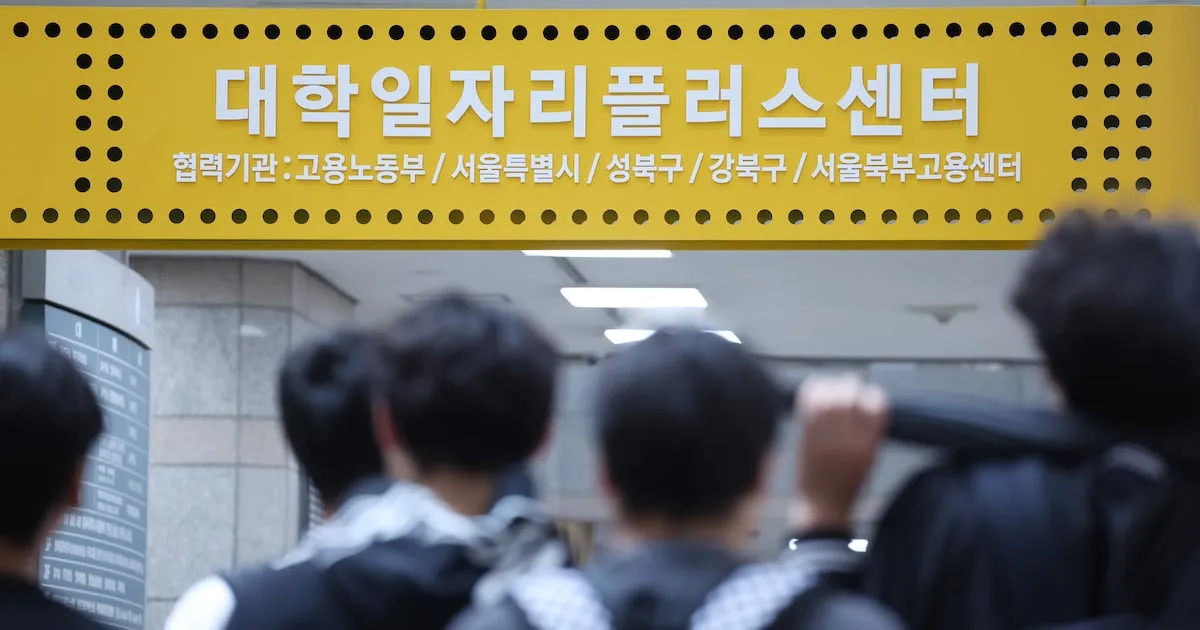
Analysts predict a significant slowdown in South Korea’s job creation for the current year, with employment growth expected to reach only around 103,000 new jobs. This figure represents a stark reduction, nearly halving the initial forecast made at the end of the previous year. The revised outlook suggests that despite potential economic growth, the benefits may not translate into widespread job gains across the economy.
Revised Employment Projections Signal Economic Headwinds
According to an analysis released by the Korea Labor Institute, the number of employed individuals is projected to increase by approximately 103,000 in the current year. This revised estimate is a substantial decrease from the 210,000 job growth anticipated in December of the previous year. The institute’s report, titled ‘First Half 2026 Labor Market Evaluation and Second Half Labor Market Outlook,’ indicates a considerable downward revision in employment expectations.
While some economic forecasts suggest South Korea’s economy could achieve a growth rate of 3% this year, this growth may not be sufficiently broad-based to stimulate significant job creation. The Korea Labor Institute points to the concentrated nature of economic expansion, particularly within the semiconductor industry, as a key factor limiting broader employment benefits.
Semiconductor Sector’s Limited Spillover Effect on Employment
The institute’s analysis highlights that while the semiconductor sector can drive overall economic growth figures, its direct impact on job creation is limited. The report states, “The composition of growth is concentrated in semiconductors.” It further elaborates that semiconductors, while boosting the national growth rate, have a restricted effect on overall employment. The broader employment landscape is heavily influenced by domestic consumption and non-semiconductor sectors, which account for a larger portion of job opportunities.
Consequently, the recovery and expansion of employment in the latter half of the year are expected to depend more on the actual revitalization of these domestic and non-semiconductor industries rather than solely on the overall economic growth rate. This suggests that policies aimed at stimulating job growth need to address a wider range of economic sectors.
Declining Employment Rate and Rising Unemployment Rate Concerns
The Korea Labor Institute forecasts the annual employment rate to stand at 62.7% for the current year, a decrease of 0.2 percentage points from the previous year. Concurrently, the unemployment rate is projected to rise from 2.8% to 2.9% over the same period. If these projections materialize, it would mark the first decline in the employment rate in six years, since the COVID-19 pandemic in 2020.
A simultaneous drop in the employment rate and a rise in the unemployment rate is a rare occurrence, having happened only four times since the year 2000: in 2003, 2009, 2018, and 2020. This pattern indicates potential structural challenges within the labor market.
Urgent Need for Support Measures
In response to these concerning trends, the Korea Labor Institute emphasizes the urgent need for measures to stabilize domestic consumption and support vulnerable demographic groups. The institute specifically calls for targeted support for young people and individuals in their early sixties, who are identified as groups particularly susceptible to employment shocks.
The report warns that delays in young people entering the labor market can lead to long-term disadvantages, including reduced future wages and career progression. To counteract this, the institute recommends policies that encourage new hiring by companies and explore vocational training programs that can supplement the shortage of private sector jobs. This proactive approach aims to mitigate the negative impacts of a slowing job market and ensure a more stable employment future for all segments of the population.
Key Takeaways:
- South Korea’s job growth forecast for the current year has been significantly reduced to approximately 103,000 new jobs, less than half of the previous estimate.
- Economic growth is expected to be concentrated in the semiconductor sector, which has limited spillover effects on overall employment.
- The annual employment rate is projected to fall to 62.7%, while the unemployment rate is expected to rise to 2.9%.
- This marks a potential first decline in the employment rate since 2020, signaling labor market challenges.
- The Korea Labor Institute urges immediate policy interventions, including stabilizing domestic consumption and providing targeted support for youth and older workers.
The analysis underscores the complex interplay between economic growth drivers and their impact on the labor market. While the semiconductor industry may bolster national economic figures, a more diversified approach is needed to ensure robust and inclusive job creation across South Korea.
