

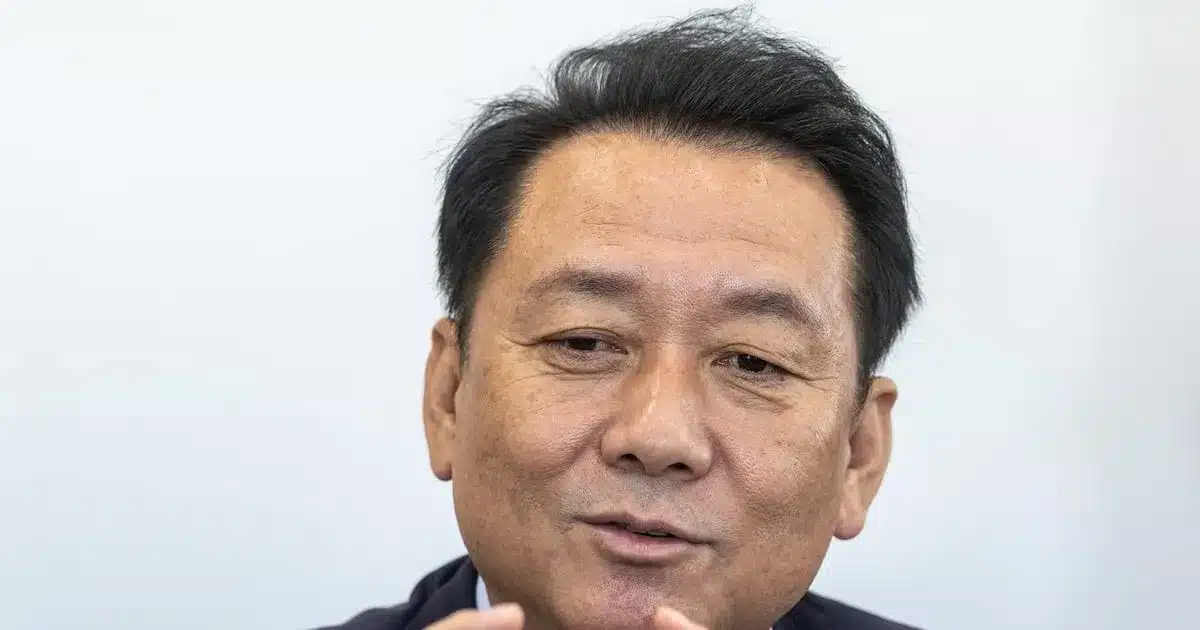
A prominent South Korean lawmaker has put forth a bold proposal: to establish a national fund where 100 million won (approximately $73,000 USD) is deposited for every child born in the country. Lee Kwang-jae, chairman of the Special Committee on Budget and Accounts, outlined this vision in a recent interview, suggesting the fund would be managed to provide young adults with startup capital upon reaching adulthood and a retirement nest egg later in life. The core idea is to proactively build generational wealth, enabling citizens to secure their financial futures from birth.
Funded Futures: The ‘Newborn 100 Million Won Fund’ Explained
Under the proposed system, the government would contribute 100 million won to a national fund for each newborn. Lee Kwang-jae elaborated on the financial mechanics, explaining that if this fund were to grow at an average annual compound interest rate of 7%, it would reach approximately 380 million won by the time the child turns 20. From this amount, 100 million won would be allocated as startup capital for the young adult’s transition into society. The remaining 280 million won would continue to be managed until the individual reaches age 65. At that point, 40 million won would be designated for retirement funds, with the remaining 240 million won to be recouped by the state and reinvested for the next generation. Lee emphasized that this structure aims to create a sustainable system, akin to a ‘goose laying golden eggs,’ rather than simply depleting resources.
The inspiration behind this ambitious proposal stems from a dual perspective: reflecting on past national development and anticipating future challenges. Lee, identified as a proponent of growth-oriented policies within his party, noted a perceived disconnect between the nation’s overall economic success and the financial struggles faced by many citizens. He questioned how to leverage the country’s substantial financial resources to improve individual livelihoods, suggesting a shift in government perspective from mere consumer to investor. Lee pointed to the successful, long-term management of national pension funds and the Korea Investment Corporation (KIC) as evidence of the state’s capacity to generate stable returns. He believes such innovative approaches are crucial for overcoming the demographic crisis of declining birth rates in the era of artificial intelligence and ensuring a comfortable life for citizens.
‘Mega Projects’ and Economic Revitalization
The proposed budget for the upcoming year is substantial, totaling 821 trillion won. Lee stressed that the effective utilization of these funds is paramount. He identified key areas critical to quality of life: employment, housing, healthcare, welfare, education, and secure retirement. He views housing, employment, and welfare/education as distinct ‘mega projects’ requiring significant, focused investment. Furthermore, he highlighted the importance of initiating ‘three mega projects’ to drive future growth: establishing semiconductor clusters, national data centers, and realizing physical AI. These initiatives, he argued, would simultaneously serve as catalysts for regional economic revitalization.
Investing for the Future: Addressing National Debt and Economic Hardship
While some political factions advocate for fiscal austerity and debt reduction through tax increases, Lee argued that the current moment calls for strategic national investment. He drew parallels with global tech giants like Google, which issue corporate bonds to fund investments. Lee believes that in the current predictable environment, proactive investment is essential. He suggested that even funds earmarked for future contingencies, such as a ‘future response fund’ potentially financed by increased taxes, should be managed with a focus on growth, similar to the national fund concept. Transparency in fund management, he added, would be a critical component.
Addressing the widespread concerns about the struggling economy and the difficulties faced by ordinary citizens, Lee acknowledged the complex situation in South Korea, characterized by a mix of hope for the future and apprehension. While sectors like corporations and culture are showing success, he recognized the strain on the general populace, partly due to inflation. He expressed optimism that the success of major corporations would eventually have a positive ripple effect. In this context, Lee specifically called upon leading conglomerates like Samsung Electronics and SK Hynix to consider issuing corporate bonds, thereby opening a new era of public investment. He stated that in return, the political sphere would need to address necessary reforms, such as labor market flexibility and tax incentives. His ultimate aspiration is for a South Korea where everyone can thrive.
About Lee Kwang-jae
Born in Pyeongchang, Gangwon Province, Lee Kwang-jae pursued higher education at Wonju College and Yonsei University. He entered politics as a close aide to the late President Roh Moo-hyun, solidifying his reputation as a pro-Roh figure. He has served multiple terms as a member of the National Assembly (17th, 18th, and 21st terms), held the position of Governor of Gangwon Province (35th), and served as Secretary-General of the National Assembly (35th). Following his re-election to the National Assembly in a by-election in June, he secured a seat in the 22nd National Assembly. In the latter half of the 22nd term, he was appointed as the chairman of the Special Committee on Budget and Accounts.
