

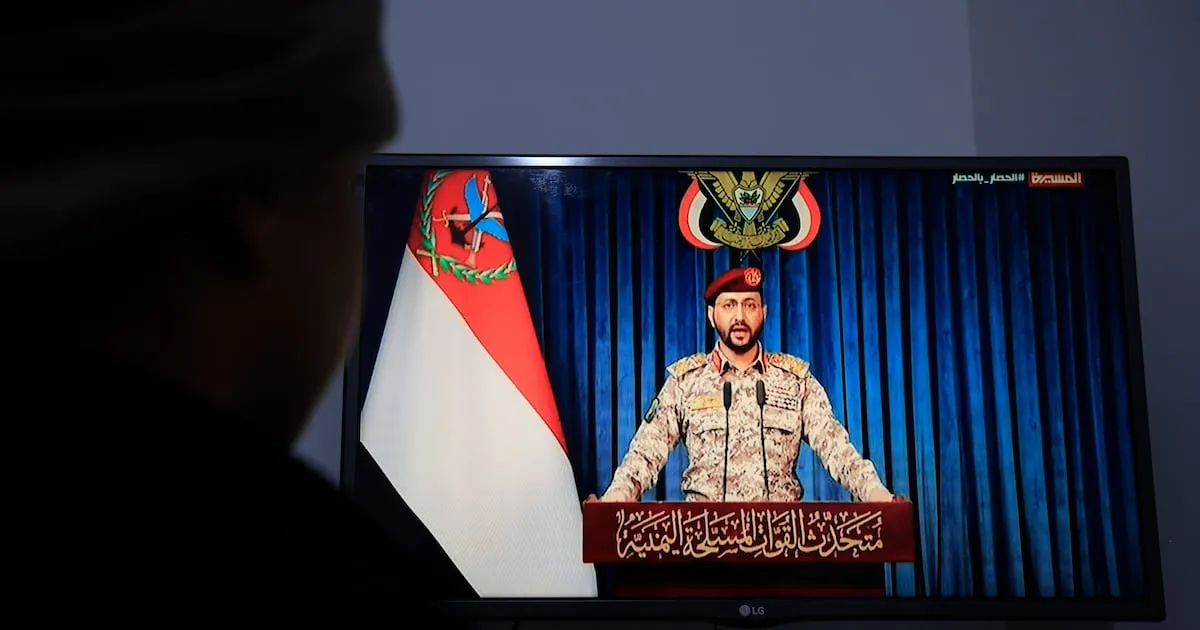
The Houthi rebel group’s escalating attacks in the Red Sea, targeting maritime traffic and pressuring Saudi Arabia, are creating significant diplomatic friction among Middle Eastern nations. Concerns are mounting over the U.S. government’s reluctance to engage in direct military action, a stance that is reportedly causing dissatisfaction among key regional players.
U.S. Stance on Houthi Conflict
According to reports, U.S. President Donald Trump has established a clear ‘red line,’ indicating that while the U.S. will not directly strike the Houthis militarily, it will continue to provide intelligence and targeting data to Saudi Arabia. The U.S. Department of Defense has explicitly stated that there have been no offensive strikes against the Houthis. President Trump himself commented that the Houthis had communicated a desire to avoid direct conflict with the U.S., preferring that the U.S. remain uninvolved and allowing them to pass through most checkpoints.
This position has drawn criticism from various quarters. Former Deputy Assistant Secretary of Defense for the Middle East, Barbara Leaf, described President Trump’s remarks as “shocking” and a “terrible approach” that appears to prioritize engagement with a designated foreign terrorist organization over close partnerships. The U.S. administration’s strategy is seen by some as a complex interplay of evolving Middle East policy and the limitations of military engagement.
Regional Dynamics and Saudi Concerns
Saudi Arabia, often considered a ‘leader’ in the Arab world, has found itself in a precarious position. Crown Prince Mohammed bin Salman reportedly requested direct intervention from President Trump on two separate occasions, but these appeals were allegedly denied. The ongoing Houthi attacks, coupled with the U.S.’s limited military involvement, have led to frustration within the region. Saudi Arabia appears hesitant to engage in direct negotiations with Iran, a key supporter of the Houthis, under the current circumstances.
Experts suggest that Saudi Arabia acting alone to neutralize the Houthi threat is unlikely without ground troop involvement or a more comprehensive U.S. containment strategy. There is a prevailing sentiment that military strikes alone may not be sufficient to dismantle the Houthi forces, leading to proposals for a ceasefire agreement between Saudi Arabia and the Houthis.
Broader Implications for Global Trade
The Houthi actions extend beyond regional skirmishes, posing a significant threat to global supply chains and oil transportation. The group has recently seized control of key shipping lanes in the Bab el-Mandeb Strait, a vital chokepoint connecting the Red Sea to the Gulf of Aden, which is crucial for trade between Europe and Asia. This strategic move by the Houthis has disrupted international maritime commerce.
The situation has complicated regional diplomacy, particularly concerning potential talks between the Gulf Cooperation Council (GCC) and Iran regarding the Strait of Hormuz. These discussions have reportedly been postponed due to Saudi Arabia’s dissatisfaction. The Houthis’ unexpected influence and reach have overshadowed previous diplomatic efforts.
Challenges and Future Outlook
The Middle East is expected to face a period of diplomatic uncertainty. The U.S. finds itself managing the dual burdens of its existing military and financial commitments related to Iran, while simultaneously trying to avoid direct confrontation with the Houthis. A pragmatic calculation suggests that maintaining a non-confrontational stance with the Houthis might be more beneficial for conserving U.S. military resources.
A Middle Eastern source highlighted the importance of U.S. involvement, stating that deterrence against the Houthis is contingent on the possibility of U.S. intervention. The source expressed concern that President Trump’s remarks might inadvertently dampen the morale of the Yemeni people, who are already facing immense hardship. Barbara Leaf echoed this sentiment, criticizing the U.S. approach and suggesting that regional powers are questioning the U.S. commitment and strategy in the area, rather than solely focusing on Saudi Arabia’s predicament.
The escalating Houthi attacks in the Red Sea have underscored the complex geopolitical landscape of the Middle East, highlighting the delicate balance between regional security, international trade, and the strategic interests of global powers.
