

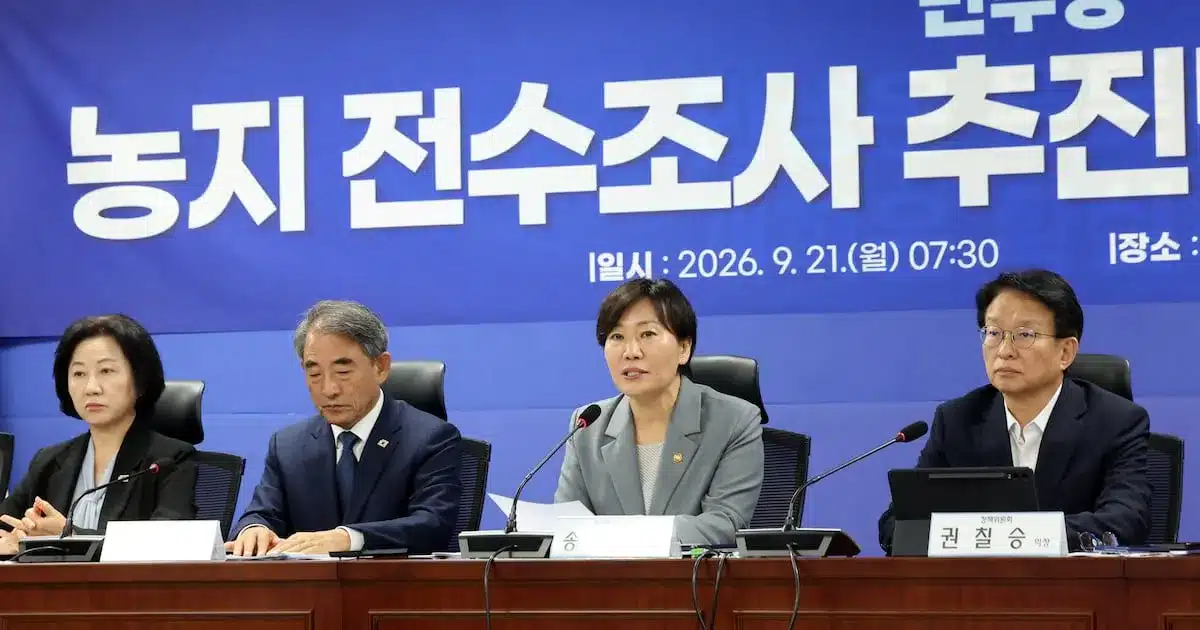
South Korea’s ruling Democratic Party convened a consultation session on July 21st at the National Assembly in Yeouido, Seoul, to discuss the direction of a proposed farmland registration system. The initiative aims to address concerns over land speculation and improve access to agricultural land for genuine farmers.
Addressing Land Speculation and Farmer Concerns
The proposed system, referred to as a “farmland registration system” (농지 전수조사), is intended to protect honest farmers from the negative impacts of land speculation and enhance their ability to access and utilize farmland. Yun Jun-byeong, a member of the National Assembly’s Agriculture, Food, Rural Affairs, and Oceans and Fisheries Committee, emphasized that the system is designed to prevent harm to agricultural professionals and increase their land accessibility. He stated that political circles have been creating groundless anxieties and amplifying them, leading to unnecessary confusion among farmers.
Yun clarified that the farmland survey is not intended to forcibly seize farmland or to collect excessive fines from individuals who have engaged in illegal land acquisition. Instead, he stressed the urgent need to stop practices that disrupt the agricultural field and undermine the value and principles of farmland.
System’s Scope and Continuity
Addressing potential misunderstandings about the scope of the proposed survey, Yun explained that approximately 10% of all farmland has been consistently investigated each year. He asserted that the proposed comprehensive survey represents a significant expansion of this scope but does not fundamentally differ from previous investigative approaches.
The initiative also seeks to ensure financial stability for farmers. Yun mentioned plans to secure sufficient resources for farmland pensions and agricultural loans, preventing situations where individuals must wait for farmland sales or face difficulties in acquiring land. The goal is to ensure that farmland is not left unsold due to a lack of buyers, thereby preventing the perception that land is unsellable.
Supporting Diverse Farming Generations
Furthermore, the system aims to provide broader options for stable retirement for elderly farmers. For young and new farmers, it seeks to facilitate smoother access to necessary farmland, potentially serving as a catalyst for their entry and success in the agricultural sector.
Government and Party Perspectives
Kwon Chil-seung, the Democratic Party’s Policy Committee Chairman, described the consultation as a forum to alleviate public concerns and explore directions for the farmland registration system and related policy improvements. He urged the government to ensure that while pursuing the core objectives of such initiatives, the process does not cause anxiety for farmers and citizens. Kwon stressed the importance of utilizing survey results for the actual development of agriculture and rural communities.
Song Mi-ryeong, the Minister of Agriculture, Food and Rural Affairs, acknowledged that while speculation would be curbed, the government would develop countermeasures for minor or administrative violations. She stated that the current consultation was aimed at establishing specific criteria to help alleviate the anxieties of farmers on the ground.
Key Objectives of the Farmland Registration System
- Combat Land Speculation: Prevent individuals from profiting unfairly through the acquisition and resale of agricultural land.
- Protect Genuine Farmers: Safeguard the interests of those who farm the land as their livelihood.
- Improve Land Access: Facilitate easier access to farmland for both established and new farmers.
- Enhance Financial Stability: Ensure adequate resources for farmland pensions and loans.
- Support Farmer Retirement: Provide stable retirement options for elderly farmers.
- Promote New Farmers: Assist young and aspiring farmers in acquiring the land they need.
The discussions highlighted a commitment from the ruling party and relevant ministries to refine the proposed system, ensuring it effectively addresses speculative practices while supporting the sustainability and well-being of South Korea’s agricultural sector and its farmers.
