

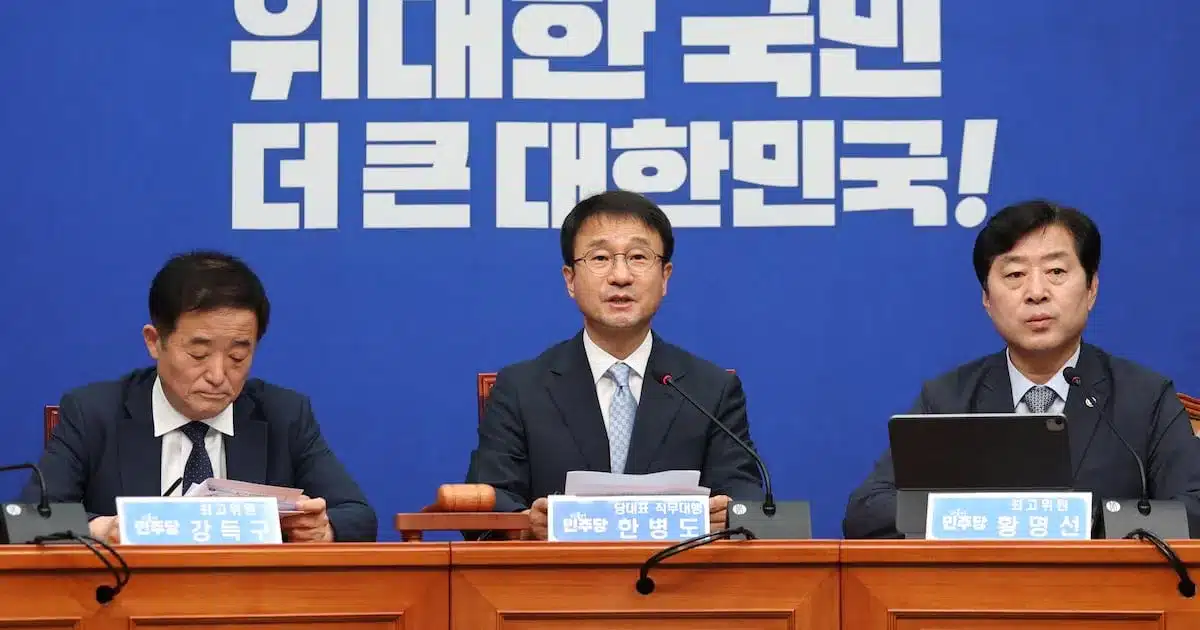
The Democratic Party is pushing to expedite the legislative process for abolishing prosecutors’ supplementary investigative rights, a move met with strong opposition from the People Power Party. The controversy, intensified by the recent Jang Yoon-gi incident, has fueled public debate and legislative maneuvering between the two major political factions.
Legislative Push to End Supplementary Investigative Powers
The Legislation and Judiciary Committee’s Subcommittee on Legislation held a session on October 10th, initiated by the Democratic Party, to review proposed amendments to the Criminal Procedure Act. These amendments aim to eliminate the prosecution’s authority to conduct supplementary investigations. Currently, the subcommittee is dominated by the ruling party’s members, as the People Power Party has boycotted the proceedings due to disagreements over the committee’s composition.
The subcommittee is set to deliberate on three distinct legislative proposals that seek to abolish the prosecution’s investigative powers. These proposals were introduced by Democratic Party lawmakers, including those from the party’s leadership, as well as by individual members like Kim Yong-min, Park Eun-jeong, and Cha Gyu-geun. While all three proposals share the common goal of eliminating supplementary investigative rights, the specific legal language and details vary among them.
However, it is anticipated that the Democratic Party’s proposed amendment will likely gain consensus among the ruling party’s lawmakers, aligning with their overall legislative agenda. The Democratic Party has signaled its intention to convene subcommittee meetings weekly to ensure a swift passage of the bill.
Timeline and Urgency
Kim Seung-won, a ruling party whip in the Legislation and Judiciary Committee, stated after introducing the amendment that the subcommittee would hold one to two sessions per week to discuss legislative proposals. The original timeline for the abolition of supplementary investigative rights and the implementation of new systems for the National Police Agency and the National Investigation Headquarters was set for October 2nd. However, with the National Audit period falling within this timeframe, the Democratic Party argues that there is limited time remaining to meet the deadline.
This perceived urgency underscores the need for rapid legislative action to meet the scheduled implementation date. Han Byung-do, the acting floor leader for the Democratic Party, emphasized the importance of finalizing the detailed system designs to ensure a smooth transition to the new regime by October 2nd.
Opposition’s Stance and the Jang Yoon-gi Incident
The People Power Party is mounting a full-scale effort to prevent the abolition of the prosecution’s supplementary investigative rights. A significant factor bolstering their position is the public sentiment, which has reportedly shifted in favor of maintaining these rights following the Jang Yoon-gi incident. In this case, the prosecution reportedly uncovered evidence of police misconduct during a supplementary investigation.
Chung Jin-suk, the People Power Party’s interim leader, asserted during a strategy meeting that the existence of supplementary investigative rights is essential to check the police’s investigative monopoly. He further argued that special measures are necessary to restore public trust in the police. Chung proposed the formation of a bipartisan consultation table to discuss reforms of investigative agencies, including measures to prevent the police from having a complete monopoly on investigations.
Calls for Accountability and Stricter Penalties
Chung also called for the resignation of Interior Minister Yun Hee-keun and National Police Agency Commissioner General Yoon Hee-keun, holding them accountable for the current situation. He strongly urged President Yoon Suk-yeol to promptly appoint a permanent Commissioner General for the police.
Kim Mi-ae, the deputy leader for policy at the People Power Party, conveyed the sentiments of Go Eun-chae, the mother of Yang, who was allegedly murdered by Jang Yoon-gi. Kim stated, “The police, whom we believed would help uncover Chae-won’s injustice, instead sided with the perpetrator. Which citizen could possibly trust the police after this?”
Kim further argued that the public’s mandate is to reform the criminal justice system, and abolishing the prosecution’s supplementary investigative rights goes against this directive. She declared, “The People Power Party will pursue amendments to the Criminal Procedure Act that impose severe penalties, including restricting special treatment for crimes such as murder, rape, and robbery, as well as for offenses related to official duties like perjury and the submission of false evidence.”
Broader Implications for the Justice System
The debate over the supplementary investigative rights touches upon fundamental questions about the balance of power within South Korea’s justice system. Proponents of the abolition argue that it is a necessary step to prevent potential abuses of power by the prosecution and to ensure a more equitable investigative process. They believe that concentrating investigative authority within the police, with appropriate oversight, will lead to greater efficiency and public trust.
Conversely, opponents, including the People Power Party, contend that eliminating these rights would weaken the checks and balances essential for a robust legal system. They point to the Jang Yoon-gi case as evidence that the prosecution’s ability to conduct supplementary investigations is crucial for uncovering the truth and holding all parties, including law enforcement, accountable. The ongoing political deadlock highlights the deep divisions on how best to reform the investigative and prosecutorial functions of the state.
Conclusion
As the legislative battle intensifies, the fate of the prosecution’s supplementary investigative rights hangs in the balance. The Democratic Party’s push for swift passage faces significant resistance from the People Power Party, which is leveraging public opinion and recent incidents to advocate for the retention of these powers. The outcome of this legislative struggle will have profound implications for the structure and operation of South Korea’s criminal justice system, shaping the relationship between prosecutors, police, and the public for years to come.
