

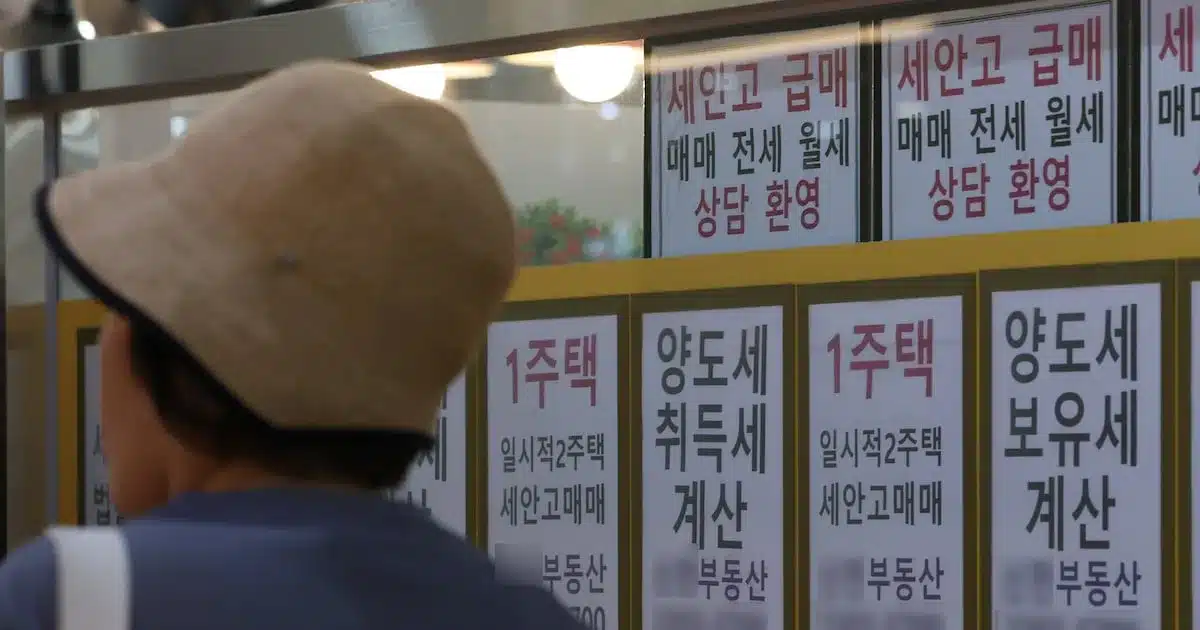
The South Korean government is considering significant changes to its property tax system, potentially increasing the burden on homeowners. A new analysis suggests that raising the standard valuation ratio used for comprehensive real estate tax calculations could lead to a substantial rise in the average tax paid per individual.
Comprehensive Real Estate Tax: Understanding the Valuation Ratio
The comprehensive real estate tax (종합부동산세, Jongbusse) is a wealth tax levied on property owners in South Korea. A key component in determining this tax is the ‘public price ratio’ (공정시장가액비율, Gongjeong Sijang Gaaek Biyul). This ratio represents the percentage of the official market price (공시가격, Gongsi Gagyuk) that is used as the basis for calculating the property tax. Currently, this ratio stands at 60%.
However, proposals are being discussed to increase this ratio, with projections indicating that a hike to 80% could significantly boost tax revenues and individual tax liabilities. The National Assembly Budget Office (국회예산정책처, Gukhoe Yesancheongcheo) provided data to Representative Lee Jong-wook of the People Power Party (국민의힘, Gukminuihim) on September 9th, detailing the potential financial impact of such a change.
Projected Tax Increases Under New Valuation Ratios
Under the current system, with the public price ratio at 60%, the estimated total residential property tax for the year is approximately 8.6995 trillion won. This figure comprises 7.2233 trillion won in property tax and 1.4763 trillion won in comprehensive real estate tax.
If the public price ratio were raised to 80%, the total comprehensive real estate tax is projected to increase by 15.7%, reaching 10.0658 trillion won. A further increase to a 95% ratio could see the comprehensive real estate tax climb to 10.7726 trillion won, marking a 23.8% rise from the current estimates.
Individual Tax Burden Set to Increase
The analysis indicates that an increase in the public price ratio would disproportionately affect individual taxpayers. Based on the 455,331 individuals estimated to be subject to the comprehensive real estate tax in 2024, the average residential property tax per person currently stands at 3.24 million won.
Should the public price ratio be elevated to 80%, this average individual tax burden is projected to nearly double to 6.24 million won, a 1.9-fold increase. If the ratio were to reach 95%, the average tax liability could surge to 7.8 million won, a staggering 2.4-fold increase compared to the current average.
Regional Impact: Seoul and Gyeonggi Face the Largest Increases
The proposed changes are expected to have a more pronounced effect on property owners in Seoul and the surrounding Gyeonggi Province, regions with generally higher property values.
In Seoul, the current estimated property tax, using the 60% public price ratio, is 4.5191 trillion won. Increasing the ratio to 80% would raise this to an estimated 5.4721 trillion won, a 21.1% increase. A 95% ratio could push the tax burden to 5.9595 trillion won, a 31.9% jump.
For Gyeonggi Province, the current property tax under the existing system is 2.0377 trillion won. Raising the public price ratio to 80% is projected to increase this to 2.2580 trillion won, an 10.8% rise. At a 95% ratio, the tax would be an estimated 2.3707 trillion won, a 16.3% increase.
Conclusion: A Potential Shift in Property Taxation Policy
The analysis highlights a significant potential shift in South Korea’s property tax landscape. By increasing the valuation ratio used for comprehensive real estate tax calculations, the government could substantially increase tax revenues. However, this would also translate into a considerably higher tax burden for individual property owners, particularly those in high-value areas like Seoul and Gyeonggi Province. The exact implications will depend on the final policy decisions made regarding the public price ratio.
