

Reports indicate that North Korean citizens are increasingly exposed to and influenced by South Korean media, sparking a desire for national reunification among some segments of the population. A recent seminar highlighted personal accounts from North Koreans who have encountered South Korean dramas, music, and films, revealing their profound impact.
Exposure to South Korean Culture Ignites Longing for Change
During a seminar hosted by the ‘North Korean Civil Society Network,’ individuals shared their experiences after being exposed to South Korean cultural content. These accounts suggest a growing dissatisfaction with life in North Korea and a yearning for the perceived freedoms and opportunities available in the South.
One 30-year-old male from Pyongyang, after watching the South Korean drama ‘The Fiery Cop,’ expressed a strong sentiment: “I feel like I’ve finally seen a real movie. Our country (North Korea) must unify with the South, if only for the sake of these movies. Seeing how they made collective submarine bunks that don’t even feed people, I sighed with my friends. If I had been born the son of General Kim Jong-il, I could have done something like that.” This quote encapsulates a sentiment of admiration for the quality of South Korean productions and a critical view of domestic policies.
A woman in her twenties from Jagang Province, after encountering a fashion magazine like ‘Cosmopolitan,’ reflected on the stark contrast in lifestyles: “I saw the clothing of a capitalist country, and I don’t think I could walk on the streets dressed like this. My country has crushed the spring-like hearts of its young women since childhood. I find myself wanting to follow the beautiful things, but my thoughts tell me I shouldn’t. Seeing pictures like this makes me envious of wanting to live that way.” This highlights the aspirational pull of South Korean consumer culture and fashion.
Another poignant testimony came from a woman in her fifties from North Pyongan Province, who watched the drama ‘Crash Landing on You.’ She stated, “I think this is the first time I’ve seen such an interesting movie. For three days, I didn’t do anything else and locked myself in my room to watch it from beginning to end.” This illustrates the captivating nature of the content and the lengths some individuals go to access it.
Digital Content Distribution and Information Access
The seminar also shed light on the methods through which North Koreans access foreign media. Lee Kwang-baek, a defector media specialist and representative of NK Broadcasting and Daily NK, presented findings from a survey of North Korean residents. The survey indicated that a significant portion of respondents (95%) admitted to having seen South Korean or foreign media content, primarily through USB drives or microSD cards.
“The use of digital storage devices like USB memory or microSD cards allows for content to be viewed on devices like notebooks or tablet PCs, and importantly, it leaves no trace or can be deleted, making it relatively safe,” explained Lee. This method of content distribution is crucial given the strict controls on internet access within North Korea.
The survey also revealed high ownership rates of devices like LCD TVs, notebooks, and tablet PCs among North Korean users. This suggests a growing technological infrastructure capable of consuming digital media.
News and Economic Information Gaining Traction
Beyond entertainment, news content is also reportedly spreading rapidly within North Korea. Lee noted that news is popular even among North Korean cadres, particularly those involved in trade with China. These individuals show keen interest in information regarding international raw material prices, exchange rates, and economic trends.
“The media devices within North Korea are continuously increasing, and the number of North Korean residents seeking external information is also steadily growing,” Lee observed. He added, “Until North Koreans can use the internet and satellite TV, the most representative method of providing information to them is by supplying digital content on storage devices and broadcasting radio waves.”
Government Crackdown and International Scrutiny
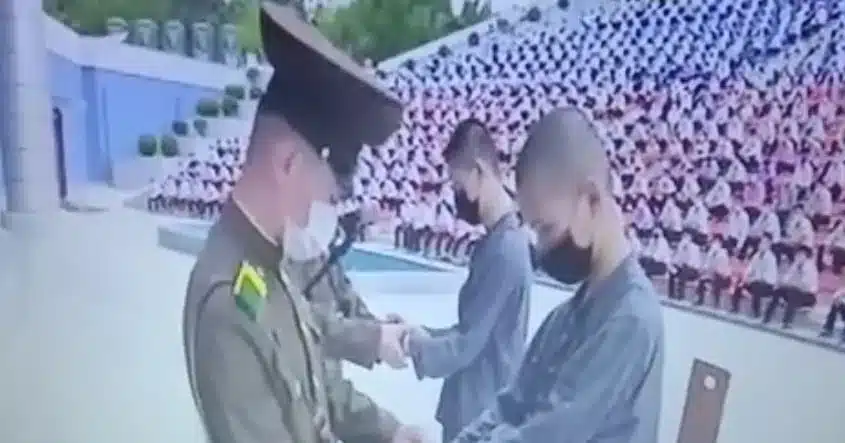
Despite the increasing flow of external information, the North Korean authorities are intensifying efforts to block such content. The government is reportedly imposing severe penalties, including execution, for those caught consuming or distributing South Korean media.
Recent reports from Daily NK detail harsh punishments. In July 2024, Pyongyang’s Ministry of State Security reportedly executed two individuals from the Ryugyeong Hotel management and the Korean People’s Army for watching the South Korean drama ‘The Queen of Tears.’ Additionally, officials from the Pyongyang City Customs and General Administration of Customs were reportedly executed after being beaten with a rifle for distributing South Korean films, dramas, and music.
The crackdown makes the work of disseminating information more challenging. Lee acknowledged, “It takes a lot of time and cost to build a network for distributing storage devices containing Hallyu content into North Korea and spreading it widely within the country.” He further stated, “Due to the North Korean authorities’ strict border controls, it is difficult to provide information frequently or regularly.”
The cost of distributing content is substantial. Lee estimated that sending 10,000 microSD cards, each with a capacity of 64GB to 128GB, could cost between 60 million and 170 million won (approximately $43,000 to $122,000 USD) for the cards alone. He emphasized the need for regular information provision and shorter delivery cycles to maintain network stability and expand viewership.
Human Rights Concerns Highlighted
The seminar also featured testimonies related to human rights issues in North Korea. Lee Yang-hee, former Chair of the UN Committee on the Rights of the Child (CRC), shared her observations of the North Korean regime’s deceptive practices during UN human rights reviews.
Lee recounted how North Korea sent highly trained delegations to Geneva, who presented a composed and professional demeanor, a stark contrast to their usual aggressive rhetoric. She noted that during the review of North Korea’s third and fourth periodic reports on the Convention on the Rights of the Child, the North Korean delegation vehemently denied allegations of forced child labor.
“I directly witnessed the North Korean delegation, dispatched by the Pyongyang authorities, to pose as a ‘normal country,'” Lee stated. She described how they presented fabricated evidence, such as entire schools taking a break for children to participate in agricultural work or construction sites, as examples of ‘innovative educational methods.’ When confronted with evidence of child exploitation in mass mobilization events like the ‘Arirang’ mass games, the delegation appeared flustered, insisting the children participated voluntarily.
Kang, a former teacher who defected from North Korea in 2019, shared her personal experience of being detained for 20 days in a security agency’s interrogation room in China in May 2017 after attempting to call her son via a Chinese mobile phone. She was released after paying a ransom. Kang noted a significant difference in her treatment compared to when her daughter was detained in 2014, during which she endured severe abuse. “When UN officials were visiting North Korea, the harsh treatment was temporarily suspended,” Kang recalled, suggesting that international attention can influence the behavior of North Korean authorities.
“The fact that someone is discussing North Korean human rights issues at the UN changes the attitude of the North Korean security agency,” she concluded. “International attention is by no means meaningless to the residents of North Korea.”
