

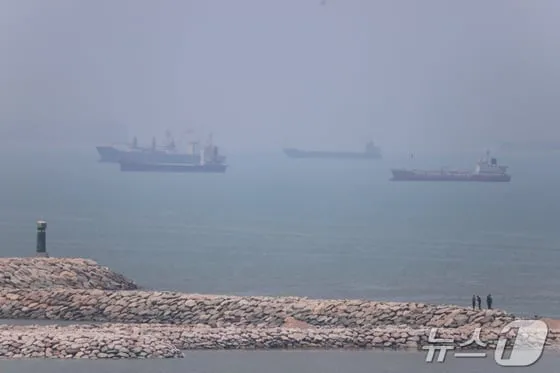
The Middle East is experiencing heightened tensions as a military confrontation between the United States and Iran escalates, centered around the Strait of Hormuz. The latest developments involve claims of missile strikes and retaliatory actions, further increasing regional instability.
Iran Claims US Missile Strikes on Nuclear Facility
On July 9th (local time), Iran’s state news agency, IRNA, reported that the area surrounding a nuclear power plant in the southern Bushehr province was targeted by U.S. missile fire. The deputy governor for political, security, and social affairs in Bushehr Province stated that the attack violated the ceasefire agreement, noting that multiple sites within the province, including the vicinity of the nuclear facility, were hit by U.S. projectiles.
Local media outlets, citing the IRNA report, indicated that several explosions were heard in Bushehr province, the location of Iran’s sole operational nuclear power plant. This development marks a significant escalation in the ongoing conflict between the two nations.
Escalation Follows Strait of Hormuz Incident
The military exchange between the U.S. and Iran has intensified following an incident involving commercial vessels in the Strait of Hormuz. Earlier in the week, Iran reportedly attacked three commercial vessels attempting to transit the strategic waterway. In response, the U.S. military conducted strikes on Iranian military facilities in the southern region and on a railway crossing in the northeast.
The rising tensions are not confined to the immediate vicinity of the Strait of Hormuz, with the conflict’s effects spreading to neighboring regions.
Missile Incident in Jordan
On the same day, Jordan’s state news agency reported that a missile fired from Iran entered Jordanian airspace, triggering air raid sirens across the country. The agency specified that eight missiles were intercepted, and fortunately, there were no civilian casualties or damage reported.
Mohammad Momani, the Jordanian government spokesperson and Minister of State for Media Affairs, confirmed that the Royal Jordanian Air Force had scrambled fighter jets to intercept the missile that violated Jordanian airspace. He emphasized the military’s readiness to respond to such threats.
Local media in Jordan, including Al-Mamlaka TV, suggested that the intended target of the Iranian attack might have been a U.S. military base located within Jordan. Military bases, including one in the Muwaffaq Salti Air Base in central Jordan, are known to be situated in the country.
Previous Retaliatory Strikes
Prior to these events, Iran had reportedly carried out retaliatory attacks on U.S. military installations in Gulf countries such as Kuwait and Bahrain. These actions followed the U.S. response to Iran’s earlier aggression against commercial shipping in the Strait of Hormuz.
The ongoing cycle of attacks and counter-attacks underscores the volatile nature of the geopolitical situation in the Middle East, with significant implications for regional stability and global energy markets.
