

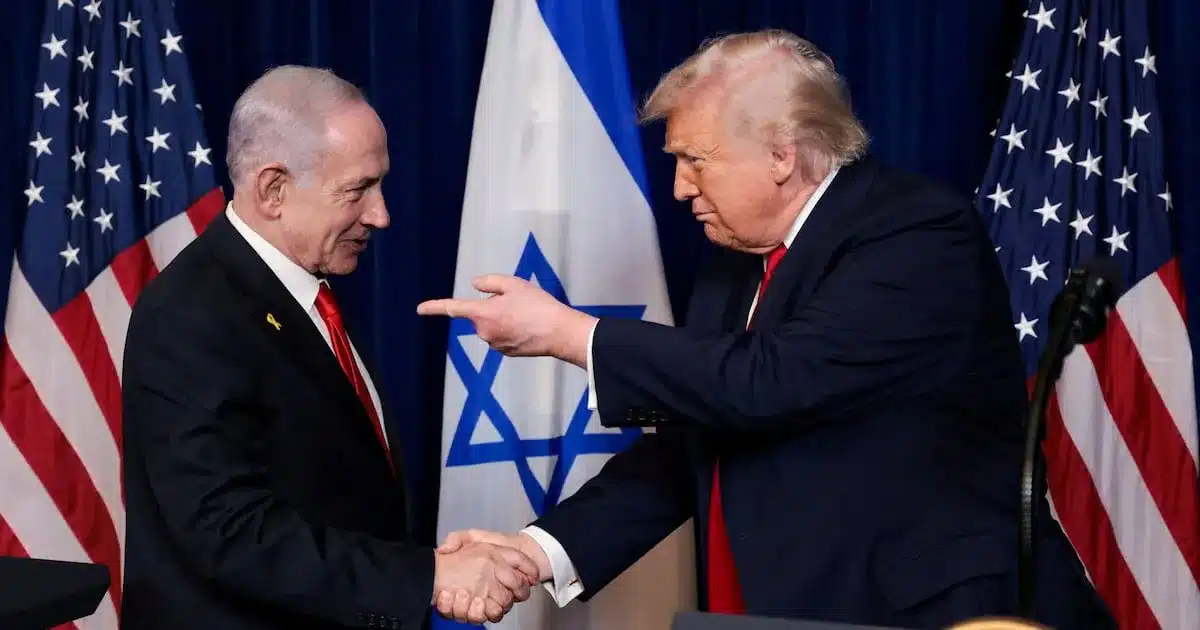
U.S. President Donald Trump and Israeli Prime Minister Benjamin Netanyahu held a phone conversation on September 9th (local time) to discuss the escalating military situation in the Persian Gulf and Turkey’s defense matters. The call occurred amidst heightened tensions between the United States and Iran, signaling close coordination between the two leaders on future responses.
U.S.-Israel Coordination Amidst Regional Instability
The discussion between President Trump and Prime Minister Netanyahu focused on critical regional security issues, particularly the ongoing military actions in the Persian Gulf and concerns regarding Turkey’s defense policies. This high-level exchange underscores the strategic alignment between the U.S. and Israel as they navigate a volatile Middle East.
Concerns Over Turkish Arms Sales
A significant point of discussion was Israel’s strong apprehension regarding the potential sale of advanced military aircraft from the U.S. to Turkey. Prime Minister Netanyahu reportedly urged the U.S. administration to firmly protect Israel’s national security interests, highlighting the gravity of the situation.
The Prime Minister’s office confirmed the phone call via social media, stating that Netanyahu raised the issue of inflammatory rhetoric from Turkish President Recep Tayyip Erdoğan and his associates, which challenges the very existence of the state of Israel. This statement points to a deep-seated geopolitical friction between Israel and Turkey, which has historically been marked by significant disputes.
Background of U.S.-Turkey Military Relations
The U.S. had previously halted F-35 fighter jet sales to Turkey after Ankara’s decision to procure Russian-made S-400 air defense missile systems. However, recent indications of improving relations between the U.S. and Turkey have led to renewed consideration of resuming arms exports. This potential shift has alarmed Israel, which views the sale as a direct threat to its military superiority in the Middle East.
Prime Minister Netanyahu’s administration has repeatedly requested the U.S. to reconsider any potential sale of advanced weaponry to Turkey, emphasizing the need to safeguard Israel’s security. The Israeli government views maintaining its qualitative military edge as paramount in the region.
Persian Gulf Military Posture
During the call, President Trump provided Prime Minister Netanyahu with a detailed briefing on the latest U.S. military measures being implemented in response to actions in the Persian Gulf. The U.S. has conducted a series of significant strikes against Iranian military facilities and infrastructure from July 7th to the 9th, marking a substantial escalation in military operations.
In retaliation, Iran has launched missile attacks targeting U.S. allies in the Gulf region. These actions have placed an existing fragile peace agreement in jeopardy, raising fears of a full-scale conflict. The exchange between Trump and Netanyahu likely involved strategizing on de-escalation and deterrence measures in light of these developments.
Geopolitical Implications and Future Outlook
The conversation between the two leaders highlights the complex geopolitical landscape of the Middle East, where alliances are constantly tested and regional rivalries can quickly escalate. The U.S. and Israel share common strategic interests in maintaining stability and countering perceived threats from Iran and other regional actors.
The potential sale of F-35 fighter jets to Turkey remains a contentious issue, with significant implications for the balance of power in the region. Israel’s strong objections underscore its commitment to preserving its military advantage, while the U.S. navigates its relationships with both allies and partners, balancing competing interests.
The ongoing military exchanges in the Persian Gulf also present a grave concern, with the risk of wider conflict looming. The coordinated communication between President Trump and Prime Minister Netanyahu suggests a unified approach to managing these critical security challenges and preventing further destabilization.
Conclusion
The phone call between President Trump and Prime Minister Netanyahu served as a crucial platform for discussing pressing security concerns, including the escalating situation in the Persian Gulf and the sensitive issue of U.S. arms sales to Turkey. The dialogue reflects the close strategic partnership between the United States and Israel and their shared commitment to regional security amidst a period of heightened geopolitical tension.
