

The South Korean government has strongly refuted claims that its recent farmland survey will lead to the forced sale of agricultural land. Officials stated that the survey specifically targets speculative and improperly managed land, not the vast majority of legitimate farms. Concerns have also been raised about a potential decrease in land transactions and prices due to the survey, but the government maintains these assertions are inaccurate.
Addressing Concerns Over Forced Sales
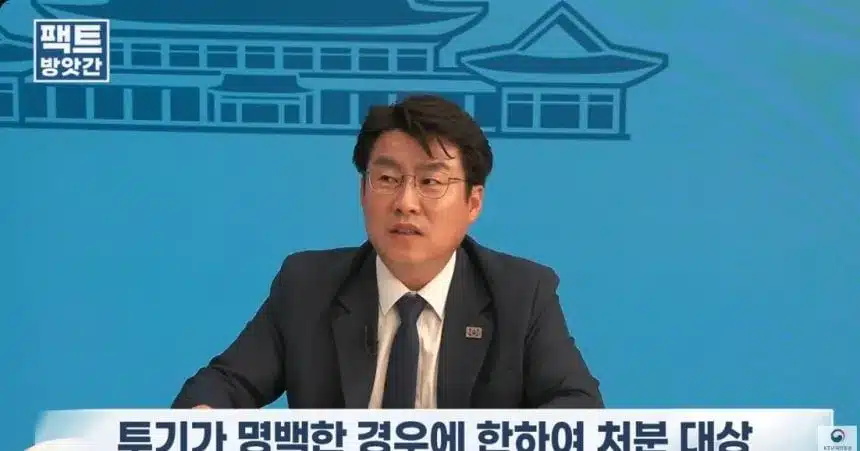
Lee Young-soo, a senior agricultural and livestock advisor at the Presidential Office, addressed public anxieties during an online policy briefing on the YouTube channel ‘Fact Bang-a-gan’. Some citizens worried that farmers who had ceased cultivation due to age or health reasons might be compelled to sell their land. Lee clarified that such fears are largely unfounded.
“Even if cultivation is temporarily halted for reasons such as age or health, if the farmer has been farming for over five years and is over 60 years old, leasing the land to relatives or acquaintances is permitted,” Lee explained. “Inherited farmland, up to one hectare (approximately 3,000 pyeong), can also be entrusted to friends or acquaintances.”
He emphasized that the current survey’s primary objective is to identify and address speculative landholdings. “This survey is designed to catch only land-related speculation,” Lee stated. “Since it targets only illegally leased or idle farmland as speculative, the majority of farmers will not be affected.”
Clarification on Compulsory Auction and Speculation Tax
Regarding the issue of compulsory auctions, Lee reiterated that these measures would only apply to speculative land. “You can consider it as being applied only to speculative farmland,” he said.
The advisor also dismissed as “groundless” and “absurd” suggestions that the government intends to forcibly acquire farmland and then resell it at low prices. “If you do not wish to sell, you do not have to sell. That is a decision for the farmers to make,” Lee asserted. However, he added that the government is preparing a budget to provide support for those considering selling their land.
Furthermore, Lee mentioned that when the Korea Rural Community Corporation purchases farmland, it will do so at market prices. He concluded by apologizing for any anxiety the survey may have caused among farmers, reiterating the initiative’s core purpose.
Survey’s True Intentions and Market Impact
“The farmland survey was initiated with the goal of returning speculative land to farmers and improving existing systems to better reflect current realities,” Lee stated. He acknowledged that there is a general trend of declining farmland prices nationwide but stressed that the survey is not the sole reason for this downturn.
Lee pointed to the strengthened Farmland Act, enacted in response to the 2021 Korea Land and Housing Corporation (LH) land speculation scandal, as a fundamental factor influencing land prices. “Farmland transactions this year have increased by 2.2% compared to the same period last year, and while farmland prices have fallen by 4.4%, this decline is relatively moderate compared to the average 9% drop seen after the LH scandal,” he explained.
The advisor highlighted that the overall decrease in farmland prices is a complex issue influenced by various economic factors and regulatory changes, rather than solely by the current survey. The government’s stance is that the survey is a targeted measure to curb speculation and ensure farmland is used for its intended agricultural purpose, thereby benefiting genuine farmers.
Background of Farmland Policy
The government’s current approach to farmland management stems from a desire to prevent the kind of speculative abuses that came to light with the LH scandal. In that incident, employees of the state-run housing corporation were found to have used insider information to purchase large tracts of undeveloped land for speculative purposes, sparking public outrage.
In response, the government enacted stricter regulations under the Farmland Act. These regulations aim to ensure that farmland is primarily owned and operated by those actively engaged in farming. Key provisions include stricter criteria for acquiring farmland and enhanced oversight to prevent illegal leasing and non-agricultural use.
The current survey is seen as an extension of these efforts, focusing on identifying and rectifying any remaining instances of speculative ownership or improper land management that may have persisted despite the strengthened laws. The government’s stated goal is to create a fairer and more transparent land market that supports sustainable agriculture and prevents the concentration of land in the hands of speculators.
Future Outlook and Support Measures
While the government maintains that the survey is not intended to force sales, it recognizes the potential for uncertainty among landowners. The preparation of a budget to offer support reflects a commitment to assisting farmers who may be considering selling their land, whether due to changing circumstances or as a result of the survey’s findings.
The government also emphasized its intention to purchase land through the Korea Rural Community Corporation at prevailing market rates. This assurance aims to prevent any perception of undervalued compulsory acquisitions. The ultimate objective, as reiterated by officials, is to foster a healthy agricultural sector where land is utilized productively and equitably.
By clarifying the scope and intent of the survey, the government seeks to alleviate public concerns and ensure that the policy is understood as a measure to promote fair agricultural practices rather than an aggressive land seizure program. The focus remains on distinguishing between genuine farmers and those engaging in land speculation.
